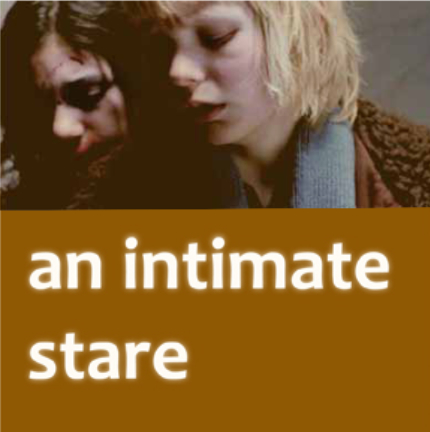
Many of us have heard about “cycles of family violence. “ How this violence is likely to pass down from the abused child to their children when that child becomes a parent. Maybe you are talking to someone about a painful childhood, and suddenly they stop and say, “I’ve become my father.”
Or my mother… take your pick, whatever applies. If you know enough family history, you may even be able to trace the inheritance of abuse from generation to generation, until someone is able to put a stop to it.
Psychologists call this “the break generation,” the one who
ends the cycle. One example was John Lennon, an abandoned
son himself. (To be fair to Lennon’s father, he did offer John the chance to live with him and was turned down, when John was a young child.)
Years later, Lennon chose the life of stay-at -home father while his second son, Sean was growing up. He also worked hard to make up for the time he had missed with his first son, Julian, after he and Julian’s mother were divorced.
Most of us have heard stories about physical manifestations—people so ill for example that they fantasize about being crucified, and then develop marks on their hands as though nails had been driven through them.
The Brood plunges you straight down into a bad dream combining these themes: The cycle of family violence, and the stories of physical manifestations. I don’t want to give away too much as to who—or what, the Brood are, except to say that they are child-like beings. And that certain abused people can use them to strike out at those who hurt them.
Frank, a divorced father with a young daughter, Candy, believes his ex-wife Nola is abusing Candy, and that he needs to keep Nola away from her. Frank has plenty of good reasons for his suspicions. He can see bruises on Candy’s back. Second, Nola has committed herself into a psychiatric institute, known as Somafree.
Somafree is run by Dr. Hal Raglan, whose therapy methods are controversial. Some call him a genius. They rave about his book
The Shape of Rage concerning childhood abuse. Others, some of Raglan’s former patients, say he has made
them worse, and are preparing lawsuits against him.
Frank has seen moments of Raglan at work with patients when he visited Somafree to pick up Candy. He can see the man’s
charisma, and his sharp insights. But Frank can also see a
man with an ego out of control, taking people to places where they may well be dangerous to others and themselves. And there is no mistaking the bruising that he sees on Candy. Raglan’s approach is for Nola, like his other patients, to confront her rage toward her parents. Nola’s mother is an alcoholic who abused her and continues to deny it happened. She still drinks heavily, even when Candy is with her. Nola’s father Barton was a weak man who stood by and let the abuse go on.
The director David Cronenberg has talked about how personal feelings concerning his painful divorce went into writing and directing The Brood. The stories are most insightful. But the movie itself is the ultimate proof of those intense emotions, and of his directing skill.
Years ago, one critic described The Brood as Cronenberg’s one good film.
At that time, this was arguably a fair criticism. But since
then, several other Cronenberg movies have shown this picture was no fluke. Many people have their own personal favorites he
directed, mine being perhaps his warmest and most hopeful,
The Dead Zone.
Cronenberg has been successful recently with two mainstream movies, A History of Violence, and Eastern Promises. But years ago, he was known as a cult director with a reputation for the bizarre and the grotesque. Martin Scorsese actually said he had been frightened about meeting Cronenberg for the first time. (Cronenberg described Scorsese as someone “who should have known better.”) In the media, Cronenberg was known as “the king of venereal horror” and worse.
In these movies, ordinary people’s bodies went through incredible changes, disturbing, at times disgusting. They Came from Within: Human bodies were invaded by strange parasites described then as a cross between a penis and a large turd. One character lies on his back, watching the outlines of the parasites as they move through his body. Rabid: a woman develops a
hypodermic growth in her armpit that kills the men who embrace
her.
In The Brood, Dr. Raglan has been able to get some of his patients to express their anger into physical manifestations: marks on their bodies, or worse, tumors, “lymphosarcoma.”
But with Nola he has gone much further. She has actually given birth to living creatures—other people at the Institute have mistaken them for children. These creatures, her brood, have a clear sense of who it is that Nola feels angriest with.
Possibly a child advocate could argue that
this movie exploits violence against children for the sake of
horror. They are definitely entitled to their point of view.
My opinion: this movie is much more than
that. It’s much more than the bad guys getting what they
deserve, or a bunch of evil children who kill teenagers after
the teenagers have sex
.
A glimpse of the brood–in the house where Nola grew up
The bad parents do get a kind of justice. But innocent people get hurt too. Cronenberg’s screenplay is not perfect but it’s good enough to make you care a lot about the main characters. For example, you feel Candy’s pain over and over again. A sweet little girl who has never hurt anyone. She is torn between two parents who both love her. She nearly sees her grandmother killed, then is terrorized by the same creature who did the killing. You don’t realize until much later that she knows who these creatures are. Later they enter her classroom and quietly walk away with her into a snowstorm; a scene that is poetic in the grimmest kind of way…one of the best moments in any Cronenberg movie.

Nola’s venomous wishes–made real
You can criticize the ending as kind of clichéd, possibly a cheap shot. But the image you are left with is something else—Candy’s sad, hurt expression as she sits in silence.