Author: phil

  • THE MIST

        The first time I saw The Mist, I was floored…period.  Not by the special effects.  Not by the explanations near the end; clearly they were no more than a throwaway.

        What moved me, really scared me, were the changes in the characters as they boarded themselves up in an average supermarket, watching horrific creatures dead set on killing them. Yeah, the people, way more than the monsters.  The people changed in ways that terrified me, though a few became heroes for sure. Equally scary, you ask yourself too, did some of these people change at all, or were they like this to begin with?

        You see at least six well-drawn characters; you closely watch their reactions and their actions at desperate moments.  Some give way to the hopelessness, to their lack of answers about the terror closing in.  Others discover, get in touch with, courage they didn’t know they had.  Still others give in to their fears, especially one fear; do the people trapped with me, hate me/feel only contempt for me?  

        The Mist starts off as a day like so many others in an average Northeast community on the Maine coast.  The night before, a violent storm with high winds. 

       David Drayton is a graphic artist who did not grow up in this town.  Next morning.  He drives into town for groceries, taking his young son Billy and his neighbor Brent, a respected attorney whose car was totaled by another falling tree.  Earlier, they watched a mist moving across the water near their houses.  

             The mist creeps up on the strip mall; no one can see more than a few feet into it.  The first to make it out of the mist screams, “Something in the mist!” his eyes wide. 

        Quickly, some of the tension between townspeople comes to the surface.  Jim, a machinist and handyman, dislikes David from the beginning—and feels David is talking down to him.  Jim won’t take any shit from an out-of-towner who went to college.  

        Brent, David’s neighbor, an Afro-American, is still simmering over a civil suit with people in town.  He senses that people like Jim have been lying in wait for him ever since…and he’s not all wrong.  Jim is tired of keeping his feelings to himself—it shows.  Ironically Brent and Jim have something in common.  They feel David is telling them what to do…trying to push them around.  David’s not military…or a police officer.  No way they’re taking orders from him.

        When night falls, huge insects begin slamming against the front window.  When larger creatures break holes in the glass, the store is invaded; people start dying. 

        Mrs. Carmody, perhaps the most compelling character out of many compelling characters, watches with the same terror as the others.  It’s where she goes with her terror that makes her riveting.  She is known around town for emotional problems she never addressed.  And for her hellfire and damnation outlook, the logical outcome of her belief in a cruel, jealous god.

        If her plan had been to lead a revolution, what happens would not be as scary.  She wasn’t born evil, she is no “bad seed.”

        Mrs. Carmody actually does some lengthy soul-searching; speaks to God.  I saw a lot of similarities between her searching and Hitler’s long search during the years before and after World War I.  Mrs. Carmody’s ideas are almost all based on the bible. 

        You may have expected a serene reaction from Mrs. Carmody when the terror begins; she had expected something like this a long time, god’s final judgment.  But her ego seems to overcome that calm; she intuits she must redeem herself before the destruction is complete.     You watch her sitting on the bathroom floor…quietly waiting for god to speak.  When a woman asks to use the bathroom, Mrs. Carmody is incensed.  Partly that she sees the woman’s offer to help her as mocking her.  But I saw something else.  Mrs. Carmody may have pictured herself walking with god…something like Jesus walking in the desert.  Then suddenly, she sees herself as only a woman in a bathroom.

        But scarier still, people begin flocking to her.  It makes sense.  Monsters are outside, trying to break the window and fly in.  People are desperate for answers…and for somebody to blame.  This woman believes she has answers.

       Another revelation.  Insects the size of hawks invade the store.  One lands on Mrs. Carmody.  She remains still, speaking a long quiet prayer.  Then—it flies off; it draws no blood.  Likely Mrs. Carmody sees it as a sign, that she was chosen to lead her people.

        In 1930’s Germany, many fatally underestimated Hitler.  One intellectual at the time said Hitler had no substance; he was only the noise he made.  We know now how wrong this man was.  

         In The Mist, more than half the people inside the store wind up firmly behind Mrs. Carmody, and her end-of-days prophecies.  Even when she tells the gathering they need to make a sacrifice for god—David’s young son Billy.

        Jim’s (the character who challenged David) changes give you a lot of insight into this woman’s disciples.  Early on, he presents himself as salt of the earth, one of the unheralded guys in the trenches.  He sees David, a graphic artist, as an ivory-tower wuss; someone you can’t count on when things get rough.

        But Jim is stunned into inaction time and again, by tentacles, by huge insects, and most of all by the monster spiders in the pharmacy next door.  He watches David, the college boy, lead the action, put himself in harm’s way again and again.  Jim looks as though his courage has failed him…he is nothing. For a while, he appears unhinged, helpless.  Then he drifts over to Mrs. Carmody’s disciples and finds his courage.  He becomes one of her enforcers.  He has a purpose, a mission now.  No reason to think, to search for rational explanations.  Now he has a leader who can make his decisions for him.

        A year or so after The Mist was released, the USA took a chance.  They elected a black president.  Eight years after that, many people felt that our country needed desperate measures to solve our problems.  Their patience had worn out with leaders saying things were evolving in the right direction.  Then, in 2016 you had a candidate saying things were fucked; that certain people were responsible and it was time we put the searchlights on them.  Sadder still, many of those voters still feel they chose the right candidate for the job.

  • NEVER LET ME GO

         People forced to live lives in shadowy fog.  Their curiosity gnawing at them but their indoctrination still catching hold: don’t ask too many questions.  We will tell you all you need to know…in our own time.  Till then, keep your fucking mouth shut.

         They have gotten messages like that since they were young kids.  That in itself makes it harder to disobey…especially when “disobey” covers so broad a spectrum.  Three main characters: the narrator, Kathy H,  Ruth and Tommy.  More restless than out-and-out rebellious.  Almost resigned to their fate.  But unable to stop questioning their reality—so many unanswered questions.

         Never let me Go takes its time to reveal…just some of the questions.  II’s set in an alternate reality, but so much will feel familiar compared to our own..      

         Many diseases we fear (in our own reality) have been eliminated.  Longevity has increased to well over 100.  But the price of these medical breakthroughs is a steep one.  Young people raised as a sort of sacrificial lamb—donors of organs needed for medical research.  These donations will kill most of them before the age of 30. 

         Ironically, the people in charge have not lied to the young people raised as sacrificial lambs.  The lambs are doing a good job.  Disease numbers are way down, and likely to continue that way.

         But Never let me Go does not deal with statistics.  It wants to focus on the people whose lives are already mapped ou†.  Paying the price for people who can now be cured from diseases which were once killer diseases.

         This movie is based on a novel by Kazuo Ishiguro, writer of the superb The Remains of the Day.  It’s not in the same league as that movie, but that is no condemnation—only a handful are.  

         Many people have Never let me Go listed as one of their all-time  best horror movies.  Does it belong there?  Well it doesn’t have any scenes that make you jump, or pull back from blood being spilled.  And yet things about it will keep gnawing at you…the fate of the main characters being the first.  Yes, they have choices they can make.  But virtually all of their choices lead to the same place in the maze—early death with no escape, no one to hear any appeal you can summon up.

         It starts out like a sensitive-kids-coming-of-age story: vulnerable kids trapped in a quiet but deceptively doomed environment.  A prison they gradually realize has numbed their spirits.  Hailsham, the upscale school where the kids have grown up, does have some unexpected kindnesses.  Sympathetic staff people who sometime listen to students’ concerns.  

         But major questions stay unanswered—who are we, what exactly are we doing here, what is our destination, regardless of whether we are carers or donors. Hailsham pupils are deliberately left in the dark.  

         I mentioned “sensitive kids coming of age story” because this is where the movie spends most of its time….getting to know Kathy, Ruth and Tommy.  We see Kathy—generous to a fault, watching Tommy and Ruth bonding while Kathy stays painfully alone.  We share Kathy and Tommy’s pain when they re-unite after a long separation. Only to learn they will only be allowed weeks together at most.  

         Gradually the theme of sensitive kids growing up is overshadowed by that of their inevitable fate.  The future of the carers is not made as clear as that of the donors.  

         Gradually the donors start to understand—few of them will survive past thirty.  They will miss out on a major part of average people’s lives.  Years that so many of us take for granted, or complain about instead of stopping to appreciate them  

         Falling in love.  Seeing their kids born.  Watching them grow up.  Experiencing our careers develop, grow.  Many of us won’t appreciate those years—we are pre-occupied with buying more things and keeping up with credit card paymentsBut some of us —the fortunate ones, may grow old and eventually treasure those times.

          Think of the many movies showing us how painful is the yearning to live through exactly those years.  Frankenstein, Bride of Frankenstein.   A surprisingly large number.of werewolf stories and even a few vampire tales—the pain of missing out on those times.

    That makes the sting so much more painful. Kathy and Tommy believe they’ve discovered an escape clause; they can find the time to experience their newfound love.  

         They find out the hard truth.  Kathy maintains her good manners and accepts her reality with grace.  Tommy stands in an empty road and screams in agony.  The movie has shown us just enough of their brief happiness together to feel what Tommy feels. 

  • THE PREMONITION

    Note—-Not to be confused with the 2007 movie The Premonition starring Sandra Bullock or a 1972 movie of the same title written and directed by Alan Rudolph

         The small-town Deep South, the mid-’70’s.  A beautiful young woman gets off a bus near a traveling carnival.  A man from the carnival, dressed as a mime/clown, clearly glad to see her.  The woman glad to see him, but she’s got other things on her mind.  “Have you seen her?” she asks him right away.  She asks to borrow his SUV; he says yes.

         The Premonition is a movie about people searching for love, but few of them able to find it.  You watch them and learn; most of them are too fragile, too damaged to give love, despite how much they want to.  They dream of a love that can save them.  Maybe it can but  it is out of reach.

         The mime, Jude, believes he loves this mysterious woman Andrea.  They knew each other in an institution/mental hospital; both are released now.  Andrea is obsessed with starting life again with her daughter Janie, who was taken from her and given for adoption.  After she borrows Jude’s SUV her first drive is to Janie’s school to see if her daughter remembers her.

         You may recall an obscure Stones song, Out of Time. 

    “You don’t know what’s going on/

    You’ve been away for far too long/

    You can’t come back and think you are still there” 

         But the movie does show the other side of the coin: Janie’s adopted parents, Sheri and Miles.  Sheri tends toward the hypersensitive but her love for Janie is strong.  

         Despite losing two previous babies in infancy, Sheri is able to love unwaveringly.  Her husband—an academic— is preoccupied with his job and with other women.  But he is clearly open to new ideas and willing to reach for new solutions to get his daughter back when things later turn desperate.

         And Miles’ faculty colleague Dr. Kingsley has learned how to “think outside the box” in reference to psychic phenomena and how to apply it to unique situations; Andrea may be alive or dead but either way her obsession with Janie threatens the little girl’s life.

         Jude the mime may be the saddest character.  Hopelessly In love with  Andrea but just able to see how fragile is her grasp on reality.  The two of them go to Janie’s house to kidnap her.  But Andrea grabs Janie’s doll, lying right next to Janie.   Andrea continues talking to the doll as if she were a real girl; Something has changed this woman in her hospital commitment; something has been cut out of her.  

         You may recall Wesley in I Walked with a Zombie.  Drunk every day, in love with Jessica, who has lost her mind, most likely her soul, to the high fever that almost killed her.  Jude has a good heart but nearly no capacity to love; watch the scene where he tries to reach out to Janie.  

         Richard Lynch (God Told me to, The Sword and the Sorcerer, Scarecrow) was a much under-rated actor, limited mostly to blackhearted villain or psycho roles.  Jude is much more complex and Lynch makes the most of his part.  This is a quiet subtle movie without much melodrama and violence.  See it anyway.   

  • KURENEKO

         Most of us feel we were brought up upholding certain responsibilities—to forces we’ve been born into.  So many ways to state what these are:

          Defending/Fighting for our country, our community.  

          But we find ourselves bound to another set of vows: 

          Promises to our family, our religion/our spiritual codes.

         Occasionally we experience a stark conflict between the two.  We Just struggle to reach a decision in reconciling this stark conflict.  In Kureneko we find three people trying to find answers between such opposing forces.  

         One sad irony.  Kuroneko is set in Japan, centuries ago.  But it was released in 1968 when such conflicts were tearing our country apart like never before.  The words “Vietnam Era” will bring back brutal memories to many in the baby boomer generation. They faced such conflicts then, splitting their consciousness.

         In the years Kureneko is set, Japanese nobility was in desperate need of someone to protect them, to fight for them.  Warriors called samurai filled that need.  But eventually the samurai’s power grew stronger than the nobilities’. The samurai felt that they were the rulers now—unstoppable.  “It’s a samurai’s world now”, one of them says, without any doubt in his voice.  

         Kureneko sets up its conflict between samurai and a farm family just managing to keep itself alive in wartime.  Near a house, samurai emerging from a forest like a swarm of army ants.  With barely a word, they devour food, then rape and kill a middle aged woman and her daughter in law.  They burn the house to the ground then leave in silence.  

         The two women lie dead in the smoking ruins.  But the silence is broken by the quiet sounds of a cat.  It stops to lick the faces of the dead women.

         Soon after, samurai begin to die.  Killed by ghostly women spirits who float, more than walk, in dense forest, asking protection from the samurai…then murdering them, then drinking their blood.  The killings done in the dark woods, occasionally in a small house deep in forest.  The samurai polite, expecting only a short respite from their soldiering for more raping, more murdering.  The last thing the samurai see before dying—a woman’s arm and hand transformed into a cat’s leg and claw.

         The samurai leader calls out for the strongest, bravest hero to stop the murders.  An abrupt shift in tone from the early, subtle scenes; from darkness to something closer to a 1960’s Bible epic.  These scenes feel wider in scope, the sunlight far brighter, the voices much louder, more abrupt.  You can almost hear it translated into modern English, soldiers answering their U.S. Marine commander—“Sir, yes sir!”  Gintoki, the samurai chosen to protect his comrades…carries around the head of his last opponent.  Not the man anyone wants to fuck with.

         Up till now, Kureneko feels like two different movies.  But here begins the third, where the two worlds start to collide: soldiers’ world and supernatural (ghosts’) world.  What will Gintoki’s fate be when he enters the realm of the ghosts?  

         At first, things go the way you expect.  Gintoki on his horse in a dark forest, sees a woman walking ahead of him.  He tells her she is about to enter a dark grove. But he offers his protection.  She accepts; they reach a house and go inside.  

         So far, all the conversations between the women and the samurai have been set-ups—for inevitable killings.  No killing this time.  The two women and the samurai circle each other like feral cats.  The man draws his sword, the women appear to vaporize, then re-appear outside.  The samurai, unable to see them again. 

         And so it begins.  Irony piled upon irony.  Gintoki, a farmer till recently, now an accomplished killer.  Two women, one previously Gintoki’s mother, one previously his wife…now sworn to kill.  

         The women’s lives before, trapped, victims.  Now they have made some mysterious pact with a supernatural  force, empowering them to commit violent revenge against samurai.  

         Yet Gintoki and the female spirits—bound to their past. Struggling to get past their previous roles, yet committed to more killing. 

  • GLORIOUS

    An everyday guy…locked inside a men’s room at a rest stop off a highway.  A voice telling him he is the one who’s imprisoned him.  And who demands a heavy price to set him free.  The main character, Wes is no pushover.  He’s not about to take anyone’s disembodied voice for granted, especially a voice who claims to have god-like powers.  Even someone’s voice who seems able to back up his claims, at least some of them.

         After a while we realize—this story is about Wes’ redemption.  And redemption, any kind, is something most of us can relate to.  It’s a theme that draws us in. 

         From this description, Glorious may sound like a movie working (or maybe not working) on several different levels.  My strategy was this: try to keep myself free, enough to jump back and forth between the levels I saw.  Admittedly not easy with things going so fast.    

         Wes’ girlfriend Brenda died recently.   But her death was not a highway accident, DUI or an incurable illness.  Wes had much to do with it—he broke her heart.  Try as he will to deny it, he hurt Brenda.

         In a movie full of possible symbols, Brenda might represent the faith Wes destroyed.        

         Or, she might represent someone able to sense anyone’s redemption.  This might explain Wes’ agony when we first see him, as he drives, hoping to die.

         You can anticipate a viewer’s impatience, even contempt for a story setting its sights so high.  A big theme is the fate of the universe—will it survive the next 24 hours. The voice says he (the voice) may have the means to save the universe, but only with Wes’ help. But the universe’s fate being determined in a men’s room with a floor covered with puke?  Pretentious?  You bet.  

         You can imagine ratings of 1/2* or 1* out of 5* and I can understand where people could rate Glorious that low.  I could argue—give Glorious serious credit for presenting some profound questions without blinking.  In a men’s bathroom no less.  (I was surprised Glorious received much better reviews than I had expected from imdb and from Rotten Tomatoes.) 

         The question—with things coming at you fast and furious; will you be intrigued enough to stick with this?  

         You may start off expecting some kind of mind games—a duel between Wes and the voice he’s hearing.  A quietly menacing voice slightly reminiscent of HAL, the computer in 2001.

         But this isn’t a movie about sick mind games.  The voice has a name—a long mysterious name with a mnemonic: “ghat.”  Ghat needs something from Wes…Wes needs to understand what he is expected to accomplish and why.  

         And ghat’s messages for Wes: Wes must redeem himself.  But first he must experience the pain he caused Brenda. Another courageous decision in this movie.  Asking you to identify with Brenda’s feeling of betrayal instead of presenting her as a woman with problems: “who loves too much,” or “loves guys who won’t love her back.”

         Wes can’t get around this.  “Her memory has to be worth something,” he reflects.  And it will be the worst pain he ever experienced.  Ghat can talk all he wants about saving the universe but Wes’ ordeal will be equally painful.

         Slowly but surely Glorious pulls us into Wes’ journey towards redemption.  What pain must he endure?  Do we know  him well enough to care?  Can we accept ghat’s word for it—that  Wes’ redemption in Brenda’s suicide  is chained to the fate of the universe?

         Wes can’t get around this.  “Her memory has to be worth something,” he reflects.  And it will be the worst pain he ever experienced.  Ghat can talk all he wants about saving the universe but Wes’ ordeal will be equally painful.

         Slowly but surely Glorious pulls us into Wes’ journey towards redemption.  What pain must he endure?  Do we know him well enough to care?  Can we accept ghat’s word for it—that  Wes’ redemption in Brenda’s suicide  is c. Slowly but surely Glorious pulls us into Wes’ journey towards redemption.  What pain must he endure?  Do we know him well enough to care?  Can we accept ghat’s word for it—that  Wes’ redemption in Brenda’s suicide  is chained to the fate of the universe?

         I can’t answer that question for each of us.  Give yourself a chance to answer.

  •          SLEEPY HOLLOW

         I can’t say enough good things about Sleepy Hollow.  And I only hope I can express how much I loved it…when I first saw it 25 years ago, and again this year.  This movie has something for everyone: horror, detective mystery, a great love story, and Young Adult horror/fantasy..

         It’s loosely (very loosely) based on one of the oldest known works of American fiction, The Legend of Sleepy Hollow (1820)written by Washington Irving.  The best known adaptation till then was a Disney animated feature.  Another adaptation was actually a made-for-TV movie starring Jeff Goldblum and Dick Butkus.  

         Its director Tim Burton was on a hot streak around that time and got a lot of freedom to do as he wanted.  Burton had a vision and was able to capture a lot of that vision.  That included a wonderful cast including the great Johnny Depp, Christina Ricci and several horror movie veterans you will probably recognize.

         Burton used some subtle touches too: the views of the river upstate; like a painting from the Hudson River School, but with all of its primary colors drained away.  The drawing room of the inn where Ichabod meets the town elders. Their faces—grotesque but grotesque in a way you can’t quite put your finger on.  Other things you can’t help but notice, the dark gloomy grey color enveloping the town of Sleepy Hollow.

         Johnny Depp plays Ichabod Crane, a  New York City police constable sent to solve a series of murders in an upstate town…all the victims beheaded by a phantom with a sword.  No clue where the heads wound up.  The city police force are glad to get rid of Ichabod.  They despise his preference for “scientific” detective methods, his refusal to torture confessions out of suspects.  The people holding the power in Sleepy Hollow appear willing to tolerate Ichabod—for a short stretch anyway.  They are that desperate to stop the killings. But they don’t hesitate to tell him, you’re long way from home, son. 

         Ichabod arrives just in time for a party at the one big inn in town.  The guests in the midst of a game of pickety-witch; a woman designated “the witch” blindfolded, trying to guess the man who has just kissed her.  She is Katrina Van Tassel, the innkeeper’s daughter.  You can sense the chemistry between Katrina and Ichabod; so thick you can cut it with a knife.  

         But you can feel the distance separating Katrina and Ichabod too.  Sleepy Hollow is a tight-knit community; just a few families closely intertwined…almost inbred.  Anyone else is treated as an outsider and must pass rigorous tests before being accepted.  It won’t be long till you sense the dirty secrets in town history…and Katrina’s family is a part of those secrets. 

         Before the end of the next day, things change—quickly and dramatically.  Ichabod, who believes in scientific methods, not superstition, sees the horseman for himself.  At first, the sight overwhelms him; a supernatural creature he’s always insisted would not, cannot exist.  Immobile in bed, he lies, shaking, while townspeople stare at him, “Well I guess it’s back to the city then,” someone blurts out.   You can understand their impression.  Ichabod can barely ride a horse.  He has a phobia of insects and spiders.  All in all, not a tough guy.

         But Ichabod finds his courage the next day.  He may not believe in witches but he meets one in the flesh.  And he is able to discover some of what he needs to know.  It’s a brilliant scene, combining humor with some visceral terror.  A tightrope-walking feat that scenes like this seldom achieve.   Even some elements of the original Psycho where Lila Crane (Vera Miles) encounters Norman Bates’ terrible mother and his mother’s worst secrets.  

         Humor too—Ichabod is so agitated he uses the word “which” three times in a matter of seconds.  The witch’s whole face is covered with shaggy grey hair.  When he finally sees her face it is a nightmare-ish vision.  But like Norman’s mother the witch supplies a major clue in Ichabod’s search.

         In addition you watch a different sort of clue; Katrina and Ichabod’s growing chemistry.  Riding away from the witch’s cave, Ichabod faces a stranger—face covered by a hood.  To his astonishment he sees Katrina.  What are you doing here, he asks.

         None of the men in town were willing to come here, Katrina says.

         Then I am twice the man, Ichabod says…Subtle but powerful partnership.  And not the last time.

         I don’t want to give away any more of the story line.  The story has way more twists and turns—more than you can keep track of.  Even Ichabod has some childhood memories he wants to forget…but memories he needs to deal with in the here and now. 

         The world where Ichabod finds himself cannot be dealt with entirely with science and reason.  He has to use some methods he had thought to be supernatural, borderline-magic.  Watching him combine the scientific and magical methods, you can see how much he grows.  You’ll want to take that journey with him.

  •                 Kill Baby Kill


         Some people have trouble resisting any movie they are told was ever banned.  Even if they know the reason in advance and they doubt it’s  justified.  I admit to being one of those curious people.  My curiosity about Kill Baby Kill got the better of me. Even though I knew the general argument for banning it—the theme of revenge but the avenger being a little girl, ten or younger.  Not long after, this movie would be overshadowed by at least two others: Night the Living Dead and The Exorcist.  Little girls doing some major violenceThen what did the censors find so unacceptable about Kill Baby Kill?

         Melissa, the avenging angel in this movie is actually fairly bland.  No satanic expressions on her face.  No demonic voices.  No dire threats.  (“The sow is mine.”).  But we do know she is seeking revenge…probably she is justified.  And others have died in the neglected, backward village where she lived all her life.

         The movie has more than its share of weaknesses.  Bad dubbing from Italian into English.  Generally shallow characters.  Acting—average at best.  A plot that’s nothing new—apart from Melissa.

         Then what are the movie’s strong points?  (Keep in mind, it has more than its share of admirers.)  Atmosphere—an overall sense of an isolated village with its mysteries well hidden.  Well guarded against strangers.  People determined to keep their secrets to themselves.  An overall sense—sickness, a cancer that needs to be cut out.  But a strong resistance to permitting anyone to do it.

         A physician, Dr. Eswai, arrives in the village on a bright day, in broad daylight.  Still, the coach driver refuses to come close to the main street.  Inside the inn, hostile looks, silence.  As though a stranger can only make life worse for them.  Karl, the burgomeister is the only one in town willing to speak to Dr. Eswai.

         Irena, a village woman has died recently, falling from a balcony onto a row of metal spikes.  Besides Eswai, a government inspector is in town to investigate Irena’s death.  Villagers, the few willing to speak, have suggested to the inspector and to the doctor that the solution lies within the villa Graps—a huge mansion dwarfing the town.  But they warn the outsiders—never go inside…for any reason.  Dr. Eswai suspects the inspector has gone there…and may be already dead.

         An unwavering materialist, Dr. Eswai has no fear of ghosts and avenging spirits.  He walks through an open door into the huge, ominous villa.  The atmosphere he finds inside is one of the movie’s strong points…maybe the strongest.  Cobwebs, everywhere he looks, obscuring portraits and mounted animals and birds, straight out of Norman Bates’ office in Psycho.  And the size of each room, dwarfing the doctor, who is a tall man himself.  Hard to believe he will ever find his way out.  A spiral staircase, narrow but seemingly endless.  Bright blue and red colors.  Many believe the blues and reds were an inspiration for the ways Dario Argento colored his masterpiece Suspiria.  I find that hard to argue; just watch Argento’s movie for yourself.  

         Dr. Eswai is not an exciting character yet he is someone you respect for keeping up his search for Melissa, her reputed curse and a way to finally end it.  He finds a long string of secrets and plot twists inside the villa.  As bland as he may be, you have to admire him for his determination to solve the mysteries.  So many characters have long-buried secrets.  As I stated, you experience the secrets as cancers that need to be cut out.  None of the people are evil people.  But their quests for vengeance have corrupted them.  Both the baroness Graps and Melissa have suffered wrongs that explain their parts in the larger tale you watch unfold.  Try to follow each character carefully and unravel their part in this tragic story.

         In the 70’s, the great success of The Exorcist opened the floodgates for possessed and evil children in horror films.  People now will probably look at Kill Baby Kill as a historical relic—-a symbol of big changes to come.  For better or worse, just read a list of 70’s releases; you can’t miss it.

  • THE THING (1982)

        Many people know how this movie was overshadowed by the incredibly popular E.T. when it first came out.  It was a box-office bomb for Universal Pictures.  But gradually its reputation spread by word of mouth, until, about twenty-five years later, many people rate it among the best horror movies ever.  I definitely
    would not go that far, but The Thing definitely packs a punch to the gut.

         I remember how disappointed I was with this movie the first time I saw it. I can recall what Ithought was missing in The Thing.  What I wanted to know about was the terrible change from being human to becoming  the ultimate alien monster; do you feel
    horrified, ecstatic, or perhaps a rush roughly like adrenaline but more intense, as you sense your new powers.

        Watching this movie now, I still would lovesome answers to my questions.  But I don’t think the filmmakers had this in mind.  It definitely did not come up during the Commentary included in
    the deluxe DVD with John Carpenter and Kurt Russell. They
    focused squarely on other issues.

        First, how does a group of people not trained for war react when suddenly face to face with an enemy different from anything that people have ever fought?  Second, how do they cope with the
    sudden paranoia when they’re surrounded by people in a closed
    space, and some of them could be already infected by the Thing?

       Questions about exactly how  and when the infected people got infected go unanswered.  Many plot threads are left dangling at the end.   But then again, that’s not what this movie focuses on.

        What you get instead are the desperate strategies these new recruits try to use, when suddenly threatened with a life-form capable of taking over the whole planet.  (In just over three years,
    according to Blair’s computer.)  And the added desperation of knowing that any of the people around them could already have been taken over by this life-force.  This is the focus of The Thing, not any deep philosophical questions.

        The Thing begins in the brightest of daylight with one unanswered question.  Why are these Norwegian researchers risking their own lives, and those of the Americans, to kill a dog?  The Norwegians seem hysterical with panic, but why?  When one of them injures a member of the Americans to get to the dog, he is immediately shot dead.  Zero chance for explanations.

        One of the M.D.’s, Copper, and the helicopter pilot MacCready fly to the Norwegian base to investigate.  The clues they find suggest something horrible but impossible to pin down.  Every
    building burned.  A bloody axe buried in a wooden door.  A man sitting, now frozen, his wrists and throat slashed with a straight razor.  Strangest of all, the body of a distorted man, combined with some other lifeform, frozen in the snow just outside the
    buildings.  The face contorted, seemingly stretched into two distinct halves, facing slightly different directions.

    image

    MacCready finds a Norwegian dead, an apparent suicide…no
    explanation

          MacCready and Copper fly the frozen body back to base.  It is dissected but its internal organs appear normal.

       Each man on the base does his best to resume life as
    usual.  Bennings, the man shot in the leg, hopes that a
    card game will relax his nerves.  A dog, the same one the
    Norwegians tried to kill, brushes against him, making him
    jump.  This dog has been wandering the rooms and passageways
    of the base all day, with everyone’s mind on other things. Bennings asks Clark, the man responsible for the dogs, to put this one in the pen with the others.

        The dog hesitates at first, then enters the pen and lies down, not sure what the others will do.

        You can’t tell how the pack will figure out who’s now the dominant dog.  Whether dominance can be established without a
    fight.  The other dogs make threatening signs.  Can this battle be settled without bloodshed?

        Suddenly this question is shoved aside for all time, as the conflict changes into something worse than most nightmares.  Personally I cannot recall ever having a nightmare as bad as this.

        The dog’s fur and skin rip apart.  From this mass of naked muscle, legs tear themselves free, spider-likelegs, but from a spider as big as the dog.  Unearthly shrieks come from the mass of flesh and contorting legs. Venomous-looking liquid shoots out of somewhere in this formless creature, covering one of the dogs while structures looking like tentacles strangle it.

    image

    The dog–starting to change

    Congratulations.  You’ve just witnessed the best special effects in movie history, the first of several in The Thing.  Someday someone will accomplish more, using CGI, but this is still the champion for right now, over 45 years and counting.

        The camp’s other M.D. Dr. Blair, and MacCready,the chopper pilot, are starting to get the big picture now and it is plenty ugly.  What they are dealing with is an extra-terrestrial form of life with the ability to change\ itself into a perfect replica of another form of life.  It can copy one of the humans as easily as it can one of the
    dogs.  Blair becomes obsessed with cutting off all the Thing’s possible escape routes, shooting the rest of the dogs, and destroying the helicopter, tractor, and the computer system.

        MacCready appears less educated than the others, but he is the most intelligent, resourceful,and courageous.  In addition, he is an excellent detective, taking clues and quickly using them to
    gain insight.  Along with Blair, he is the first to feel the coming wave of paranoia that will soon sweep the others:  Given its capabilities to mold itself, any one of them could be harboring the Thing.

        You can sense the paranoia after Dr. Copper thinks of a way to identify the Thing using refrigerated blood kept for emergencies.  But the crew finds the entire blood supply is gone.  Accusations
    and counter-accusations fly. The intense fear is masked with
    an anger, genuine fury, probably the crew’s best defense against panic.

    image

    MacCready: “Trust’s a hard thing to come by these days.”

         A new blood test is devised, but order is on the verge of crumbling.  Garry, the only man with a key to the blood supply has become a prime suspect.  Other major suspects: Dr. Copper, who often gets access to  blood, and Clark, due to the long stretches of time he spends with the dogs.  Blair, the man with the deepest insights into the Thing’s biology, is kept prisoner after his spree of
    destruction.  Garry is deeply offended about being accused, and refuses to be leader any more.  MacCready, with his courage and decisive nature takes charge; he is all that stands between the crew and chaos.

        The new blood test is given.  Without giving too much away, leave it at this:  All the guesses as to the Thing’s identity (to be fair, all were backed up with some logic) turn out to be dead wrong.  In a few scenes,which match the dog-transformation scene in their power, the Thingis brought out of hiding, in ways that are as imaginative as they are horrific.  To repeat one of the most quoted lines in The Thing, one astonished crew member
    stares at a new lifeform the Thing created, saying “You gotta be fucking kidding.”

        The death toll mounts, but no one can say which of the survivors has become the Thing’s latest replicated form of life.  Scariest of all is MacCready’s idea, probably sound thinking: The Thing will be happy to go to sleep in the intense cold and wait until spring to revive itself. He sees only one answer, and it means sacrificing all who have survived this far, “We’re going to have to warm things up around here.”

        Plenty of plot threads are left hanging What was the deal with the torn-up uniforms?  Who turned on the light in MacCready’s shack?  Whatever happened to Nauls?  Just forget these details for now. This movie finally puts to rest, the man in the monster suit with the zipper down the back.

        Listen to the Commentary, and appreciate how much the technical advances meant to the filmmakers’ sense of creativity.  As much as we all loved E.T. we can now appreciate how alien a form of life from another solar system might be.  Especially a form of life with the intention of re-populating our planet.

        I can’t say enough good things about Rob Bottin’s special effects.  We are all less fortunate for the limited amount of work he has done since, after reportedly burning out to keep up with finishing this movie.  The music by Ennio Morricone (The Good the Bad and the Ugly) is chilling, with two notes, like sinister heartbeats repeating again and again, building the tension.  Kurt
    Russell (MacCready) has never been better.  The rest of the cast, mostly familiar as character actors, are excellent as well.

    The Thing begins with some rather conventional flying-saucer effects.  What comes next is anything but conventional.  Forget the loose ends in the plot.  This is one movie that will grab you and not let go.

  • FRANKENSTEIN MUST BE DESTROYED

        Frankenstein Must be Destroyed was the next-to-last appearance of Peter Cushing as Baron Frankenstein.  This movie does have its faults. Probably the most serious; you have virtually no reason to sympathize with the baron anymore.  He is almost
    overwhelmingly evil.

    But after an undistinguished first half, things change radically.  The movie takes a devastating detour, turning into a bizarre, tragic love story, as powerful as it is unexpected.  You suddenly find yourself in a different tale.  Not the baron’s anymore, but that of Dr. Brandt and his wife Ella.

    Imagine being light-years away from the person you
    loved most.  Then years later, you are back in the same
    house, close enough to watch them sleep.  Yet you know this
    is as close to them as you can ever get.

    Many reasons for this.  But the strongest
    one: you really aren’t you anymore.  It is a
    startling idea, especially in a movie made in the late
    ‘60’s.

    Much of the story up till then has gone in a
    different direction.  You watch the baron, feeling regret,
    but much more, feeling disgust.   His positive feelings
    have been bled out of him.  He does violence without
    regret.

    As the movie opens, a well-dressed man walks down a street.  Suddenly another figure emerges from the shadows, a scythe in his hand.  In one stroke, he slices off the first man’s head, and calmly places it into a box he brought for this purpose.  This is your re- introduction to the new, savagely embittered Baron  Frankenstein.

    How has he become so cruel, so lacking in feeling?  Without excusing him, the movie gives you an explanation.

    The baron sees himself as a man of vision, someone able to
    see past the limits of the scientific establishment. For years, he has waited, relishing his opportunity to show them his greatness and their small-mindedness.

    But despite his brilliance and imagination, he has seen frustration after frustration.  Is it God, or fate, or luck, or karma or Murphy’s Law?  The baron, a materialist through and through, is only sure it is not God… because God does not exist.   He is
    only sure of his ever-growing fury and ruthlessness, as though he is at war with the Universe.

    Baron Frankenstein tries to start fresh in a new town with a new identity, Mr. Fenner.  (He is careful not to call himself “Doctor.”)     In no time, his beautiful landlady, Anna, and her fiancé, Dr. Karl Holst, have become his blackmail victims.  (Anna’s mother lives in an expensive hospice, and Karl has been stealing cocaine from the medical facility and selling it, to pay for her stay.)

    The Baron does not need their help for a new creation.  He has something more urgent in mind. It turns out that the Baron’s former research colleague, Dr. Brandt is an inmate at the hospital for the insane where Karl works.

    It is Dr. Brandt’s help that the Baron needs. Brandt has made progress where the Baron was unsuccessful. Baron Frankenstein is obsessed with finding out Brandt’s discoveries.

    However the medical staff is sure that Brandt is unreachable.  His devoted wife Ella continues to visit him, never giving up hope that he will recover. He shows no response to her.  To the doctors,
    he alternates between long stretches of total apathy and short bursts of  violence.

    Yet the baron believes he can cure Brandt’s insanity.  He can see only one way to solve this problem. Brandt must literally be kidnapped out of the hospital. With Karl’s help the baron is able
    to do this.  Amazingly, he is also able to cure Brandt’s insanity through surgery.  image

    The surgery transferring Brandt’s brain turns out to be the
    easy part 

    But fate continues to plague Baron Frankenstein.  In getting free, Brandt has suffered a heart attack.  The baron knows Brandt has only days to live. Frankenstein’s solution is grim but simple; he kills a respected surgeon, Dr. Richter, and places Brandt’s brain
    in Richter’s body.

    Again his gift for surgery serves the baron well.  And again fate betrays him; Brandt’s wife sees Frankenstein on the street, and believing she recognizes him, follows him home.

    The baron greets her warmly, and deceives her with a brilliant mix of truth, lies, and omissions.  He admits he is Frankenstein, and explains that kidnapping her husband was necessary  to restore his sanity.  Then he tells her she may see her husband, though she may have trouble recognizing him, covered with bandages.  Doing this allows him not to tell her that her husband’s brain is now in Richter’s body.

    Unable to speak yet, Brandt is able to communicate with hand movements.  In addition, he recognizes his wife’s voice and can tell her this. The baron’s plan is working to perfection.  He convinces Mrs. Brandt that her husband needs rest.   But she is welcome anytime to see him.  The minute she is gone, he turns to
    Karl and says, “Pack.  We’re leaving.”

    Frankenstein, Karl, Anna and Dr. Brandt (in Dr. Richter’s body) find refuge in a deserted estate.  In the next few minutes you start to realize: this is not Frankenstein’s story anymore.  It is Brandt’s story now; his desperate try at returning home, in every sense of the word.

    Perhaps Brandt realizes right away that he and his wife can never regain what they have lost. He has access to all his former consciousness, but the wrong body; the old one is dead.  His wife will only see him as another face, hear him as another voice.

    And if she could ever accept him this way, it is too late now.   She has been shocked, traumatized too many times.  Already she has lived through his plunge into insanity, followed by years in the hospital. Years he was unable to even give her a smile of recognition.  The kidnapping.  Her joy at the baron telling her, her husband has returned and is sane now.  Then both her husband and the baron disappearing.

    And the final stab, the police showing her, her dead husband’s body. A brilliant, resourceful man, Brandt must realize too that Baron Frankenstein will never leave them in peace again.The baron is a force of nature, dead set on finding out Brandt’s conclusions.  At the risk of stretching things a little, Frankenstein reminds me of Hannibal Lecter—he never stops coming at you.

    Brandt escapes from the baron and heads straighthome.  Already he can sense just how poor the odds are
    that he and his wife can start a second life together.  Life
    has hurt her too much for her to accept him.  Second,
    Frankenstein will stop at nothing to get to his (Brandt’s)
    research conclusions. The baron would even kill Ella; her
    life means nothing to him.

    Brandt gets home.  He knows how much he needs to
    do before Frankenstein gets there.  Time is precious beyond belief.  He yearns to speak to Ella after so long.
    Yet he realizes full well how difficult it will be; to explain all that’s happened.  The music is poignant as he stands there a moment, watching her as she sleeps, but afraid to wake her.

    The best he can do is leave her a note, hope she reads it next morning, and speak to her then.

    Next day he is there when she wakes. Ella reacts with even more pain than Brandt expected. Perhaps he never realized that after his disappearance, his wife was told he was dead.

    He can only try to explain (in another man’s voice) all that has taken place.  He quickly realizes that she cannot take all this in.  Life has already dealt her one too many grim surprises.

    He speaks to her from behind a screen, afraid of the added shock of her seeing him.  When Ella finally does,  she faints.  She regains consciousness but the couple is past the point of ever communicating:

    “Don’t touch me.”

    “I wouldn’t harm you, Ella.  I’m your husband.”

    “You’re not anything….human.”

    Veteran director, Terence Fisher described this movie as the love story he had wanted to create. He ultimately succeeded… although of course it is a tragic one.  Ella is faithful to her husband’s memory for years, while his mind was imprisoned.  And when he finally can return, he can’t reach Ella.

    Give credit too, to a powerful script from Bert Batt, an assistant director who was never able to sell another screenplay.  And to Fisher, for a unique, powerful love story, taking place under bizarre circumstances.

    Peter Cushing as always, is excellent as the baron.  Maxine Audley is effective too, in the difficult role of Ella Brandt.  And Freddie Jones, so powerful as the cruel carnival owner in The Elephant Man, has probably never been better as the tormented
    Brandt/Richter.

  • HORRROR OF DRACULA

         Horror of Dracula was an eye-opener when it was first released (in 1957).  In his great book of short reviewsThe Psychotronic Encyclopedia of Film, Michael Weldon calls it “The best vampire film ever made.”  I think he’s absolutely right.

         Its studio, Hammer, had a small budget to work with.   Much less freedom to use special effects likethose, for example in Bram Stoker’s Dracula, years later.  Hammer had to leave out several parts of the novel requiring special effects.

       Still the stripped-down plot taken from Bram Stoker’s great 1897 novel is focused and absorbing; scenes and images will stay with you.  Screenwriter Jimmy Sangster and director Terence Fisher got what they wanted.

      They believed that, to tell the story right, their movie needed two elements.   First, to spill blood like never before.   Second, the freedom to show women lusting for Count Dracula.  It meant pushing the censors (even stricter in the United Kingdom than in the USA) to new limits.  Remember, 1957 was still the era of Doris Day/Rock Hudson comedies.

       Horror of Dracula did not share much with the 1931 Universal Studios Dracula.But surprisingly, this was a good thing.   Most of that movie had been based on a Broadway play; the longer it goes on, the more stage-y it feels. The new Count Dracula, Christopher Lee,had never seen the Universal movie.   Instead, he reread the novel–many times, for his inspiration.

    image

    Christopher Lee–Dracula

       The opening scenes succeed in translating much of the
    book’s atmosphere.  The count is polite and speaks good
    English.   You don’t immediately feel anything sinister about him.  But all this is just a mask; you learn real fast that things are wrong here.

       Jonathan Harker has come to Castle Dracula in the disguise of librarian, his real mission to destroy Dracula. The count gives Harker a brief, but warm welcome.  He says little except for his compliments while he looks at photos of Harker’s beautiful fiancée Lucy.

       But you learn how false this mask is.  That night Harker walks downstairs and meets a woman begging him forhelp.  She tells him that Dracula is keeping her prisoner.

       Harker is unsure whether to believe her.  But when he later wanders downstairs, he accepts her word for everything.  Again the same embrace but this time with a savage difference; she turns her mouth to his neck and bares her teeth to bite him.

       What follows is probably the most intense scene in director Fisher’s career.  You see Dracula at the top of the staircase, face in close-up, eyes bright red.  In an instant he is down the stairs, throwing the woman to the floor.  She hisses back at him in pure fury.

    .image

    The savagery behind the polite shell

    .

    The two of them literally snarl at one another, hungry cats fighting over a scrap of food.

        Or maybe; two junkies fighting over just enough dope to get one of them off.  You feel a sense of viciousness, rarely experienced onscreen 70 years ago.  It shows another side of Dracula, one that stays with you.  A truth about him that makes Lucy and Mina’s craving for him more unsettling.    You have already seen his animal side.

    image

    Harker abruptly realizes what he is dealing with 

    Harker is soon dead, a victim of his own bad judgment in trying to
    stake Dracula. But Harker’s work is taken up by a new vampire
    hunter—Dr. Van Helsing.  An insightful, intelligent, imaginative, articulate, courageous man.  Someone who’s able to deal with vampires, but with others too:  Superstitious peasants in Transylvania, terrified of strangers.  Members of the Victorian-era middle class with just enough scientific knowledge to reject anything they believe is superstition. (The movie is set in Germany but its characters seem much more English than German.)

       Worst, a middle class that puts down its women, ignoring both their intellect and their sexuality.  The men, mostly pompous, self-satisfied, know-it-alls.   The women’s lives empty and boring.  It’s no great surprise these women are ready to follow a figure as charismatic as Dracula.

        Van Helsing knows all this and knows he must deal with these things alone.

       As he moves from each closed world to another, Van Helsing must deal with the peasants’ mistrust, and the  Holmwoods’ (Jonathan’s close friends) lack of belief. His job is especially difficult with this family.  Van Helsing needs to respectfully, yet forcefully convince them their rational, scientific outlook is accurate… but limited. Vampires still exist, and modern science is helpless against them.

       Most of all Van Helsing understands vampires; their craving for blood, a craving that inevitably strips away all humanity.  A craving more potent than friendship, love, even the taboos against harming a child.  He knows what Harker did not; how to use the weapons he has.image

    Dr. Van Helsing–great personal courage 

         When the scene shifts from Transylvania to middle-class Germany, Van Helsing has the difficult job of telling Harker’s friends that Jonathan is dead.    With great tact, Van Helsing wins over Mr. Holmwood.

        At this same moment, Van Helsing faces a new crisis.  Lucy, Harker’s fiancée, has been suffering anemia without explanation.  Lucy is a kindhearted but naive woman, over-protected all her life.  Her future already determined: wife and mother in the privileged class.

       Slowly but surely you sense a change in Lucy. As much as any British movie at that time could show, you feel her yearning, then lusting, for an unknown force to possess her. Watch her reaction to the garlic placed at her window for protection (no, it’s not the smell that makes her uneasy.) Watch her lie down in bed and open her nightgown to expose her throat.   Then watch her look of quiet
    expectation as the wind swirls the leaves outside her window.

    image

     Lucy waits for the Count; subtle images yet nearly censored in 1957

        She waits for someone, the opposite of the gracious but utterly bland Jonathan.  Someone with no hesitation about taking what he wants.   The count has left his castle and descended upon a  society with no defense against him.  Gasoline and matches.

       Lucy dies from loss of blood.  She is buried, yet Tania, a servant’s young child, has seen her at night, in the garden.  Van Helsing knows what must be done.

        Already, Lucy has asked Tania to go walking with her.  Without showing any violence, the movie makes it clear; though Lucy has known Tania for years, the girl is nothing to her now.  Only an easy  blood-meal.  You are light-years away here from the little girl in
    Interview with the Vampire.

       Van Helsing, not a pious man, is described by critics as a man with an intimate knowledge of sacred objects as weapons
    in his arsenal.  He uses a cross to stop Lucy in her tracks
    by placing it against her forehead, burning her deeply.  She
    flees back to her crypt.  Tania watches, one small step from
    hysteria.  Her plea, “I want to go home,” only hints at how
    close she is to chaos.

      But Van Helsing stays in control.  “And so you shall,” he tells her, his words symbolizing the calm presence he brings.  Very quietly, very assuredly he asks Tania to wait for him.

       Van Helsing must convince Holmwood that their only way to save Lucy’s soul is to drive a stake through her heart.  (In the novel, they must also cut her head off.)

        Blood gushes, but Van Helsing finishes his work.  Afterwards, his wisdom is clearly shown by the transformed expression on Lucy’s face, the sweetness, the innocence of the old Lucy.

         The violence that Fisher believed he needed to show is essential.  Lucy’s demonic urges must be purged from her to restore her to purity.  To understand, to taste for yourself the transformation from Lucy to vampire, then back to Lucy, you need to see the cancer cut out of her.

         Critics at the time, especially in England, criticized Fisher’s onscreen violence.  He believed that storytellers of magical tales needed to portray the struggle between good and evil graphically.  Suggestion was not enough.  His goal was not the ambiguity Val
    Lewton aimed for, and achieved so well, in Cat People and
    The Seventh Victim.  Instead Fisher strived for something closer to the horror of Germanic folk tales and legends.  The ones before well-meaning people created tamer versions, believing these tales must be made suitable for children.

        Sadly, time and budget limits meant that many of the novel’s characters had to be minimized or left out completely.  Stoker’s theme of a group of brothers and a sister united by common blood against a sinister foe is gone.  Van Helsing must face Dracula alone.

          In every way, he is up to the task. Horror of Dracula becomes a pure action movie after the count begins his flight back to the castle and Transylvania.  And it may be Hammer’s best action movie ever.  A fight to the death between two figures, both larger
    than life.  Peter Cushing, with a style of acting once described as “fussy” proves himself not just scholarly, but tough.

       Hammer’s peak years lasted until about 1962. The studio never could top what they achieved in this movie. Only one vampire movie The Brides of Dracula, even comes close, along with a scattering of others.  Hammer tried to ride the wave of freedom to show more sex, nudity, and violence in the late 60’s but it was too late.  Horror of Dracula remains their best, the real deal, especially when you imagine how it must have felt to people accustomed to Rock Hudson/Doris Day.  Don’t miss this one.
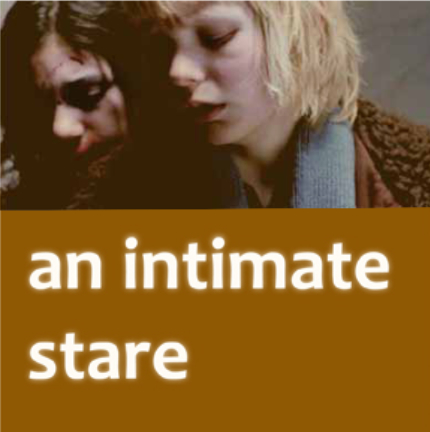
  • THE WOMAN IN BLACK

       The fury of a mother believing her son was stolen from her…later, left to die.  Her endless search for justice—or maybe endless vengeance… going way past an-eye-for-an-eye.

    A young father dealing with the loss of his wife in childbirth.  He struggles to crawl out of the place he has escaped to…he knows his son needs him.   But the pain of feeling is nearly unbearable.   Now he is threatened with losing his job—his work record has been poor since her death. He knows he and his boy stand on the edge of disaster.The last thing the young man needs is to enter this woman’s world—yet he has no choice, if he wants to save his
    job.  The house where this woman hanged herself needs to be
    sold, and his law firm demands he settle the paperwork. “This is your final warning,” is how the head of the fir
    puts it.

    The man, Arthur Kipps (Daniel Radcliffe, veteran of the Harry Potter series) comes to a town haunted by unending tragedy.  All Arthur wants is to take care of legal business but he is unwelcome.   He cannot understand the reasons all at once.  Everyone in town wants him to gather the papers he needs—and get out—now.

    But Arthur can’t do what is necessary without staying a while and investigating a house no one wants any part of.  Everyone in town fears that the vengeful woman’s spirit haunts this house.  If her spirit is disturbed in any way, the town will suffer more tragedy; they already have suffered deeply.

    Arthur needs to spend time there, with only a small dog for company.  Some of these stretches will feel like your standard generic haunted-house movie: the mysterious noises, the ghostly figures emerging in silence, the white faces of dead children standing motionless in the rain, the creepy wind-up toys banging cymbals or shakingtheir tambourines at the most suspenseful moments.

    image

    Arthur–no choice but to deal with the house and its legacy

    Yet Arthur’s character takes this story in some new directions.  His personal tragedy (the death of his beautiful young wife) gives him courage.  Whatever spirits and ghosts he runs into, they can’t do much more to him than life already has.  The house hasn’t got much that can really scare him—he has a job to do, and he is already numb.  You don’t expect him to run screaming out of this house unless it’s something really serious.

    image

    Personal tragedy has left him with little else to fear

    The irony is that people in town are exactly right—any time the lady has a reason to appear, children will die. And anyone who sees her (Arthur the most likely)—spreads death like a contagious disease.  Her presence at the house is unmistakable—Arthur sees her again and again.  Just glimpses, but enough.  The first child Arthur sees face to face in town dies that day; she drinks lye before anyone has a chance to save her.

    Everyone is positive this girl won’t be the last to die—Arthur has seen the woman,and this makes him a sure messenger of death.

    image

    image

    Three more children, swept up in Jennet’s spell

    You learn that the vengeful woman in black, Jennet, lost her son to her sister, Alice Drablow.  Her son Nathaniel never got the sweet, loving cards Jennet sent him—Alice hid them.  Alice even got legal papers signed to keep Jennet from visiting.  Later on, Jennet came to believe that Alice left Nathaniel to die when their coach sank into mud on the causeway between the house and the mainland.

    You watch the movie, and wait to see who in town conspired with Alice the most.  On whom the vengeance needed to strike the hardest.  And ironically the answer is no one—there are no more dirty secrets.  At least none that the movie tells you.  The
    Woman in Black’s plot actually reminds me less of an English ghost story than those of recent Japanese horror movies
    such as The Grudge or The Ring—where an avenging spirit will hurt anyone it comes across, guilty or innocent.  All it wants to do is lash out—at everyone and anyone.

    Arthur doesn’t understand all of this yet.  He knows that Jennet’s spirit has found no rest…and how the deaths of children in town took place.  All of them appeared to be under a deep spell.  They suddenly stopped whatever they were doing, and walked out of windows, or walked into the sea.  The second girl Arthur saw dies by setting herself on fire. What he does believe in is justice, and
    bringing the deaths to an end.

    He is searching for a way to make everything right.  His wife’s death could have affected him in radically different ways.  He could have become uncaring…believing the Universe is uncaring; why should he care about anyone.

    Or his pain could have made him determined to do the best he can, whenever he can, even when he is tempted to slide back into not caring, to escape his own pain.  Watch him put a tiny bird back into its nest while he explores the creepiest room in the house.   Then a crow screams, making him jump.  It lands on a bed.  But Arthur means to do the right thing and let it escape—and he makes sure he does.

    Eventually he decides he must re-unite the woman’s spirit with the body of her dead son…even though he must risk his life pulling the child’s body free from the thick black mud surrounding the causeway.  Many of us who have experienced sorrow will later make a similar decision–we need to do the right thing.

    The film-makers tried to find a middle ground between the quiet, subtle, almost mannered approach of The Innocents, or The Others, and the loud, slam-shocks and close-ups of Drag Me to Hell or Se7en.
    The shocks do tend to be loud in volume, but with hardly any blood, let alone body parts getting chopped off.  Their goal
    was not gore. But they did not want a stuffy period piece either.
    This is no Masterpiece Theater.

    One of the few movies I remember close to this one was the much underrated 1979 film The Changeling, with George C. Scott.  Like
    Arthur, John Russell (Scott’s character) is grieving family deaths, and like Arthur, he has no intentions of confronting any ghosts.  But his exploring an old house frees a spirit looking for justice over a past wrong.

    That story was probably a more traditional one—revenge is visited on the guilty—and only on the guilty. Too many of the concrete facts are left out in The Woman in Black. You are never told for sure, but it appears that Jennet never had the chance to revenge herself on her sister.  In some way, Alice was able to escape Jennet’s reach, her hatred.

    Jennet’s spirit became the proverbial bottomless pit—no amount of vengeance could ever satisfy her.

    Many say there are no new stories to tell…and they have some convincing arguments.  But there are not many stories like this one; a spirit of pure hatred, face to face with a character who has almost gone past fear.  An individual struggling to find meaning in the death of someone they loved deeply. You don’t get a twist ending, at least not the kind you have grown to expect the last twenty years or so.  Instead, this story brings you to a conclusion that clearly shows you what each individual carries with them.  Many American Buddhists are taught some variation on the following: Don’t look at the notion of karma as simply, We all get what we deserve.  There’s a lot more to it.  You can look at
    the ending as plain and simple…or something more subtle, that you need to think more about.  I really don’t want to give anything more away, to risk ruining it.  See it, judge for yourself.

  • WHITE ZOMBIE

          There are some movies that bring out a wide range of opinions.  Lots of people really like them.  Lots really hate them.  Plenty of people are scattered in-between.

       White Zombie is one of those movies. There are plenty of reasons.  Not all the acting is good. Some is plain bad, especially that of the hero and heroine.  White Zombie was made just after the silent-film era ended.  Like many early talkies, some of its acting feels awkward, dated.  In addition, this movie was made on a low budget, and this hurts it at certain points.  (One major flub was accidentally left in; look closely when Silver, Beaumont’s servant is thrown into the water near the end.)  You also find humor, possibly too much humor, especially one running gag that wears out pretty fast.

    Then why do other people like it so much? First, its atmosphere  is often genuinely creepy.  Again and again, you get a feeling that characters are in way over their heads, trying to deal with forces
    they are ignorant of.  Forces they are unable to fight, even if they understood them better.

    Beaumont, the sleazy rich man may remind you a little of Mickey Mouse in The Sorcerer’s Apprentice.  He has played with magic and now the magic is pulling him under, drowning him.

    Bela Lugosi’s character, Murder Legendre is the zombie-maker that Beaumont has paid to turn the woman he loves into a zombie.  Legendre is more than idle talk, way more.  He has the powers he claims to have.  Soon Beaumont is realizing the terrible price of dealing with Legendre.

    Lugosi’s best known character, Count Dracula was pure evil, with no redeeming features.  But for many years now, he has become a rather clichéd character. He has some of the vampire’s traditional powers, but you don’t  see him use these powers much.

    Legendre is also pure evil, but more than Dracula, he is someone capable of doing real damage.  Along with Beaumont, you get to see his evil potential.  Legendre and the Sayer of the Law in The Island of Lost Souls are probably Lugosi’s all-time best roles.
    image

    Murder Legendre–perhaps Lugosi’s best role

    The story seems pretty straight-forward…at first.  The beautiful Madeline has come to Haiti to marry Neil, after a long engagement.  Beaumont, the rich. man Madeline meets on her way there, has fallen wildly in love with her.  To turn Madeline into a zombie and keep her his captive, Beaumont has made a deal with Murder Legendre.  Beaumont hopes that he can make the zombie-Madeline fall in love with him.

    It is up to Neil along with an old missionary, Bruner to get Madeline away from Beaumont.  Bruner is the only character who knows enough about voodoo to match Legendre’s powers.

    Why else does White Zombie work?  It deals for example with this frightening question:

    What might it feel like to experience your human qualities, the capabilities you take for granted, begin to  slip away from you?  To turn powerless, or into a zombie, unable to think?  Except for some of David Cronenberg’s imaginative films (for example,
    The Fly, The Brood, Videodrome, Naked Lunch),   It’s a question that not enough horror movies ever deal with. The Thing (1982) which probably included the best special effects to that point, never really goes there.

         White Zombie is able to open this frightening door a little.  This is a scene with Legendre and Beaumont and you don’t want to be in Beaumont’s place. Legendre is reminding Beaumont of the day they made the deal for Madeline’s soul.  At that moment Beaumont had refused to shake Legendre’s hand. (Beaumont is the kind of arrogant aristocrat who hires others to do his dirty work.) Now, Beaumont’s hand has turned useless.  You see him
    vainly trying to prod or twist or flex some life back into it.

    Nothing works.  Beaumont can no longer speak, but he is still able to hear.  Legendre reminds him of his past insult.  He tells Beaumont that he, Legendre, has turned men into zombies before, but Beaumont is the first to know what was happening to them.   Then he adds, “We understand each other better now.”

    Beaumont makes a small, pathetic try at touching Legendre’s hand with his own.  Legendre pats the useless hand, then walks away while Beaumont continues to struggle. And like him, you sit there letting your imagination do its worst.

    In addition, a lot of White Zombie’s power comes from its taking place in a Third-World country in which an ancient folk tradition, voodoo, is as strong as organized religion.  Of the American and European characters, only Bruner has the knowledge to deal with voodoo.  He tells Neil straight out that the authorities in this country are too intimidated by magic to come to their aid.

    And here is where the movie gets into questions of political correctness and racism.  It can’t avoid them, when you think about it.

    You can say “Well… this is the 1930’s and these characters are typical of that (pre-Civil Rights Era) time. They are probably scared as hell to be the minority race—White.”   One of Neil’s comments is particularly racist; “Alive…in the hands of Natives?  Better dead than that.”

    But I think if we are honest with ourselves, some of that feeling still exists in white people now.  For example, you feel a big relief when Neil, Madeline, and the coach driver are finally off the road and safe on Mr. Beaumont’s property.  (Keep in mind, the driver who is Afro-American, is more afraid than they are.)

    image

    For me, the Black-White issues are definitely part of the ominous quality you feel.  But if you are not White, you can still find things to be scared about.  The zombies who stay with Legendre, ready at any time to do his bidding are all White men.  But they are slaves.  Their power to function, think, and feel has been torn out, obliterated out of them by Legendre. They are no better off than the zombies at Legendre’s mill, whose entire existence comes down to turning the creaking wheel in that same endless circle, hour after hour after hour. In an understated way this is one of the creepiest moments in the movie.

    image

    The mill

    Keep in mind too, that White Zombie was made during the worst of the Great Depression.  In those.days, mandatory overtime was a lot more than a temporary inconvenience.  Nobody knew yet if the Depression had bottomed out or how much longer it could go on.  Conditions today are not as tough.  But most of us (whatever our race and ethnic background) know, or at least know of, someone older, unable to retire, forced to work at Wal-Mart, or some supermarket or mega-pharmacy. White Zombie taps into those fears too.  For many people in the early 1930’s, jobs not much better than in Legendre’s sugar mill were all that stood between them and homeless life.  Those were the only choices left.

    Before the Depression hit, supernatural themes in American movies were rare.  In those movies, characters would stay in haunted houses and see ghosts, for example. But almost without
    exception the magic and the ghosts turned out to be fakery at
    the end.  Explanations turned out to be rational and realistic.

    Here, things feel bleak and out of control.  Legendre’s hands hold a candle wrapped in Madeline’s scarf, and he squeezes the candle into the shape he wants.  At the same moment Madeline starts to
    give a corny, conventional wedding toast, then suddenly looks into her glass and says “I see…Death.”  She collapses and appears to die.  Intense stuff for a mainstream American movie.

    image

    Madeline

    Some of the music is effective too.  The funeral chant as the
    movie opens is another reminder that you are now in an alien
    land.   Much later Neil finally reaches the castle where Madeline is a prisoner.

    You sense their souls reaching out, trying somehow to contact the other.  The hymn Listen to the Lambs, hummed, with no musical accompaniment, is eerie and dramatic at this moment.

    Pick a night when you’re feeling patient and open to. suggestion, the darker and quieter the better.

    Forget about some of the bad acting and dialogue, and concentrate on the atmosphere.  White Zombie may very well
    surprise you.

  • THE BROOD

         Many of us have heard about “cycles of family violence. “  How this violence is likely to pass down from the abused child to their children when that child becomes a parent.  Maybe you are talking to someone about a painful childhood, and suddenly they stop and say, “I’ve become my father.”

    Or my mother… take your pick, whatever applies.   If you know enough family history, you may even be able to trace the inheritance of abuse from generation to generation, until someone is able to put a stop to it.
    Psychologists call this “the break generation,” the one who
    ends the cycle.  One example was John Lennon, an abandoned
    son himself.  (To be fair to Lennon’s father, he did offer John the chance to live with him and was turned down, when John was a young child.)

    Years later, Lennon chose the life of stay-at -home father while his second son, Sean was growing up.  He also worked hard to make up for the time he had missed with his first son, Julian, after he and Julian’s mother were divorced.

    Most of us have heard stories about physical manifestations—people so ill for example that they fantasize about being crucified, and then develop marks on their hands as though nails had been driven through them.

    The Brood plunges you straight down into a bad dream combining these themes:  The cycle of family violence, and the stories of physical manifestations.  I don’t want to give away too much as to who—or what, the Brood are, except to say that they are child-like beings.  And that certain abused people can use them to strike out at those who hurt them.

    Frank, a divorced father with a young daughter, Candy, believes his ex-wife Nola is abusing Candy, and that he needs to keep Nola away from her.  Frank has plenty of good reasons for his suspicions.  He can see bruises on Candy’s back.  Second, Nola has committed herself into a psychiatric institute, known as Somafree.

    Somafree is run by Dr. Hal Raglan, whose therapy methods are controversial.  Some call him a genius. They rave about his book
    The Shape of Rage concerning childhood abuse. Others, some of Raglan’s former patients, say he has made
    them worse, and are preparing lawsuits against him.

    Frank has seen moments of Raglan at work with patients when he visited Somafree to pick up Candy.  He can see the man’s
    charisma, and his sharp insights.   But Frank can also see a
    man with an ego out of control, taking people to places where they may well be dangerous to others and themselves.  And there is no mistaking the bruising that he sees on Candy. Raglan’s approach is for Nola, like his other patients, to confront her rage toward her parents.  Nola’s mother is an alcoholic who abused her and continues to deny it happened.  She still drinks heavily, even when Candy is with her.  Nola’s father Barton was a weak man who stood by and let the abuse go on.

    The director David Cronenberg has talked about how personal feelings concerning his painful divorce went into writing and directing The Brood.  The stories are most insightful. But the movie itself is the ultimate proof of those intense emotions, and of his directing skill.

    Years ago, one critic described The Brood as Cronenberg’s one good film.
    At that time, this was arguably a fair criticism.  But since
    then, several other Cronenberg movies have shown this picture was no fluke.  Many people have their own personal favorites he
    directed, mine being perhaps his warmest and most hopeful,
    The Dead Zone.

    Cronenberg has been successful recently with two  mainstream movies, A History of Violence, and Eastern Promises. But years ago, he was known as a cult director with a reputation for the bizarre and the grotesque.  Martin Scorsese actually said he had been frightened about meeting Cronenberg for the first time.  (Cronenberg described Scorsese as someone “who should have known better.”)  In the media, Cronenberg was known as “the king of venereal horror” and worse.

    In these movies, ordinary people’s bodies went through incredible changes, disturbing, at times disgusting. They Came from Within: Human bodies were invaded by strange parasites described then as a cross between a penis and a large turd.  One character lies on his back, watching the outlines of the parasites as they move through his body.  Rabid:  a woman develops a
    hypodermic growth in her armpit that kills the men who embrace
    her.

    In The Brood, Dr. Raglan has been able to get some of his patients to express their anger into physical manifestations: marks on their bodies, or worse, tumors, “lymphosarcoma.”

    But with Nola he has gone much further. She has actually given birth to living creatures—other people at the Institute have mistaken them for children. These creatures, her brood, have a clear sense of who it is that Nola feels angriest with.

    Possibly a child advocate could argue that
    this movie exploits violence against children for the sake of
    horror.  They are definitely entitled to their point of view.

    My opinion:  this movie is much more than
    that.  It’s much more than the bad guys getting what they
    deserve, or a bunch of evil children who kill teenagers after
    the teenagers have sex

    .image

    A glimpse of the brood–in the house where Nola grew up

    The bad parents do get a kind of justice.  But innocent people get hurt too.  Cronenberg’s screenplay is not perfect but it’s good enough to make you care a lot about the main characters. For example, you feel Candy’s pain over and over again.  A sweet little girl who has never hurt anyone.  She is torn between two parents who both love her. She nearly sees her grandmother killed, then is terrorized by the same creature who did the killing.  You don’t realize until much later that she knows who these creatures are. Later they enter her classroom and quietly walk away with her into a snowstorm;  a scene that is poetic in the grimmest kind of way…one of the best moments in any Cronenberg movie.

    image

    Nola’s venomous wishes–made real

    You can criticize the ending as kind of clichéd, possibly a cheap shot.  But the image you are left with is something else—Candy’s sad, hurt expression as she sits in silence.

  • 28 DAYS LATER

        It would be easy for zombie- movie fans to take this film lightly.   To call it a combined rip-off of the Night of the Living Dead/Dawn of the Dead/Day of the Dead series, the under-appreciated early 70’s movie The Crazies, Stephen King’s The Stand, and lots more you will probably remember.  Technically it isn’t even about zombies, but people infected with a virus.

        But writer Alex Garland and director Danny Boyle have taken some familiar elements and given them a freshness, an originality, even a vision, that is uniquely their own.  They have come up with a plot that is simple but tight, and well-drawn characters. They also give you several subtle reminders as to how precious our stressed-out, early 21st century life can be, as aggravating as it feels day-to-day.

         This movie could have taken a paranoid viewpoint, with mega-corporations uniting to enslave the world with disease.  Instead you see a series of careless errors that come together to set off bigger and bigger explosions.  First, scientists create a virus called Rage.  Then they test it on chimpanzees which are locked in cruel confinement (tiny glass tanks).  The Rage virus turns the chimpanzees into killing machines ready to go off at any time.

        Then, animal rights activists liberate them.

        The activists really want to do the right thing.  Given the amount of abuse done to apes in the name of science, these activists refuse to believe a researcher who tells them they are making a terrible mistake.  They react to this man like he is “the boy who cried wolf.”  Only this time it’s no bullshit.  With their idealistic
    animals-rights agenda, they are literally letting a plague loose
    on the world.  Not only do the infected chimps attack the first human they get their hands on, but in a matter of seconds you can see that she has been infected too,  just from the look in her eyes.

        Ignorance, coupled with foolishly dangerous, misguided science has resulted in a situation far worse than a conspiracy-theory believer could dream up.

        The movie’s hero, Jim, had been hospitalized for injuries from a traffic accident.  He awakes to silence that feels deafening .  Silence so thick you could cut it with a knife.  Outside the hospital,  he can see the usual pigeons and gulls but otherwise the city is lifeless; all is still, unmoving.  No people to be seen anywhere.  Familiar sights, the Tower of London, the Houses of Parliament, but everywhere the same deathly silence.

    image

    A bizarre dream–London without people

         Jim is not normally a man of action.  For a long time he wanders, not sure how to react. Ironically, the first living human he sees is a complete lunatic, a minister in his own church, a place you might
    well expect to serve as some sort of sanctuary. Jim pulls out of his apathy long enough to bash the minister with a bag full of metal cans.  This allows him to stay alive.

        After more wandering, a group of maniacs spot him.  Jim runs but you wonder how much further he can get.  At that moment he meets the first normal people he has seen, Selena and Mark.  They rescue Jim by setting the maniacs on fire.

    image

    Jim–One mistake can be fatal

          Jim can see that neither Selena nor Mark has been a soldier or police officer, but they have quickly learned how to survive in this new world. Selena quickly tells Jim there has been a plague, but not to ask too many questions;   “Staying alive is as good as
    it gets.”  The rules she and Mark follow are simple: never go anywhere alone, and never go out at night, unless absolutely necessary.  You soon learn one more valuable rule—if anyone you know catches the disease, you kill them with no hesitation.

        Selena and Mark go with Jim for a last visit to his house.  Because it’s too late to walk back to a safe place before dark, they sleep there till the next day.  While Jim watches videos of his dead mother and father, a man enters through a window.  Clearly infected.  Mark and Jim are soon covered with blood while they subdue him.  Suddenly Selena kills Mark.  She tells Jim she knew right away that Mark was infected, by the expression on his face.  She is quick to add,  “ I’d do the same to you.”

    image

    One bite is all it takes

     Eventually, Jim and Selena find two more survivors living in a high-rise building, Frank and his daughter Hannah.  Holed up in this apartment, they hear a radio message promising help and safety, at a location near the city of Manchester.  After some hesitating,
    they decide to drive there.

    image

    Exposed and vulnerable

         Even though each attack by an Infected (as Selena calls them) is gruesome and thick with spattered blood, you are shown one reminder after another of how life was, how precious.  A life you probably take for granted, waking up each day and telling yourself something to the effect of—Same shit, different day.

        Only after this holocaust can people see the small touches of happiness they once had.  Jim’s family in the video, his mum’s book of recipes.  The goldfish in Frank’s apartment, trying to survive in just a few inches of water.  Some beautifully shot scenes of horses running wild in the countryside outside Manchester.   Jim
    feeling the breeze through the car windows.  Selena and Hannah playing cards in the back seat.

        They find the city of Manchester burning, but. also find the people who had been broadcasting salvation.    These people are
    army personnel and at first they seem decent enough.  Major
    West, the officer in charge, appears to have the trust of his
    soldiers.  He shows his practical side (keeping an Infected man chained, to see how long he will take to starve to death).  Also a touch of the philosopher: People were killing people before the
    plague hit, he says, and basically nothing has changed.

        But Major West is nowhere as sincere as he seems.  His radio message promised “salvation” but he is far from any cure for the virus.  He tries to justify the lie by saying he had no choice, that his men were on the brink of despair and suicide.  “I promised them women,” he explains.  “Women mean a future.”

        But for the soldiers, a future starting a new extended family is not a goal.  What they want are sex slaves, pure and simple.  They are ready to kill anyone standing in the way, whether it’s another soldier or Jim.

        For the first time, everything depends on Jim. (Frank was accidentally infected, and shot dead by two of the soldiers.)  To save Selena and Hannah, he must outwit more than a half-dozen armed soldiers, none of them exactly filled with compassion.  Without spoiling the ending, I will say this:  The next time Selena sees Jim, she is shocked to find (almost too late) that he is not one of the Infected.

        I enjoyed this movie the first time I saw it and it appears to get better each time I see it again. Selena and Jim’s parts are both written well and acted well.  (Naomie Harris is Selena; Cillian Murphy is Jim, both real good.)  Selena’s changes at many crucial moments from pure survival instinct back to a yearning to get close to people is touching.  Watch her face just after the wild horses have passed. She says to Jim, “I was wrong about saying: ‘staying alive is as good as it gets.’”

        You see the gradual changes in Jim.  At first he seems almost clueless, hoping he can avoid taking action,  not knowing how to take action.  You see a huge change in Jim when he realizes what
    the situation at the army camp really is.  Christopher Eccleston who has had plenty of experience playing men in pain  (Jude, A Price above Rubies, Let Him Have It) is all too believable as Major West .

          Those in positions of authority turn out to be as desperate (probably more desperate) than those people who came to them for salvation.  The Major appears to be saying to Jim: giving these women to my soldiers is the best I can do, under the circumstances.

         I could go on and on about a number of other characters and actors, but I’ll leave it at this: No one strikes a false note in this movie.

         The screenwriting and the directing are also excellent, though there are so many tilted shots you feel at times like you’re back watching the Batman TV show of the 60’s.  The digital photography which worked so effectively in Saving Private Ryan works well here too.
    And as horrible as the scenes with Infected attacking are, so
    many moments are just as effective in their still beauty. Not many movies are able to make you jump out of your seat at one moment, then silence you with stillness at another.

  • DEAD SILENCE

        Dead Silence sets its aim high, especially for a recent movie.  The filmmakers clearly wanted to tell an original story, not something re-hashed from bits and pieces of other plots.  They wanted the characters to be more than obnoxious people having lame conversations and casual sex before dying.
    Dead Silence also tried to blend a rather subtle, ghostly, haunted house atmosphere with a scattering of violence severe enough to give the movie an R rating, and an optional Unrated version.

        This is asking a lot—making a blend like that.  But Dead Silence achieves many of its goals. It wasn’t a big box-office hit, although it didn’t bomb either.  Still, this lack of success is saddening,
    considering how many uninspired sequels…and even Parts #3-4’s to various routine stuff are being made recently.

        What are some of the major goals that Dead Silence succeeds at?  Let’s go through some.  Story.  Characters.  The swings in
    atmosphere mentioned previously.  Then the acting. Ryan Kwanten, the Australian actor playing the hero Jamie, never overdoes it.  Yet his love for his wife and his unwavering search to bring her killer to justice give him courage which shows in all his scenes.  In just a few minutes near the beginning of Dead Silence, you get a sense of two people (Jamie and wife Lisa) who have truly bonded.

    image

    Miles away, many years later, the curse still reaches Jamie and Lisa

         After her death, Jamie is willing to go straight into Hell for answers, whatever his journey may bring.  (A good example: the scene where the clown says to him, “Come closer…”)

         Jamie and his wife Lisa had found a dummy delivered to their apartment.  No return address. Thinking nothing of it, Jamie goes downstairs for take-out food.  When he gets back, Lisa is dead.   And suddenly Jamie is convinced the dummy killed her.

        Dummies started showing up in movies at least as far back as Dead of Night (1945), possibly earlier than that.  Even Anthony Hopkins, more than 30 years before taking on Dr. Hannibal Lecter, made a movie with a dummy, Magic.  Fortunately, Dead Silence is not a slow build-upleading to a dummy gradually taking over someone’s mind, with one person after another telling that same character, “Oh… you’re just letting your imagination get the best of you…”

        Jamie returns to his home town, Raven’s Fair, a small, quiet, isolated place.  Years ago it was prosperous, now it is rundown for the most part.  He already has a good idea of what and who he is looking for.  As a kid, he and his friends had heard stories and scary rhymes about a lady named Mary Shaw.  Jamie believes there is a connection between her and the dummy that killed his wife.

        Mary Shaw, a resident of Raven’s Fair, had disappeared years before, but she had been famous in the town for her dummies and dolls.

         For years now, Jamie had been out of touch with anyone in the town.  He never got along with his father, had no idea that his father had remarried. (Bob Gunton, so powerful in The Shawshank Redemption as the corrupt warden, is effective as
    the father.)  His new wife, much younger than Jamie’s dad, hardly mentions Jamie’s grief, and generally seems a little too friendly to him.

        Mary Shaw’s memory still holds a power in this town, especially for the undertaker and his wife.  As frightened as the undertaker is, his wife is much worse—talking to herself, or to someone else only she can see… hiding from time to time in the crawlspace and basement.

       A New York City detective (Donnie Wahlberg) has followed Jamie to Raven’s Fair.  He doesn’t have enough evidence to arrest him yet but he is sure Jamie committed the murder.  He also doesn’t want Jamie to bury the dummy. (Something  the undertaker’s wife tells Jamie he must do.)

    image

    Jamie–Lisa’s death makes him follow the clues, even if he
    must die to do it

         At last, the undertaker is willing to reveal what he knows about Mary Shaw.  His story is similar to what Jamie remembers hearing as a boy.  Mary lived alone with her dolls and dummies, and was a skilled ventriloquist. Occasionally she did an act at a stately theater located on a lake.

        But there is more.  The undertaker still has intense memories of the last show that Mary did.  He was a sensitive young boy then, very polite, very respectful.

        But another boy at that show was the opposite—rude and disrespectful.  This boy criticized Mary’s skill (he yelled out he saw her lips move while she did her act).  Not long after, the same boy disappeared and was never seen again.  Then several others from Raven’s Fair disappeared too.  Shortly after, Mary  disappeared.  Later, you learn that it wasn’t the boy’s rudeness so much that angered Mary.  It was his suggesting that her dummy Billy wasn’t real.

         Some of the plotting seems a little far-fetched.  You generally didn’t see that much rudeness in small-town America at that time, except where people had big class differences.  Another thing; after all these disappearances in Raven’s Fair, wouldn’t the FBI or at least the state police be called in?

        But as unlikely as you would expect, two scenes here are the strongest in the movie.  First the undertaker’s memories of going down to his father’s workroom to get another look at the dead Mary (his father was also an undertaker). Second, the old photos of Mary’s victims seated grotesquely next to each other, their mouths mutilated.

        The undertaker is afraid to help Jamie more than this.  Jamie goes to what is left of the theater where Mary did her last show, and to Mary’s home near-by.  Here he finds some of her  sketchbooks, featuring designs for more realistic dummies (very creepy, although the pages look way too clean, considering  their age).  Jamie’s father also fills in some of the story from years ago.   The rude kid at the show was Michael Ashen,  Jamie’s great-uncle.
    Jamie’s family and their friends killed Mary Shaw.

      image

    Mary and one of her children 

       Plenty more plot twists and turns are still to come.  But
    perhaps the most frightening scene is only a brief suggestion;
    that Michael was not killed right away, but slowly turned into a
    doll by Mary.

       Again, it is sad that Dead Silence did not do better in theaters (I need to check out how the video has done).  Meanwhile, the same director’s Saw, a much cruder, less imaginative movie, has already been followed by one sequel after the next.  I found it original, but not much more than that.  I’m thinking I need to watch it again, and then figure out if I missed something.

  • DUST DEVIL

        Dust Devil comes from a long tradition of stories with basic plot elements in common.

       They share these things:  Modern, well-educated people find themselves up against something straight out of an ancient legend/ folk-tale/ mythology.   These people must  overcome their
    disbelief,  then turn to traditional or ancient weapons.  Not contemporary science, which proves to be powerless.

        They must look to someone who knows the old legends…or perhaps, to some native shaman, wise man or magician who is familiar with the magic tradition in the myth.   Only they know what to do next.

        Dracula, The Exorcist, Curse of the Demon, Poltergeist, and The Last Wave all have subplots similar to this.   Remember the
    intimidating medical tests Regan must suffer through, in
    The Exorcist none of them doing her any good.  Modern science has great powers… but not over everything.

        But this formula is no guarantee of success—think of The Sentinel (1977) and Blacula, and lots, lots more.

        You get the broad outline of the
    Dust Devil mythology in voice-over as the movie begins.

        “The desert wind was a man like us; then grew wings and flew like a bird.  He became a hunter, like a hawk, and took refuge in those far corners of the world where magic still lingers.  Having once been a man, he still suffers the passions of a man…”

         How real will this legend feel to you?  That depends on another question.  It depends on how well you can accept the Dust Devil in human form; a man sounding and looking something like a young Clint Eastwood (High Plains Drifter, Pale Rider for example), wearing a long coat decorated with human bones.

      He is photographed in a way that reminds you of Eastwood in Sergio Leone’s films and later, in Eastwood’s own.

    image

    Listening for signs of life in the desert

    You see him first alongside a highway in a desert resembling the inferno–inside the nation of Namibia.  He is pressing his ear against the highway, which seems so empty that he is in no danger.   Soon a car driven by a lonely woman stops; she offers him a.ride.  Then… not much later, the chance to stay at her
    house.  The gardens and house feel like a speck of color in an endless wasteland.  Soon they are in her bed.  The Dust Devil breaks her neck, killing her it seems, in mid-orgasm.

    image

    Lovemaking abruptly cut off by killing

        He stops long enough to light several candles
    in her bedroom.  Then he uses her blood to sketch ritualistic drawings on the walls.  He cuts off several of her fingers then carefully saves them.

    image

    One of the drawings the stranger leaves

        Next, he finds a can of gasoline and sets fire
    to the house.  Much of it burns but definitely
    not all.

       The phone rings for Detective Ben Mukurob.  First he ignores it, thinking it is one of his sad,  frightening dreams.  He has had a lot of those dreams recently.  Except for a large dog sleeping close-by he appears painfully alone.

       Soon after, Ben gets another call, describing the burned house.  Your first impression may be (as mine was) that he is too cynical to care.   But that impression is very wrong.  He takes his job most
    seriously.

        Meanwhile, in the neighboring country of South Africa, Wendie, a home-maker in her twenties is arguing with her husband, Mark.  She makes up her mind to leave him and drives away.

        At the dead woman’s house, Ben speaks to his supervisor.  The boss is sure that this is the work of terrorists.

    image

       Ben–determined to bring in the killer

    Ben is equally sure it is not.  The political situation in Namibia and South Africa had changed recently, stabilizing in some ways.  Terrorists are less common now.

        Dust Devil does something uncommon:  voice-over is used to
    continue telling the unfolding plot.  As Wendie keeps her word about leaving, the narration continues:  “Out of the flatlands she came.  Into the drylands…He had been calling her…drawing her to Bethany…”

        Bethany, the Namibian town is indeed dying: no rain for seven years, its one major industry already shut down.  Wendie, in her car, and the Dust Devil in a train, have both picked Bethany as their next stop.

        More narration: “He sifts the human storm for souls.  He can smell a town waiting to die.”  You feel that Wendie and
    Dust Devil inevitably will meet;  it is only a matter of
    time.

         At the same time Ben talks to the coroner about the victim’s remains.  Neck broken, the drawings on the walls sketched  in her blood, probably mixed with body fat, iron ore, and kaolin (clay).   The coroner, a white woman, tells Ben who is African, that the
    killing is tied in with witchcraft.  She recommends he speak to a sangoma, an expert on witchcraft rituals.

       Ben has an old friend Joe who is a sangoma.   But the detective has turned his back on magic and rituals.  He aims to be more like Sherlock Holmes, or one of the CSI team, staying with rational,
    purely scientific explanations.

        As if it was fated, Wendie and the Dust Devil cross paths.  Wendie gives the stranger a lift, and immediately you feel the mutual attraction. They talk on and off; suddenly Wendie sees him on the road and realizes he is no longer in the car.  Hours later, alone in a motel room she takes a bath.  She makes a sudden
    decision to slit her wrists with a razor then abruptly changes
    her mind.

    image

    Ready and waiting for Wendie

       The Dust Devil can sense her wish to die.  He waits in the motel bedroom.  Wendie knows he is out there.  Next morning, as she prepares to drive away, he is already sitting in the car.

        Their attraction continues to grow.  They stop at another motel, dine in an outdoor café and dance to country and Western music played on loudspeakers.   In the motel room, they have sex.

        But afterward, the Dust Devil talks–more than he ever has before.  “You don’t understand…This wind keeps blowing me on and on…You don’t know who I am…”

        He showers and Wendie looks through his collection of snapshots.  They seem harmless enough. Then she finds severed fingers and knows she is in grave danger.  The Dust Devil tries to comfort her with the truth—“all these people wanted to die…I was only the midwife…”

        But Wendie no longer wishes to die.

         “You picked the wrong one this time, you bastard!” She drives off.

         Ben changes his mind; he talks to his old friend Joe despite his own doubts about magic.  Joe tells Ben that this is the work of a
    shape-shifter.  He adds, “You’ve got to stop thinking like a White man and start thinking like a man instead.”  He pleads with Ben to
    take a carved stick  with him, and keep it close. The stick has the power to bind the Dust Devil, to root him to the ground.

        Ben, with his strong faith in science and logic, has trouble believing this.   “You’ve been watching too many drive-in movies,”  he says, but does let Joe give him the stick, before leaving for
    Bethany.

          Wendie wanders out into a seemingly endless desert, followed by the Dust Devil, Ben, and Mark. All but Mark catch up to each other in a ghost town, every building with floors covered ankle-high in sand.

         Dust Devil deserves praise for originality in several  elements.   The music by Simon Boswell takes on many forms.  At times it feels reminiscent of Ennio Morricone’s work in Sergio Leone movies like The Good, the Bad and the Ugly and Once Upon a Time in the West.  Other times it is like a vocal chorus without words, as if the Earth itself is humming.  The photography is
    outstanding, showing the desert  barren, endless, devoid
    of color, a place where death is never far away and life is
    precious.  Check out the shot in the desert with the Dust Devil sitting absolutely still on a rock outcropping, and thirty feet higher up, vultures waiting calmly.

        Zakes Mokae, so good in movies like A Dry White Season and
    The Serpent and the Rainbow, is excellent a  the haunted Ben, and John Matshikiza equally good in the tricky role of Joe.  (He is also effective as the narrator.)  Robert Burke (Rescue Me,Munich) strikes most of the right notes as the Dust Devil.  To
    avoid leaving out anyone, the entire cast does the job.

        You may find still more influences that I missed out on, that have been borrowed by Dust Devil.

     Having said that, I still find this movie highly original and unusual.  I can’t recommend this one enough.

  • ONIBABA

       Japanese horror movies have become big box office in
    many countries now, including the USA and Europe.  Movies
    like The Ring have become household names.    Video stores stock the American-made English-language versions, and in many cases too, the Japanese originals.

       Onibaba is a much older movie (1964).  Some would argue that it really doesn’t belong in a site on horror films; that it is more of a war film or possibly an art film about the effects of war.

       In some ways those people would appear to be right.  It is not easy to find another movie in this site similar to Onibaba.  For example, it seems light-years away from The Ring.  Off the top
    of my head, I would probably say it is closest to Deliverance, shown from the crazed backwoods people’s point of view.  Onibaba, like Deliverance, shows people at their simplest and
    most savage.  It is not an optimistic outlook, to put it mildly.  The characters in Onibaba are in desperation.  The men have been forced far away, to fight a war that means nothing to them.  The old men, women and children left behind are finding it impossible to work their farms anymore. They are close to starving.  Already they have seen much bad weather. Strange omens of doom are signs of worse things to come.

       Onibaba takes place in a remote part of Japan, in land covered in grass taller than any of its human characters.  At night, especially, the grass sways wildly in the intense wind.  The movie starts by introducing two of the main characters, the Woman, and the Young woman, who is married to the woman’s son, now gone to war.  You never learn their names.

    For a long while, it has been just the two of them. They have done what they had to in order to stay alive; killing soldiers and selling their weapons and armor in exchange for food.  Killing has become as familiar to them as washing clothes, eating and going to the bathroom.  It is just something you do.  All their humanity appears to be gone.

    image

    Brutal times; the only way to stay alive

         Hachi, an old neighbor returns out of nowhere from the war.  He tells them that the man they have waited to hear about, son to one, husband to another, has died.  The man’s death was just one of a long series of horrors Hachi has seen.

          Almost right away, Hachi’s return creates a tense triangle between the three people, with each struggling for ultimate power.   All Hachi wants now is his old house, food to survive, to stay out of the war, and to be with the young woman.

          And that is enough to throw everything that existed out of balance.  The woman sees Hachi’s desire for her former daughter-in-law, and she is terrified.  Not because she cares about her, she is past caring for anyone.  But she absolutely needs her daughter-in-law, to help with the killings now that she cannot farm.  If Hachi takes her away, she feels that her life will be over.

    image

     Hachi’s return; a rapidly growing competition

         When Hachi first returned, he described a war
    with sides that meant nothing to any of them.  But now Hachi
    has started a new war; only three people, but they cannot live
    side by side.  Someone has to win; someone has to lose.
    At first the older woman seems to be the loser.  Strangely
    enough, it is sex that determines the battlefield.  Hachi and
    the younger woman are attracted to each other almost
    immediately.  When they start their affair, you can feel the
    heat; maybe it is their desperation, possibly more than that.

          For the older woman, intimidation is the only weapon left.  She tells the young woman stories about purgatory and a hell that sounds right out of Dante’s Inferno, with the most intense physical pain saved for those who indulge in extramarital sex.  The young woman is afraid but Hachi is not.  He tells her that he would risk hell to continue having sex with her.  And despite her talk you know that the older woman is tempted too by Hashi’s sensuality. She tries unsuccessfully to seduce him, and not just to break up the affair.  She desires him too.

          Things change one night the old woman is alone.  A samurai appears, wearing a grotesque mask.  All he wants is to find his way out of the sea of tall grass.  The old woman refuses at first, then seems to be intimidated into helping him.

          And here is where Onibaba finally starts to feel like a traditional
    horror movie.  The samurai talks about his mask, and how he
    needed it to protect his handsome face during combat.  The
    old woman has trouble believing him, the same way she has trouble
    believing anything positive anymore.  More and more, you feel
    the bitterness eating her up from the inside.  It’s no big surprise when she lures him into the same deep pit where she has
    thrown the bodies of the other men they have robbed.

         To get his armor and weapons, she needs to climb down to the bottom.  Piles of human skeletons cover the ground around his body.  Seeing them, wading through them, does not seem to bother the woman.  She talks to the dead samurai in a sarcastic way about his handsome face; she feels no sympathy.  He is just one of the many faceless samurai who dragged her son away to his death.   To her horror his face is not handsome beneath the mask but horribly scarred, possibly war wounds, there is no way to know.

          The samurai mask now becomes a weapon in the war between the three survivors.  The older woman puts it on, and uses it to play the role of a demon. In this way, she hopes to keep the Young woman home and afraid to leave.  Each time the Young woman leaves for Hachi’s hut, she. finds the demon waiting for her.  Knowing nothing about the dead samurai and fearful of hell, she does not suspect the other woman yet.

          But other forces (Black magic? Karma? The list is endless.) have been brought to life. Whatever powers the mask may have, each of the three must now pay a price.  As you would expect you are left with a lot more questions than answers:  Why won’t the mask come off the woman’s face?  Is her pain while she wears the mask only physical pain or is she feeling her terrible loss of humanity at last?  Has the mask been cursed by the dead samurai?  As the old song goes…Nothing is revealed.

        Well, maybe a little.  The director, then in his 90’s when Onibaba was re-issued on DVD, did talk about some of his ideas in an interview included on it.

        For one, he hoped to show that sex was more than just basic animal need.  It was the one spiritual experience available to these people in their ravished land.
    A brief scene of Hachi and the young woman running naked in a
    downpour shows this.  Its tone screams of freedom; it is so
    different from what has come before: the endless cycle of work,
    the voices with no expression.  The lust of the older woman
    too (which she spells out clearly to Hachi) is a need for love as
    well.  Only she cannot express this (a need for love, as well as the sex) until much later.  Her anger masks everything else about her.  Why wouldn’t she want to tear her inner mask of anger away, the way she longs to tear the real mask off her face?

    image

     A mask; and perhaps a look inside a soul

         But this is only one of many interpretations; people will find many other insights of their own, based on their own experience.  Onibaba may or may notscare you in the sense of making you jump out of your seat.   That is an individual thing.  But this is not all you can judge it by.  For a lot of people, Onibaba will stay with them a long time:
    Outside forces stripping you of pieces of your life and people you
    once loved.  Realizing those forces mean nothing to you; That
    your losses have been for no reason you can  understand. The
    theme of losing your humanity in a savage world.  The
    additional pain when another person finally makes you realize the
    pain of that loss.

     The word “important” has a bad sound to a lot of people…like
    a teacher saying , “This should be important to you.”  Still,
    Onibaba is an important movie, much more than
    just a good story.

  • HALLOWEEN

       A lot has been written and argued about Halloween.  It generated loads of controversyThe main reason for the
    controversy:  Halloween was soon followed by a huge number of “slasher” movies.  It’s hard to write about Halloween simply for itself, apart from what came after it.

    Three things cannot be disputed, though.   This movie
    was made cheaply. And it was extremely successful.   Third, Hollywood producers knew a good thing when they saw it.

    Its cast was unknown then, except for Donald Pleasence, best known as an off-beat character actor in The Great Escape and Fantastic Voyage.

       Halloween’s sequels tried to explain the mysteries with characters and past relationships. The original explained practically nothing.   I’m not sure if the filmmakers intended this, but these unanswered questions added to Halloween’s power.  Fear of the unknown can be devastating, and Halloween takes great advantage of our fears.

       The movie begins in 1963.   All seems fairly conventional; a typical teen couple makes out in the girl’s empty house.   They walk upstairs, the room goes dark.

        You realize that things are not normal, though.  You are watching these events through a third person’s eyes, a person wearing a mask. This unknown figure stops in the kitchen, and takes out a
    large knife.

       He/she stops a moment and watches the boy leave, then
    goes upstairs.

       A girl sits, brushing her hair, wearing only panties.  She only has time to say “Michael…!” before being stabbed to death.

       The masked figure goes downstairs.  The parents are just getting home.   “Michael?” they ask. The mask comes off.  You see a boy, about six, blonde hair, angelic face, somewhat dazed, mystified expression…

        Fifteen years later, a different town. Hard rain pours down as Dr. Loomis and a nurse drive the last stretch of road towards a hospital for the insane. Loomis’ voice is entirely cold, clinical, “He hasn’t spoken a word in 15 years.”  You know who he is talking
    about.  In the downpour, figures wander aimlessly across hospital grounds.

       Suddenly a dark shape jumps onto the car roof, then throws both of them out of the car and drives away.  It is one of those totally unexpected moments that makes you jump out of your seat and wonder how it all happened so fast.

       This is your introduction to Michael Myers, more a force of nature than a human being.  Nothing,  no one, can stop him for long.  What is equally scary; he is beyond communicating with.

       Loomis later describes Michael this way:“I first met Michael when the boy was six. After eight years, I was convinced he was pure evil.  I spent the next seven years making sure he could never escape.”

        You know that Michael will return to his hometown for Halloween.  Not knowing why makes it even scarier.   You cannot
    figure out what he wants.   But you must expect the absolute worst.

       Meanwhile, his hometown of Haddonfield appears to
    have forgotten Michael.  Another Halloween; everyone
    pretty much knows the drill.  You’re introduced to Laurie
    Strode and her friends Annie and Lynda.  None is sketched out in detail.

       You feel you know Laurie well enough, though. She is shy but has her feet planted firmly on the ground.   She has common sense, she is resourceful, loyal to her friends, and to the kids she babysits for.

        She is more reserved than Annie and Lynda.   A major difference between them: Laurie has no boyfriend.  But Laurie is no 70’s hardcore feminist.  At times she reveals her loneliness, her wish to
    find a boy she cares about.

        Laurie is the focus of Michael’s return to town.  Why Laurie, the movie never explains.

        A lot of the criticism of Halloween revolved around the connection between active sex and being killed by Michael.   The
    promiscuous characters seemed the ones much likelier to die.
    Strangely, Michael appears fixated on Laurie, someone who has
    never had an intimate relationship.

        You realize for sure that Michael is back when Laurie stops by the old Meyers house to drop off a set of keys there.  (Her father is a realtor who thinks he can finally sell this property again.)

         You see someone’s point of view from inside the house.  A figure suddenly emerges from the right side of the screen—a sign of things to come

       Meanwhile, Dr. Loomis is on his way, trying to warn
    the police about Michael.  The police don’t take him very
    seriously.  On the highway, Loomis finds an empty pickup
    truck, but in his hurry, misses the dead body of its driver,
    thrown into nearby bushes.

       For Annie and Lynda, Halloween is a chance to combine
    babysitting, sex with boyfriends, and socializing with
    friends.  Only Laurie is beginning to suspect that someone
    has other plans for them.

       In 1978, Carpenter’s direction appeared to over-use
    certain conventions… to the point of breaking cinematic
    rules.  Watching Halloween 30 years after its release, its camera work no longer seems so shocking.   Perhaps because many other directors adopted styles similar to Carpenter’s.

      One example is to show someone in danger, such as Laurie,
    in a close “one shot,” then show another character suddenly appear next to her.  The first time this happens is 25 minutes into
    the movie.  It turns out to be Annie’s father, the town’s sheriff.  A harmless meeting.   Yet you still find yourself jumping; it comes only seconds after Laurie has seen the stranger facing her directly, then abruptly vanishing.image

    Laurie’s early glimpses of Michael–still an unknown to her

    Laurie gets to Tommy’s house to babysit; Annie is also sitting, at
    a house across the street.  Meanwhile, Michael stalks the
    peaceful streets in a mask, but is ignored; masks on Halloween are expected.

       Slowly the story tightens the circle around the four characters:Laurie, Tommy, Annie, and Lindsay, the girl Annie sits
    for.  Tommy’s dog goes outside, confronts Michael, squeals
    and dies.  Annie goes to use the washing machine and gets
    stuck in a doorway.  Lindsay goes to Tommy’s house so Annie
    can drive her boyfriend Paul over to the house.

       Through much of these events, the camera appears to
    taunt you, to play with your fears.  When Annie talks to Paul
    on the phone she moves continuously, left-right, right-left,
    forward-back, back-forward. The camera follows her but much
    of the time, Annie seems to be in “two-shots.”   In other words, she is framed so that there is room for another person; you expect another person (Michael)… yet there is no one.  Your adrenaline slowly but surely reaches unbearable levels…image

                image

    Laurie’s friends–expecting only the same old
    Halloween

         Annie tries to take out the car, finds it is locked, walks back for her keys.  When she returns, the doors are unlocked; she never notices the mist on the inside of the windows.  She gets in.  Immediately she is.strangled, then stabbed.

        I still remember my reaction the first time I saw Halloween.   It was the first time I can ever remember being relieved when a character was murdered.  At least you can breathe again, I
    thought   That’s how suspenseful the moments before had
    been.

       From here on, the action comes fast and furious.  But describing the events in sequence gives only a hint of the power you experience onscreen.  You’ve seen women before pursued by a maniac, and finally forced to fightback.  (One example is the under-rated Wait Until Dark.)

       But Carpenter uses Michael (also called The Shape) in
    a new way.  You see him appear, seemingly out of the void, as
    he did inside the deserted house earlier.  Much later, Laurie
    tells the two young children, “There’s no Boogeyman.  I killed him.”

       Then without a sound, he is abruptly visible, holding
    the knife again, in the right side of the frame.  Has
    Carpenter over-used this device?  It doesn’t feel that
    way.  Somehow he has made it work, like the repeated use of
    one-shots to set us up for the kill, mixed with the two-shots with
    a character missing…until it is too late, and Michael is at our
    throats.

       I remember seeing Halloween, by myself, in Flushing, New York, the Friday night it opened.  I had a girlfriend, but she didn’t like horror movies.  A group of about ten teenage girls sat near me, screaming their heads off for the last 30 minutes.  A man was seated just in front of them.  As the movie ended, he turned around, smiled at them, and said, “I gotta see if my ears still work.”

       Other box office smashes, such as Deliverance and The Exorcist were soon followed by many bad imitations.  It was the same story with Halloween, only worse.  A new series, Friday the 13th followed, and also made huge profits.

       I don’t think Halloween had any message (for example, a girl having premarital sex will die violently, or deserves to die) or even any great social significance.  But its style affected  horror films in
    general; that feeling of the camera playing with you, almost
    taunting you in a mean way.  Once you had a chance, you could
    finally find some holes, some inconsistencies in the story.

      How could a child as psychotic, as evil as Michael have
    passed himself off as normal for six years?  Why wasn’t his
    sister more scared of him?  What did he see in Laurie that
    made him focus on her?  How did he learn to drive?

       Halloween’s raw power makes all these questions irrelevant.  It pounds you into a place where rational questions have no meaning.  I don’t think Carpenter has ever done anything equal to it yet.

  • NIGHT OF THE LIVING DEAD (1968)

        In the uncertain days of 1968 a new, low-budget independently-made zombie movie was released.  Reviewers (the few who bothered) mostly wrote it off as violent junk.  It was soon forgotten.

        But in a few years, people began hearing about a strange movie with cannibals/cannibal zombies.  The movie sounded like it went to places few others dared to go.  Especially at that time.   A little
    girl eats her mother. That’s one of the all-time cultural taboos, I remember my sister saying. Especially on campuses, this movie picked up momentum as a midnight feature.  Of course, it turned out to be that same 1968 movie.

         Night of the Living Dead deserved the acclaim.  It delivered the goods.  Although the actors were unknowns, they held their own.  The action sequences kept you squirming and jumping.  The plot, simple as it was, was highly absorbing.  And the idea of everyday, ordinary folks trying their best to break into your house and eat you (for reasons you barely understood) was about as disturbing as you could get.

        Sixty or so years later, it’s easier to sit back and make sense of how this movie fit into the culture then.  A war was heating up that divided the country like none other before.  A president decided not to run again.  Recent diaries of Lyndon Johnson show a man who saw his country headed into quicksand (Vietnam), yet going straight into war because he simply didn’t know what else to
    do.  A new president was elected, largely for saying he had a
    secret plan to end the war.  (Actually he would keep the war
    going another four years, then announce a peace settlement the
    week before the next presidential election).

        Every summer starting with 1964 had seen violence in the Afro-American sections of big cities.  Drugs, especially the psychedelics such as LSD, STP, mescaline and psilocybin were changing people’s lives.  The “changes” formed a spectrum from a beautiful new vision, as some described the psychedelics to, in other people’s minds the ultimate nightmare.  (How many people had heard the urban legend about the babysitter telling the baby’s mother:  “ …and the turkey is in the oven…” told as a true story?)

        That sense of the unknown swooping down on us was exactly what this movie delivered.  Being attacked and killed by a grizzly bear might make sense.  But a bland middle-American guy suddenly going berserk in a peaceful cemetery and killing your brother for no reason at all—nobody was ready for this.  Suddenly
    your world has changed, and you’re doing your best to take action
    you never dreamed was necessary.

        This is the situation Johnny and Barbara, an ordinary 20-something brother and sister from Western Pennsylvania find themselves in one late Sunday afternoon. Johnny is killed right away.   Barbara escapes into a country home, and waits for someone to save her.

     .image

     Johnny and Barbara–their world about to change
    forever

         But there’s no Steve McQueen, John Wayne, Sean Connery or any other 1968 heroes around here.  There’s the old lady of the house, already chewed up more than a bit.   And another lone survivor trying desperately to clear his head enough from the insanity in order to protect himself.]

    image

    The first of many zombies

         Ben, this other survivor uses all his common-sense and imagination to protect the house and the people who have run there for safety.  He’s got plenty to deal with; an army of zombies soon surround the house.  In moments they are doing all they can to break in.  Soon, Ben and Barbara find out that these zombies are actually eating the flesh of the people they kill.  And unlike the many Westerns.that American audiences grew up on, there doesn’t seem to be any cavalry on the way to rescue them.  They are in this alone.

             image

     Iconic image for the 60’s; living dead surround the house, then move in for the kill

         No doubt the violence alone made this movie memorable in 1968.  But what made it more thanjust a crude, sensational shocker were some memorable characters.  Ben is clearly a courageous man, doing his best to deal with overwhelming events.  Tom and Judy, a likable young couple, try hard to use their ingenuity and strength to figure out the right escape plan.

       Then there is Harry and his family.Harry is played by Karl Hardman. Hardman, like Russell Streiner (Johnny) was one of the principal filmmakers/movers behind this movie.  You may have thought Harry was a kind of sit-com character, grouchy on the outside, but warm on the inside when you got to know him.  He’s not. He is a selfish bully in an unhappy marriage who does not know how to change.  The movie may be black and white but this is not your standard primetime TV comedy.  His daughter has already been bitten by a zombie.  No one can figure out what medicine she needs; not that any is likely to be there anyway.

       Tom and Judy do their best to work with Ben to come up with an escape plan.  Harry is in it only for himself, and is only concerned for his family.  Helen, Harry’s wife, is left in the middle between them as they debate the possible ways of staying alive in the house.

       The story breaks away again and again from expectations for a Hollywood picture.  The escape plan figured out by Ben, Tom and Judy fails with gruesome results.  And it is nobody’s fault or nobody’s backstabbing that causes it to fail.  It fails because…as one perceptive writer put it, gasoline can spill and then get ignited when things don’t go exactly right.

        Also, Barbara never gets over the shock of seeing her brother Johnny die.  You keep expectingBen to slap her or find another way to snap her out of it, but he is never able to do this.  Perhaps the filmmakers took the safe route in this; Ben is Afro-American, Barbara is white, and any close relationship between them was too much of a risk in 1968.  But equally likely—someone like Barbara was simply not going to bounce back from all the horror going on around her.

       Even worse, Kyra, the bitten girl, dies, turns into a zombie and goes right after Helen and Harry. Both of them (with good reason) are too devastated to save themselves.   (Kyra Schon, the actress playing this girl, later had her own website, including a favorite tattoo of her in  zombie make-up and some kind words about Duane Jones, who played Ben.)

        Perhaps the least hopeful sign is when a crowd with guns finally shows up and destroys the army of ombies.  You learn that bullets can take them down but only with a head shot.  A TV reporter asks one of the men withguns about dealing with the zombies.  His answer (no irony intended):  “Yeah, they’re dead…they’re all messed-up.”  Not exactly reassuring.  The movie ends with a look at the zombies being burned.  The ugliness feels like it’s spilling right off the movie screen till it is all around us.

        Night of the Living Dead worked well as a straight-ahead action movie.  Although most of the actors had limited experience, they were convincing.   With a few exceptions, the dialogue worked well too.  According to director Romero, friends and neighbors of the filmmakers who played the zombies were given all the beer they wanted and making the movie turned out to b enjoyable.  They too were convincing—they certainly did not look Hollywood or even like wannabes of any kind.  Their ordinary looks worked in their favor.

        Like Psycho, The Exorcist, and in other ways, Deliverance, Night of the Living Dead had a strong resonance in the USA and many European countries at the time.  All of these movies. changed the film-going experience in a big way.  You can get a general idea of these changes bycomparing each of these movies to blockbusters at that time, then looking at those that came soon after.

        Things would never be the same.  Despite the low budget I consider this movie one of the 10 best of its kind.  I hope I can do it justice by pointing out some of its effects on those that came later.

    image

    Another iconic image–average American girl, turned cannibal
    zombie

  • SCARY STORIES TO TELL IN THE DARK

    Scary Stories is much more than a movie about naive but adventurous teenagers exploring a haunted house In their hometown. It re-creates an intense atmosphere of place and time; the Rust Belt, 1968.  Major changes coming, though just a few people in town notice them yet.  Some heavy emotional themes;  you watch them slowly revealed one by one.  

         Small-town people forced to change.  Sharp curves in the road ahead. Changes that will make it hard just staying on the road. Teenagers on the edge of a cliff.  Hardly suspecting they’d have to decide which way to turn. But hard decisions they need to make; real soon.  

         A presidential election (Nixon-Humphrey) that will slowly but surely end in sorrow.  A deserted house full of dirty secrets.  Kids barely out of childhood…poised on the edge of a cliff.      

         A warning though; most of the reviews I read (after writing this) were only slightly better than average.  People born after the baby-boomer generation did not seem affected by it with the same impact..  The movies’s second half throws in some (partly) unexplained creatures and drags a little.  

           But you get a sense of deep emotional changes in the narrator, Stella, and in her friends starting with a voice-over which the movie will deliver on;  “Stories can leave deep scars.  This I learned.”

         Whoever she learned from was dead right.  

         “The last autumn of my childhood, ” Stella goes on.  The movie shows you how that autumn changed her .

         Donovan on the radio; Season of the Witch. Its sinister, overpowering organ.  We would hear a similar organ theme a few years later; even more ominous, more threatening: Led Zeppelin,  Your Time is Gonna Come.  A tough, mean kid telling two friends he just enlisted in the military.  They get ready to go out and kick some ass.  After all it’s Halloween night.

         Stella alone in her bedroom. Its walls full of horror movie posters.  An aspiring writer, a good soul.  Her two best friends, Auggie and Chuck finally persuade her to hang out. Ramon, a stranger in town, alone in his car.  He watches her ride her bike.

         Auggie and Chuck have a longstanding grudge against the tough kids.  The hoods chase them into a drive-in. Night of the Living Dead.  One more indication of big changes to come in our country.  (Watch it now, then try to imagine watching it in1968). The tough kids chase them into the town’s only truly haunted house, the Bellows place.  But you’re not watching a Scooby-doo episode.

         Inside the house; no big surprises.  The one exception; a dusty old book that Stella finds and takes home.  Only a quick flash of the ugly reality still to emerge.

         Kids in the town start to die.  Stella and Ramon read stories in the book.  No mistaking the connection.  They try to burn the book; it won’t burn.  The book is a pandora’s box.  No magic word, amulets, silver bullets to use against it.  The law enforcement they once had faith in— only makes things worse.

    Scarecrow With Unexplained Powers

        Even baby boomers who survived the Vietnam war/student protests/Watergate/Nixon Impeachment era may not sense the symbolism the book reflects.  How we got here…and what the fuck do we do about it.

         Stella and her friends stare at the open book as it writes its own new stories and their town slowly begins to die.  Their search for answers takes them  into a corrupt, savage mental hospital then to a jail without mercy. Then back to the Bellows house.  As she feared she would, Stella finds a monster…one that their own family de-humanized.  Only one hope for a girl (not yet out of high school):  Face the monster. Explain. That the people who died so far were innocent, that they never hurt the monster.


         Stella’s opening words. The town will never go back to what it was.  But some sense of hope may have survived, for those people able to find some compassion in their heart.  Watch this movie, then…watch it again.  I doubt that most of us will catch all of it the first time.  But I think some of us will open themselves to the experience Stella has to go through. 


    An Incarnation of the Daughter the Bellows Committed for Life?  A   Mystery Never Revealed