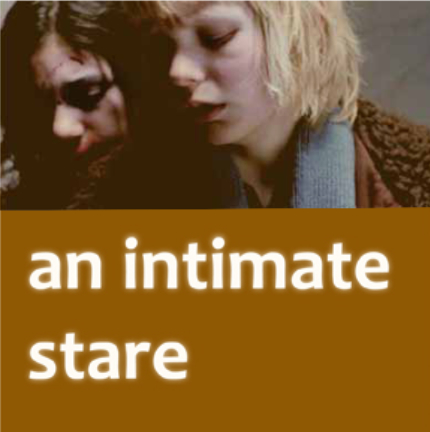
Author: phil

  • LET THE RIGHT ONE IN

        Once in a while, you watch a movie that is so good
    you doubt you can do it justice in a review.  Let the Right One
    In is that good.    The video box quotes a review
    calling it the best vampire movie ever.

        I‘ll take a pass on agreeing or disagreeing, only
    because it’s more than vampires.  What else is it?  It’s
    hard to know where to stop.  First, a movie about
    adolescence, a time of change that can be brutal.  Many of us
    feel the scarring the rest of our lives. 

        Not all of us will make it at all.  We may
    never escape the violence around us and inside us.  Do we
    slip away into a fantasy world because reality is unbearable?
     Do we decide to join the bullies, to hurt the people who
    were kind to us?  A lucky few find a way to stay out of the
    mean-ness and violence.  Others seek desperately for a drug
    or an obsession as their way out.

        Let the Right One In was made in
    Sweden but it’s no art film.  It’s got a gritty reality you
    will feel no matter where in the industrialized world you come
    from.  

        The movie’s director describes the story’s adults as
    being nearby, but unable to get the big picture.  They have
    enough problems of their own.   Divorce, alcoholism, unhappy
    marriages, putting food on the table.  Their kids need a lot
    more than their families can give.

        The movie starts out as a painful look at two of the
    outcasts, the victims.  One is Oskar, the target of bullying
    at school.   The other is Eli, a strange girl who moves in
    next door, who helps Oskar fight back. But Eli can never be one of
    the in-crowd; for a million different reasons.   Most
    important—she is exactly what she appears… a vampire.

        Your first look at Oskar is a quiet but agonizing
    moment.  Snow falls steadily on a dark night.  He
    replays a kid’s voice from school.  “Squeal like a pig,” the
    kid tells Oskar.  Anyone who remembers  
    Deliverance will flash back instantly to that
    moment, the ultimate bullying.  But you can figure out
    Oskar’s life easily enough, with or without that memory.  He
    looks down from his window, a knife in his hand, all vulnerability
    and sadness.

    .image

    Oskar–a bully’s victim, with all the desperation that comes
    with that

       Both Oskar and Eli are searching for love.  They
    slowly begin to look for love in each other.
     Victims/outcasts will never find this an easy path.
     You may find it too hard to deal with the violence inside
    you…or the loneliness.  You may never be able to get in touch
    with your gentle side.  You may find it too hard to listen to
    the other person—or empathize if you can listen.  You are
    bound to say things you will soon regret.  

        But the fortunate ones get past this, and form a
    true bond.  So much happens in this movie, but this is its
    heart—two people finding the path to form a bond.

        Oskar and Eli are characters you can’t forget.
     We have all known people like Oskar.  But Eli feels
    real too, a different kind of outcast.  To be with her, to
    stay with her, Oskar has to grow.  As the expression goes, he
    needs to find things in himself he didn’t know he had.

     image

    Eli–as much the outsider as Oskar is

         Your first looks at Eli show her loneliness,
    her vulnerability.  Wearing no winter jacket on a sub-
    freezing night, snow all around.  “I can’t be friends with
    you,” she tells Oskar before he can say a word.  Wanting to
    say she’s sorry in advance.

        One reason Eli is unforgettable; her emotions are so
    easy to recognize, to identify with.  But she is something
    more.  And this is another big theme in the movie.
     Years ago there was a Donovan song called
    The Universal Soldier.  Eli is something
    else, The Universal Outsider.  And more; the savior you never
    expected to be your savior.  

        You didn’t expect them to be the one to redeem
    you…for many reasons.  Maybe sexual orientation, like Dil in
    another great movie, The Crying Game.  Maybe
    their ethnic group.   Maybe they’re a whore.   Or older
    or younger, different education level, different social
    class/caste.  Eli could be any of them.  Oskar’s road is
    not that different from Fergus’, the IRA soldier in
    The Crying Game.  And Eli takes a lot of the
    chances that Dil took, in trusting anyone.

         Oskar’s first reaction to Eli is worse than
    ambivalent.  “You smell funny,” he tells her.  Watch her
    face; she tries not to cry.   You may be reminded of Fergus,
    when he first finds out Dil’s secret—he vomits.  

        Seated on the jungle gym, Eli looks down on Oskar.
     No big surprise; so does everyone else.  But he takes a
    chance with this strange girl, handing her his Rubik’s cube.

        Next morning, Oskar finds the Rubik’s cube in front
    of his house, its mystery solved.  He smiles cautiously,
    probably for the first time in the movie.  In his lonely
    classroom, he holds it, like a magic charm.  How many of us
    know that feeling, of finally finding a symbol of protection… or
    wish we did?

        Oskar finds her in the same place that night.
     “Do I smell better?” she asks him anxiously.  She tells
    him she is 12, but doesn’t know her birthday.  Oskar presses
    her on this question but all she will tell him is that she has
    never gotten any presents.  

        He offers her the Rubik’s; her first-ever present.
     She shows him how she solved it.  His gaze at her is
    longing.

        The next day, Oskar takes awkward steps to change
    himself.  But definitely a start.  Outside school, the
    bully, Conny waits.  His two friends step out of the shadows;
    one looks at least as scared as Oskar.  One more kid paying a
    high price to fit in.  Another reminder how easily one kid
    can turn on another.

        But for the first time, Oskar stands up to Conny.
      His expression shows he’s ready to deal with the pain he
    knows is coming.  Conny uses a branch to whip Oskar’s leg;
    one friend slashes his face.  They tell him, you better not
    tell.

        At home, Oskar continues being courageous, lying to
    his mother about his face.  When he sees Eli later, she’s the
    one to reach out.  She tells him, next time they hit you, hit
    back…hard.  She says she will help him if he is in real
    danger….”if I can.”

        We can identify with Eli; torn between wanting to
    reveal our secrets, and the fear of the consequences when we do.
     They go to the movies.   Another big step.   Eli
    asks, “Would you still like me if I wasn’t a girl?”  More
    mysteries, more doubts.  But one big difference; Oskar lets
    the question drop.  He is glad just to be with her.  
     

        But this movie won’t let you romanticize its story
    for long.  You’re seeing another story unfold—the story of
    Eli’s ‘father.’  You never learn how he first met Eli, how
    they decided to stay together.  My gut reaction; he wanted to
    escape his loneliness; he hoped Eli could fill the emptiness in
    his life.  He was willing to pay the price to be with her.
     

        And he has paid—big time.  He stalks the woods
    around the apartment complex.  If he can find someone alone,
    he kills them, hangs them upside-down, drains their blood, then
    disposes of the body.  Endless chances for things to go
    wrong.   And the times he returns home with no blood, Eli
    screams at him in frustration.  The movie refuses to let you
    forget how much Eli needs.  

        The strain is wearing him down.   Everything
    about him smells of desperation, even his lifeless hair.
     Again, the movie is honest with you.  It gives you a
    clear picture– what it costs to stay with Eli… already you sense
    Oskar will have to pick up where father has left off.  

         Days later.  You knew it was inevitable,
    but you still feel the impact when Eli’s father is trapped by
    reality… checkmated.  

        Not his fault.   But his attempt to kill a boy
    inside Oskar’s school goes wrong.  

        No way out.  He has planned for this; destroy
    as much of his face as he can with corrosive liquid, and cover any
    links to Eli.  And Eli is prepared too.  She visits his
    hospital room where he clings to life…then removes his breathing
    tube and drains his blood. 

        The movie takes a lot of chances; and big ones.
     The next time Eli is with Oskar, she asks if she can get
    into bed with him.  Oskar can feel how cold she is.

       Yet it is not a scene about sex.  They are miles
    away from being ready.   Instead the question is simply, can
    they be boyfriend and girlfriend?  The dialogue is risky.
     You may find it embarrassing, even ludicrous… or deeply
    touching.  But one thing is clear; these are people forced to
    be honest.  They can’t put on a “cool” façade…and they know
    it.

       “Do I have a chance with you?” Oskar asks her.  

        It takes Eli a while to realize he is talking about
    going steady.  When she at last understands, Eli says
    straight-out, “Oskar, I’m not a girl.”

        A long silence.  Finally Oskar says it doesn’t
    matter.  “Then you have a chance with me,” Eli tells him.
     Under the blanket she is naked, but completely covered.
     Oskar continues to face the opposite direction, never
    turning to look at her.  But she takes his hand.

        Again, an unorthodox, courageous scene and dialogue.
     Unexpected, almost unimaginable in the age of MTV.  Yet
    surprisingly believable.

         Oskar’s life has definitely taken a turn for
    the better.  He stands up to Conny and for the first time is
    left alone.  In Eli he sees the girlfriend he dreamed of, but
    never expected to find.  He has new-found self- respect.

        Much of this is due to Oskar taking the risk;
    trusting an outsider.  Yet he doesn’t know Eli as well as he
    thinks.  The years have taught her how to keep secrets.

        Oskar’s too caught up in himself to understand how
    much Eli’s life has changed.  She is vulnerable without the
    guardian who kept her supplied with blood… and paid rent.
     And more than that, the circle is closing.  Eli has
    already killed a man in the apartment complex.  The dead
    man’s best friend, Lokke, is not about to stop looking for the
    killer.   

        Desperate for blood, Eli bites Lokke’s wife
    Virginia, and almost kills her.  Virginia lies near death at
    the hospital.   Her husband decides he must become a
    vigilante; find her attacker.

         Oskar spends more time with Eli.   He
    notices more than one strange clue, odd coincidences.  As
    difficult as it is to believe Eli is a vampire, Oskar finds the
    evidence increasing.  No other explanation makes sense.
     

        The scene where Oskar brings his suspicion into the
    open will leave you breathless; you can picture how differently it
    could have turned out.  You see another big theme in the
    movie firsthand.

    image Oskar’s suspicions about Eli confirmed

        The theme of identifying with the oppressor.  
    In this case, the kid who got bullied, becoming a bully himself.
     Eli stands at Oskar’s door.  She says he must ask her
    in before she can enter.  Oskar stands motionless, silent.
     As if the power he holds over her is suddenly a drug.
     He makes a slight head-movement; trying out some new
    tough-guy body language.  Like… yeah, come in if you want,
    bitch.

        Eli takes a few steps inside.  Blood slowly
    begins to flow—from her eyes, her ears, even her scalp.

        Oskar gets it.  “You can come in!”  He
    hugs her.

        You feel the conflicts, the self-doubt.  Bitter
    words, the kind that end relationships.  Eli tells him she is
    the same as he is.   She throws it in his face– how he was,
    when they first met.

        “I don’t kill people,” Oskar answers her.  

        “No, but you’d like to…be me a little.”

        He once was happy being with her.  Empathizing
    with her is not as easy.  They stand there, at the edge of
    the cliff.  One possible road—end it now, turn their backs.
     Or… keep trying to trust each other.  They survive this
    hard test.  

        But they face worse tests down the road.  More
    surprises are left to come.

        On a less serious note, many who haven’t seen the
    movie want to know–Is it scary?

        My answer; yes, but what makes it frightening does
    not have much to do with vampires.  The filmmakers wanted
    their story to play out as realistically as possible: the
    struggles at school, family problems at home, and being close
    friends with a vampire.  They did not want the look and feel
    of the movie to change when Eli uses her powers.  The idea is
    to basically leave you alone, to watch the characters, the story,
    the themes.

        One more scene is worth a description.  Oskar
    free and easy, alone with Eli.  Happy to have found a girl of
    his own, and more, a girl who knows exactly who he is and still
    wants him.  He hopes to do what romantic teenagers do—each of
    them will cut their fingers, then press them together.

        Of course this fantasy is doomed.  Eli’s
    craving is impossible to miss once Oskar cuts his finger.
     She tells him to get away from her—now. 

        Like a junkie, she attacks the first stranger she
    sees; a woman with a husband walking just behind her.  An
    unlucky choice.

        Not a feel-good romantic movie.  Love carries a
    heavy price.  Eli and Oskar are barely past their childhoods,
    and faced with a daily struggle to survive.  You see
    crystal-clear how hard the road is.  What gives this movie
    its power, its resonance, is just how badly you want them to make
    it.    

  • MASQUE OF THE RED DEATH (1964)

         Not everyone will agree, but I think the
    creators of Masque of the Red Death saw a rare
    opportunity.  A chance to produce a movie that made big
    money.  And the opportunity to slip a message in.   A
    profound message about an individual’s faith, how you live your
    life, given the inevitability of death.  Even better, they
    could include this message without damaging their movie’s
    commercial appeal. 

         Some felt
    Masque over-reached… or it was pretentious.
     I can understand those feelings.  

        But the more I watch it, the more I feel how high it
    set its goals.  Limited budget and shooting schedule took
    their toll.  In other words, Masque was
    bound to fall short of what could have been. 

        The question is, how good was the final cut, what
    they were able to capture.  

        Real good.   I’d still rate it Vincent Price’s
    best horror movie…even better than
    Witchfinder General.  And director Roger
    Corman’s best too.  (Others prefer Tomb of
    Ligeia, Corman’s last horror movie.)  

       Don’t forget the veteran screenwriters Charles
    Beaumont and R. Wright Campbell who came up with a great story and
    dialogue, most likely under great time pressure.

       The main character is Prince Prospero
    (Price)—arrogant, often cruel, most of all, confident in mocking
    Christianity.  An ego the size of Cleveland Ohio.   The
    story begins with a plague (the Red Death) sweeping through the
    countryside.  

    image

    Vincent Price as Prospero– in probably his all-time best
    movie    

        Prospero’s opinion on the Red Death?  It can’t
    touch me in my castle; I am a prince, immune to such everyday
    shit.  

        Prospero is also a Satanist who makes no apologies.
     He condemns Christianity in a whole slew of ways: it is
    hypocritical; it gives people a wretched life.
     Basically—what has God ever done for you?

        He takes sadistic pleasure at putting people to the
    test—if you really believe, what will you do once I get my claws
    in you?   Prospero never misses a chance to challenge them—to
    say, if you’re such a good Christian, how will you handle this?
     

        The plot is based on a brilliant Edgar Allan Poe
    story.   But the story is too short to sketch out many
    characters.   The movie is generally faithful to Poe’s sketch
    of the prince, and uses that as a jumping-off point.  

         Near the beginning, Prospero stops in a
    village where the plague just hit.  In his typical mocking
    style, he invites the villagers to his celebration.  Three of
    them refuse to grovel—the young lovers Gino and Francesca and
    Francesca’s father.

        Their courage, especially Francesca’s, intrigues
    Prospero.  He orders her taken to his castle, the two men
    taken to his dungeons—then burns the village.

        Prospero is determined to convince Francesca that
    her faith is hollow.  How?  Any way he can.

        Show her the suffering of innocent people, and
    innocent animals.  And not a single sign from God in protest.
     Show her the selfishness, the mean-ness of people who call
    themselves good people.  Tell her about cruelty done in the
    name of God—monks who tortured during the Inquisition.  Most
    of all—let her experience life with the rich people in his castle,
    who will survive the plague while people outside die.  

         Not that Prospero calls his guests good
    people.  The fact that they survive while other people die
    only proves his point.

        Francesca gets to Prospero’s castle just in time for
    the freak show—a medieval version of the privileged class…at their
    worst.  You can imagine that old Emerson, Lake and Palmer
    song for a soundtrack, 

        “We’re so glad you could attend/Come along, Come
    along/Come along, the show’s about to start/Guaranteed to tear
    your head apart/Come see the show!”

        Prospero hopes the corrupt atmosphere will rub off
    on Francesca.  But even more, that he himself can teach her,
    win her over to his satanic viewpoint. 

        Many critics found Jane Asher (Francesca) utterly
    bland.  They have a point.   Yet she shows a kind of
    quiet courage that is not easily broken. She has faith she doesn’t
    need to throw in your face. 

    image

    Francesca–quiet but unshakeable faith

        Only one scene in Masque takes
    place outside during daylight.  Yet it is cruel and brutal as
    anything else in the movie—Prospero lets his falcon fly free, it
    kills a dove; the dove falls from the sky.  He and Francesca
    watch.

        Director Corman was legendary for dealing with the
    worst circumstances and managing to use them to his advantage.
     He may not have planned this to be his only daylight scene.
     But the results are devastating; a good argument that life
    is continual brutality—night or day.

         Again Prospero mocks Francesca’s faith, tries
    to bait her into his argument.  She has no compelling
    comebacks to his taunts, but continues to hold her ground with a
    quiet courage,  a dignity.  The Prince is clearly not
    scoring any quick knockouts.

        Prospero believes he will soon receive a sign from
    Satan.   The festivities begin; a dinner followed by a huge
    celebration and dance.  Prospero’s humor has a mean edge to
    it.  Most of his guests take it in stride.  They realize
    it is a small price to remain in this sanctuary.  

        Okay.  You know things will not turn out the
    way Prospero swore they would—a reckoning is at hand.  Corman
    had directed several movies loosely based on Poe already, and had
    done well with most.  He knew a formula that worked and
    basically stayed with that.

        But what messages gets slipped in, along with this
    commercial recipe?  I wish I knew enough about Corman,
    Beaumont, or Campbell to tell you whose concept this was
    originally.  

       Because whoever it was, took a courageous,
    enlightened look at spirituality.   One not usually found in
    mainstream movies… especially as early as 1964.  

        Satan-worshippers in movies were nothing new. 

        But Masque’s viewpoint was a major
    break from the past.  

        A lot more than “God/Jesus=good…Satan=evil.”
     Carefully, subtly, this movie reached to expand its vision
    beyond Judaism/Christianity/Islam into a broader vision, including
    other religious faiths.  

        Look carefully, and Masque reveals the differences
    between Prospero and those who defied him—Francesca and Gino.

         You may not catch it the first time, but I
    think the key is this—their deeds, their purposes, not their
    words.  With Prospero, forget a moment all his talk about
    Satan vs. Christianity.  Don’t  judge him on his Mortal
    Sins… or sins at all…Instead, feel his attitude toward humanity.
     

        And that is an attitude virtually empty of
    compassion.  At scattered moments you get strange hints of
    empathy–perhaps Francesca has touched something in him.  But
    his arrogance is so great that little penetrates it.  

        Jane Asher and David Weston (Francesca and Gino),
    never became big stars, but there’s more to their characters than
    you realize.  Francesca’s impact is in her faith—she‘s no
    clever evangelist with brilliant debating skills.  No zinging
    quotations from Scripture.

        It is her actions you respect.  Her willingness
    to enter Prospero’s castle, expose herself to the freak show.
     Offering to give herself to Prospero if he spares Gino’s
    life.  

        Even her words to Julianna, Prospero’s mistress,
    after Julianna brands her own breast with a satanic symbol.  

        Francesca could have spoken words of contempt…or
    complete disgust.  You’re lower now in God’s eyes than a
    toad.

        Instead she shows concern for Juliana.  “Did
    Prospero do that to you?”  

        Her humanity shows through at that moment.

        Gino is no Kirk Douglas or Gregory Peck (major
    action heroes in 1964) —he is more of an Everyman, a peasant from
    a tiny village who never learned to use a sword; he never had the
    chance.

        But again and again he shows his courage.  He
    refuses to accept Prospero’s abuse.   Later he tries to
    appeal to the Prince’s humanity when Prospero orders his men to
    burn the village: “Winter comes.”

        He fights a guard he knows is a skilled swordsman.
     When the surviving villagers come to beg Prospero for mercy,
    he tries to stop them; “Forgiveness for what?

         Later, Prospero orders Gino thrown out of his
    castle.  Alone in a dark forest, Gino experiences not just
    doubt, but real fear.  He falls to the ground in near-panic.
     The atmosphere in this scene feels familiar to fans of
    Corman’s previous Poe movies.

    image

    The figure in red

        Then, everything changes suddenly.  Gino
    notices a figure dressed all in red, his back to a tree.  He
    slowly drops Tarot cards to the ground from a deck.  His
    voice is cold but his words are kind, comforting.   “Who is
    your God?”

        “The true one,” Gino says, no hesitation.

        “Tell me—have you sinned?”

        “I’ve killed, “ Gino says.

        “For yourself?”

        “No!”  Gino says.  “I’m afraid.”

        “For yourself?”

        “For Francesca, and for me.”

        Gino gets the reassurance he needs to get his
    courage back.  Watching him experience doubt and fear, then
    get past them, makes him a hero you can identify with.

        I don’t want to spoil the ending; I will try not to.
     But the same red figure soon enters the castle.  He
    will have a long talk with Prospero.  At first, Prospero is
    overjoyed, believing him to be a messenger from Satan.  

        Definitely wrong.

        “Satan rules the Universe,” Prospero tells him
    confidently.

        “He does not rule alone.”  

        Rare talk in a movie in the early ‘60’s.  
    Maybe from exiled Spanish director Luis Bunuel (The Exterminating Angel, Nazarin, unknown to audiences except for hardcore art-film fans).  
     Miles away from any American movies.  

         The figure states his blunt truth to Prospero,
    “Each man makes his own Heaven and Hell.”

        Again, that suggestion between the lines—it’s not
    worshipping Satan that makes a difference to your soul, but your
    feelings toward mankind—all the people you touched in your life.
     You may call God uncaring, even deny God’s existence, but
    was your life still a kind one, a caring one?  

        Most of us have known people like that.
     Someone who hasn’t attended a religious service in years,
    but a good person, beyond any doubt. 

        The final scene would be tough to describe without
    spoiling it.  You may find it deeply touching…or pretentious,
    like Sonny and Cher being philosophical in their song
    The Beat Goes On.  

        Again, the theme is the one inevitable certainty in
    all our lives—and it’s not taxes, not if you’re a CEO or an
    investment banker.

        Not everything works in Masque.   The costumes
    and sets are intense with color and beautifully shot.   But
    the visual images don’t capture as much as they need to, in the
    scenes without sound (Juliana’s hallucinations, the final dance
    scene), where powerful images are needed most.  Vincent Price
    gives a typical performance—powerful but borderline-hammy in many
    spots.

        But give the filmmakers credit for taking all the
    chances they took.  Corman had more options  making this
    movie in England than he did in his previous Poe movies.  He
    aimed high and found the vision he wanted.


  • EYES WITHOUT A FACE

    (Caution—Spoilers near end.)

    In 1959, a French director, known mostly for
    documentaries, was offered the chance to make a horror movie.
    He could make it as scary as he knew how…but with some major
    restrictions.  Tight limits on the amount of blood shown
    onscreen.  (Due to censorship in France.)  The main
    character could not be portrayed as a typical “mad scientist.”
    (Censorship in Germany.)  No cruelty to animals.
    (Censorship in England.)

    Some excellent writers worked on the story, but did
    not come up with much that was truly original.  Still, the
    director, Georges Franju, had a vision as to what he wanted.
    He came up with a cult favorite, with images you won’t
    forget—a bizarre mix of hideous and poetically beautiful.  It
    showed real guts on Franju’s part—only a handful of people had
    ever attempted to combine such extremes before.  And keep in
    mind, this movie came out before the freedom given to filmmakers
    by
    Bonnie and Clyde, The Wild Bunch, and Night of the Living Dead.

    To make things even more challenging, Franju wanted
    his characters to be as ordinary as possible.  Not larger
    than life figures like Dr. Frankenstein, Count Dracula, Hannibal
    Lecter.  How could anyone combine all these different
    elements in one movie?

    Making the murderers feel like ordinary
    people was probably the easiest part.  The more movies, TV
    shows, nonfiction books and articles we read about serial killers,
    the easier it is to accept Dr. Genessier and his associate Louise
    as “average people.”  By now all of us have heard about
    people working nine to five, living day-to-day, even boring
    existences, but with double-lives.   Killing whenever they
    can.

    Dr. Genessier was driving with his daughter when
    their car crashed, destroying her face.  But the doctor is
    convinced he has the knowledge and skill to remove the faces of
    young women, and then transplant these onto Christiane.  Make
    her beautiful again, as she was.

    This is where
    Eyes Without a Face begins.  Louise, a woman
    completely devoted to the doctor, is dumping a woman’s body in the
    countryside.  The woman’s face is gone, used unsuccessfully
    to graft onto Christiane’s.  Meanwhile, Christiane had been
    reported missing four months previously.

    Dr. Genessier and Louise are prepared to go on
    kidnapping, operating, and dumping bodies until they succeed.
    So far none of the bodies have been found, but the doctor
    has a plan in case one turns up.  He will look at the body
    and identify it as Christiane’s.

    This time, Genessier needs to play that card.
    The doctor’s fame as a surgeon and a skin graft researcher
    gives him power.  When the real victim’s father shows up and
    wants to look at the body (after Dr. Genessier has already
    identified it as Christiane), the authorities tell him he cannot.

    Louise has the job of finding the women, and
    bringing them to the doctor’s estate in the outskirts of Paris.
    She knows what she’s doing.  Find a young woman, new to
    the city and act friendly and helpful without coming on too
    strong.  Louise has the right balance; I’ve been around, I
    know what you’re going through, I know what Paris is like for a
    newcomer.

    You probably have seen some variation of this story
    in a recent movie, or on the TV show
    Criminal Minds.  The brutal facts of real
    life.

    But the movie takes a strange turn, giving a
    much different feel, when you meet Christiane.  The doctor
    needs to walk a long way, through strange doorways and up narrow
    staircases to the room where his daughter stays hidden.

    All that distance–not a coincidence.
    Christiane lies on a couch, face completely hidden.
    Something about her makes you think of an angel with a curse
    placed on her, maybe of a princess from a fairy-tale, under a
    spell.

    Not that you could never picture her before in
    everyday Paris, getting caught in the rain for example, having to
    stand on a crowded bus or someone accidentally spilling coffee on
    her dress.  But that world is cut off from her now.

    Dr. Genessier is over-protective, self-righteous,
    controlling.  He tells her he is this way because he loves
    her.  He is angry because she has taken off her mask.

    Christiane never blames her father for the accident.
    But she hates how “he needs to control everything.”
    The doctor leaves.   Christiane waits awhile then walks
    through the huge house.  In her featureless mask, there is a
    beauty to her; long graceful body and limbs, hair combed
    perfectly.   In one room, she stops to look at her portrait.
    The style of painting is tacky, even corny.  Far from a
    great piece of art.

    Yet looking at it, you still feel a tragic irony,
    because of what Christiane has become.  She walks into a room
    full of caged dogs.  Each of them doomed, certain to be used
    in her father’s experiments.  She stops to kiss each
    one.

    image

    Christiane’s inner beauty

    But Christiane is more than dreamy images; she
    is a real person.  The movie won’t let you forget that.
    Christiane knows that her father is not just a controlling
    man; he may well love his research as much as he loves her.
    Later on, she suggests that he is ambivalent about her
    surgery.  He wants her beautiful again, but if this operation
    fails, he will get more chances to experiment, to get more
    firsthand experience with grafting.image

    Lonely prisoner

    Her fiancé, Jacques, works with her father, but he
    is more than a clone of Dr. Genessier.  You don’t see any
    signs that Jacques idolizes him, or that Christiane wishes that
    Jacques did.

    The movie is unclear about how much surgery
    Christiane has already seen her father perform on women Louise
    kidnapped.  But this time she sees the latest victim,
    sleeping.

    Again the movie’s style changes radically.  You
    are forced to watch, in graphic detail, a woman’s face literally
    being detached.  Slowly, with great care, Dr. Genessier makes
    his incision, following lines he’s drawn earlier.  Dangerous,
    precision work.  You see a few drops of blood trickling down;
    somehow it feels more painful to watch the trickle than a steady
    flow of blood.  The procedure takes a long while.
    Finally, “Here we go,” Genessier says, literally lifting the
    face free of the tissue beneath it.  Imagine what it was like
    seeing that in 1959.

    For a precious few days Christiane is beautiful
    again.  But the doctor knows the warning signs, and at the
    first hint, he tells Louise he has failed again.  Christiane
    is without her face once more.

    image

    A
    precious few days of looking as she did once

    image

    Unmistakable signs the surgery is not a success

    For the second time, she calls her fiancé and
    he answers the phone. The first time, Christiane was satisfied to
    wait in silence, to only hear his voice.  This time she
    speaks his name quietly, “Jacques.”

    Jacques believes Christiane may be alive.  The
    police launch an investigation, including a sting operation using
    a woman they caught shoplifting.  They force her to check
    into Genessier’s clinic; they wait to see if he will kidnap her.

    SPOILERS

    ***********************************************************************************

    Louise and Genessier take the bait.  The woman
    is someone they want: young, beautiful, blue eyes.  When you
    see her next, she is already in the operating room, strapped down.

    But here is where the movie really delivers.
    Before the police have a chance to act, you see the
    princess, placed under a spell, transforming herself into someone
    real.  Someone who says, in effect, “Enough.  This is
    where the bullshit stops.”

    Yet at the same time, her appearance is still
    otherworldly, ethereal; an angel of vengeance but still an angel.
    Slowly she raises her father’s scalpel, but as the
    restrained woman screams in terror, Christiane cuts the straps,
    freeing her.  Louise suddenly walks in.  One stab with
    the scalpel deep into Louise’s throat.  Louise has enough
    time to ask “Why?” before she dies.

    Christiane opens the dogs’ cages and each is
    free.  Not far away, cages full of white doves.  She
    frees them next.  They swirl about Christiane; one seems to
    actually hesitate, stop to kiss her on the lips.  A single
    dove stays quietly on her hand.  Outside, she sees her father
    dead, half his face torn away by the dog pack.

    imageA bizarre mix of brutality and unexpected beauty

    (Probably the one serious piece of damage from the censorship
    Franju had to deal with. Franju definitely needed to show
    Genessier’s past cruelty to the dogs for this scene to make sense.
    But due to censorship the movie could only show him being
    stern with them.)

    Christiane keeps walking slowly into the night….

    Not everyone will appreciate the sudden
    changes in moods…in styles.  I can imagine comments like
    “discordant” and “jarring” and these are understandable.  The
    movie makes some fast gear-changes from a graphic operating room,
    to surreal poetic images, to dreary black and white (daytime
    Paris), to plain realistic police story, among its many styles,
    its many moods.

    But give Franju credit for making the movie he
    wanted.  He was forced to accept some serious limitations.
    Yet he still came up with a unique vision.

  • THE ANDROMEDA STRAIN

         What do The Andromeda Strain,
    Deliverance and Cape Fear have
    in common?

    This question is not for film-freaks
    only; It’s not “The art directors of these movies all worked
    in Billy Idol videos later in their careers.”

    The real answer:  Whatever category you
    want to put these movies into (“Horror” might not be your
    first choice), they’re way too good to leave off this
    list.

    The Andromeda Strain’s
    concept is scary enough, right off.  A new disease
    appears on Earth, its origin somewhere in the vast reaches of
    space.  No drug to stop it, no way to vaccinate against It.
    Possibly…no way to contain it.  A small team of
    scientists and MD’s are assembled quickly and taken to
    a state-of-the-art facility.

    But the facility has problems of its
    own.  Scary enough for me.

    Keep this in mind, though.
    Andromeda’s screenwriter, Nelson Gidding, and
    director, Robert Wise were not interested in cheap
    shocks.  They wanted their movie to frighten you
    through understatement.  The deaths they showed, the
    micro-organism growing and reproducing, the music, none of
    these were aimed at slamming its audience over the head.

    The late Michael Crichton’s novels, such as
    Andromeda Strain, were filled with ideas.
    I think Gidding and Wise wanted to underline these ideas, not
    to overshadow them.  The filmmakers seemed to sense that
    all they could give was two hours of good plot, good characters,
    and the best possible special effects.

    And, they needed a balance.   For
    example they didn’t want a “US military conspiracy”
    subplot, any individual characters, or the biology of the
    micro-organism, to overwhelm the other elements.  The
    interviews with Wise on the DVD clearly show someone without a big
    ego. Instead, Wise was determined to draw the best from his
    whole team, not neglect anyone.

    Andromeda Strain begins with
    a quietly terrifying situation.   A tiny but otherwise
    typical town in New Mexico.  Absolutely nothing
    moving.

    The next day.  A plane flies over the
    town.  Below, bodies scattered on the ground, motionless.

    An emergency team is assembled, real
    fast.  Unannounced, soldiers show up at
    their homes.  The first two, Dr. Stone and Dr. Dutton,
    clearly have been prepared to participate in a disaster like
    this.  With great composure, they leave their families,
    saying little.  Stone’s wife, a senator’s daughter,
    someone clearly having political clout, immediately calls her
    father.  Her call to him is abruptly terminated.

    The third member, Dr. Leavitt, a biological
    researcher, is much more her own person, able to speak her
    mind.  She’s in the middle of an experiment, angry at having
    to walk away.  Definitely not an ass-kisser.

    The fourth, Dr. Hall, is a brilliant surgeon, but
    knows as little about these emergencies as Dr.Leavitt. Hall is
    played with great strength by the under-rated, generally low-key
    actor James Olson (Rachel Rachel, Ragtime).  Here, you see a different side of Olson, one he rarely
    got to show.  Again and again, Hall brings down- to-
    earth emotions into their workplace, so technologically advanced,
    but  frighteningly isolated from human feelings.  Like
    Leavitt, Hall is not eager to mold himself into a new
    role.  He cares about leaving his patients.   They are
    much more than research rats to him.

    First things first.   Stone and Hall must go into the
    ravaged town to get a closer look; fully suited, they hope,
    against the unknown disease.  Again, you sense the balance
    that Wise and his team aimed for; let the reality create its
    own tension.

    And reality does speak…loud and clear.
    The vultures throughout the town eating the dead—all are
    gassed to death immediately.  Absolutely necessary; each bird
    has the capability to spread the disease to the world
    outside… possibly destroying all life on the planet.

    image

    No apparent signs of life

    The way the bodies lie sprawled; dead
    suddenly, several children among them.  The
    small-town doctor seated, mouth wide open.

    In the midst of the carnage, Dr. Hall’s mind remains
    firing on all cylinders.  He thinks to check the dead
    doctor’s buttocks for blood—the butt’s color should be the reddest
    part of the body.

    The dark color is not there.  They cut
    the man’s wrist and get not a drop of blood.   It has all
    turned to powder. 

    Yet over the chopper noise–sounds of human
    life.  Two alive somehow: an infant crying
    loudly, nonstop, and an old man, rather quiet, seemingly
    insane.  As the two researchers talk to him,
    your reaction may be like mine—What if this guy tries to rip
    open their sterile suits…for Christ’s sakes, don’t get too
    close.  Stone and Hall bring the two survivors back in the
    helicopter.

    The military contacts the president for permission
    to nuke the town…no time to fool around.

    About this time, Dutton and Leavitt meet an important
    character.    Not a human being but the site at
    which they will investigate, hopefully fight this disease.
    In the middle of empty desert, an ordinary-looking
    agricultural research station.

    But this is only a mask for the most advanced
    disease-control center ever built.  An elevator takes
    them directly into the bowels of the facility…absolutely
    astounding for the early ‘70’s.

    You’re privileged to see it through the eyes
    of Dr. Leavitt.   She’s a brilliant,
    perceptive scientist, yet someone with everyday human
    reactions to the technology surrounding them.   She can
    still joke about it; her continual ironic comments keep you
    grounded as the facility rushes at you.

    Much of the time, Leavitt and Hall feel as though
    they’re on an alien planet.  What gets them through the
    stress is a combination of determination, intelligence, and
    intense caring for life.  Getting to know them, watching
    them interact with people, the disease, and the facility is never
    boring.  Both know the desperate need to ‘hit the ground
    running.’  The facility is designed for
    maximum efficiency and protection against human error, or a
    disease that’s stronger than anyone guessed.  But that
    doesn’t mean Leavitt and Hall can get used to working there.image

    Dr. Leavitt–feeling isolated and insignificant in the
    facility


    image

    Dr. Hall–glad for signs of compassion in the facility–the
    nurse cares for the baby he helped find 

    I’ll talk more about Andromeda’s lack of action
    later, but I have to say this: if you want an action flick,
    this movie is not for you.  Wise and his team wanted to show
    you a battle to the death, but  show you the
    thinking needed.  The way a scientific mind goes to
    war.

    The scenes where Leavitt and Stone unearth the
    first of Andromeda Strain’s secrets are key ones.  (The
    scientists give this name to the deadly organism.)

    Arguably, they are some of the scariest in movie
    history, yet understated to the point that
    some viewers may feel cheated.   This understatement is
    a reason (possibly the main reason) that
    Andromeda didn’t make much money.  What
    should have been scarier, wasn’t scary enough.

    The two scientists struggle to project a microscopic
    image of one area of the scoop grille. Stone believes they
    have only found a grain of sand.

    Then they notice green specks;
    not sand.  Their reactions radically
    different.  Stone takes it methodically, little emotion,
    step by step.  (Unless, as you might argue, he and the
    military  are in on this already.)  Leavitt—more
    emotional, more imaginative, sifting through
    possible implications:

       Nasty implications: All bets are off.
    They likely are experiencing the first-ever contact with an alien
    lifeform.  And probably a lifeform with no wish to
    communicate with them.   Only infect them.  No
    desire to reveal its secrets; they must do that work for
    themselves.  Or die, real soon.

    image

    Lab monkey–about to be exposed to Andromeda

    Later, Leavitt and Stone watch Andromeda
    reproduce.   Again, many high school kids
    today have learned to consider this question:
    How might an alien lifeform reproduce itself without DNA and RNA?

    But use your imagination and try to picture
    yourself seeing this in 1971.

    They stare at a fragment of Andromeda.  It
    looks more like a crystal than any cell they’ve ever seen.
    Suddenly Leavitt gets a flash of insight as to how Andromeda
    can grow without amino acids.  Any source of energy
    serves its growth.

    Back to that same devastating question.  How do
    you stop a lifeform that does not function like any Earth
    lifeform?  Where do you even start?  You ask yourself,
    is all the science I’ve ever learned, suddenly out the
    window?

    It’s not hopeless.  They have found the most
    common elements in Earth lifeforms: Carbon, Hydrogen, Oxygen,
    and Nitrogen, in Andromeda.  But it’s like graduating law
    school, then suddenly being dropped into Mongolia to try a
    murder case, only you don’t speak a word of Mongolian.

    A strange insight into the visual point of view in
    these scenes.  Compare them to a very different style of
    film, the giant bug movies of the’50’s:
    Them, Tarantula, The Deadly Mantis,
    Mothra, for example.

    Many had one scene in common.  The monster
    walks quietly up to a house, the heroine inside.  It
    approaches a large window.   She looks outside, sees the
    monster up close and screams in terror.

    Here, there’s no window– they are deep
    underground.  But you see the crystal pieces of
    Andromeda reproducing and mutating  on a large
    screen behind Leavitt and Stone.  Wise had been a master
    of subtlety for years, back to his days with Val Lewton in
    the ‘40’s.  The last thing he wanted to show was Andromeda
    smashing through a barrier, and ripping someone’s head
    off.  He probably had no  interest in directing
    Alien, where the creature tearing its way out of
    a man’s chest gives you another sudden introduction to an
    otherworld lifeform.

    But ironically, those big bug movies,
    Alien, and Andromeda Strain have
    at least one thing in common.

    All start with a similar idea: people messing around
    in areas best left alone.  And the research all focuses
    on  possible weapons.

    In the big bug movies, scientists test atomic
    weapons, used to protect their nation in case of war.
    In Alien, the alien itself is a
    potential weapon (listen to Dr. Ash’s gushing description of the
    creature—a superb killing machine).
    The Andromeda Strain raises the question; did the
    U.S. military actually search outer space for better
    germ-warfare?

    The more serious question: the disease strains that
    the U.S. military (and plenty of other countries; don’t
    single out the USA) already have available.  The average
    person prefers not to think about this too much, and switches
    to Dancing with the Stars.

    Forget for a minute how the movie ends.
    Reality is much scarier.  Not to give too much
    away:  the answer to stopping Andromeda relates closely
    to an  environmental problem that has endangered life on
    Earth for years now.  Another brilliant idea from Crichton.

    Not that moviegoers today are too ignorant to follow
    Andromeda’s story.  Far from it.
    But many would choose to see dumber movies, without
    the intensity of the ideas and the science.  They’d
    rather have entertainment to relax their brain, than
    something to stimulate it.   And Hollywood, like
    a manufacturer of junk food for the mind, sits there happy,
    saying,

    “You want more entertainment?  Well, we’ve got
    it for you…in 400 exciting new flavors.”

    An unexpected blessing:  maybe we will
    appreciate movies…which make us think, that much more.
    Movies without obvious good guys and bad guys… you
    don’t sit there knowing  how you want the story to turn
    out.

    Maybe we need to be more thankful for people who give
    us those movies.

  • Pigeons from Hell- Boris Karloff’s Thriller Episode

         Many people remember the
    Pigeons from Hell episode of
    Thriller as the scariest prime time show we ever
    saw, period; possibly the best episode of anything scary
    on TV.  This kind of praise might well create unrealistic
    expectations for people when you see it again…or a kind of
    anticipation/backlash for those seeing it for the first
    time.  Like…let’s see this masterpiece I keep
    hearing about.

         Watching it recently, I felt I was of two
    minds.  Like I was staring at a horrifying childhood
    memory…but in the harsh light of day.  Some of its flaws were
    clear…hard to miss.

         On the other hand, I felt an intense
    reaction as the end-credits ground to a halt;
    I don’t want this to end
    .  And more than that; being fairly sure i had felt like
    this before, other times I’d seen it.

         That is an emotional reaction–hard to
    explain.  Such conflicting emotions.  I had moments
    where I imagined someone slowly picking apart its story
    logically.  I don’t enjoy being that person but often that
    side of me takes over.  I zero in on plot inconsistencies…let
    my cynical side control me.  Other times I switch to a more
    visceral viewpoint–admitting the consistencies, yet feeling–this
    experience was
    way more than the sum of its parts.  I hope I can explain that
    last part.

          First,
    Pigeons introduced America to a new mythology–to
    a creature virtually none of us knew before.  Even hardcore
    horror fans had trouble remembering a movie…or a novel with
    anything resembling it.  We knew the basics, the legends for
    example of vampires, werewolves, maybe zombies.  But what was
    in that old house didn’t fit any of these categories.  And
    remember, we weren’t seeing this in a movie theater on a
    weekend.  This thing was visiting our house…maybe staying a
    while.

         Tim and John Branner are everyday guys on
    vacation far from home–they might be us.  For the first time
    in their lives they are in the Deep South.  A place not many
    of us in 1961 had been once, let alone a place we knew well.

         When their car is trapped on a muddy back
    road, everything changes in a heartbeat.  Just a stone’s
    throw away, they find a deserted mansion from pre-Civil War days.

         Tim, an easygoing pragmatic guy sees it
    simply as one more adventure, a small bump in the road.  (Tim
    (Brandon de Wilde)  might remind you of  Todd (Marty
    Milner) in the Route 66 series.)  His
    brother John is the opposite–instantly on edge…from the moment he
    hears a sound like a feral cat, or a puma…or something more
    sinister.

         Pigeons flock in front of the house–John
    continues towards the front door anyway.  He cannot admit he
    could get scared off by pigeons.

         Just as he gets close to them…that same
    eerie cat-like noise.  They take off–are they attacking him
    or just spooked by the sounds?  The first idea feels
    ridiculous…yet we wonder if we would react as he does, in
    near-terror.

    image

    John–immediately fearing the house’s spell

          Again, that contrast as the
    brothers camp out inside the house.  Tim sees a roaring fire,
    comfortable sleeping bags, more adventures tomorrow.  John is
    locked into the sounds–and preoccupied with the memories of
    sounds.  For a long while he stares at an old portrait
    hanging near the fireplace.  A beautiful dark-haired
    woman.  Yet something strange we can’t identify.  The
    camera stays fixed on it a little too long.  Meanwhile, the
    pigeons crowd the windowsills–their noises keep John
    restless.  He finds it impossible to calm himself.

    image

    The portrait

         Sometime later, both of them asleep.
    John awakens to a wordless melody, someone singing.  The
    voice coming from the second floor.  He stands–sleepwalking
    or in a trance.  He slowly walks up the staircase and turns
    left into the wide hallway.

         Soon after, Tim awakes, follows him
    upstairs, into the hall, screams–

         John faces him, blood oozing thickly down
    his face.  Eyes open wide but without expression, without
    recognition.  He holds a hatchet tightly.

         “John!” Tim screams.  No
    response.  John comes nearer, swings the hatchet straight at
    his brother’s face.  The hatchet misses Tim by inches; for a
    moment it stays embedded in the wall.  Tim turns and
    runs–down the steps, out the front door.  John follows him
    slowly.

    .

    image

    Tim–facing a brother turned murderous

    So much, and we can make no sense of it.  A hunter finds Tim
    unconscious in the woods and calls the sheriff.  His name is
    Buckner.  He asks Tim what he remembers; Tim, shaking with
    terror, tells him everything but realizes how insane his story
    sounds.  Impossible yet he feels the truth of it in his
    gut–his brother set on killing him, “But he was dead!”

         Tim realizes fast that Buckner will
    not, can not believe him.  He no longer cares what
    anyone believes.  Much more frightening is the hunter’s
    reaction.  When the sheriff tells Tim he will take the man
    and search the place, the hunter suddenly takes off running–out of
    his own house, into the darkness.

         Slowly we find ourselves sinking in
    quicksand; one set of folklore, then another, then another.
    Tim knows virtually nothing about the Deep South, or the
    plantation age, or the source of the black magic that killed his
    brother yet caused his dead body to stand up and swing the
    ax.  Later he hears voodoo mentioned, maybe zombies.
    But he wonders if that can explain all he has seen.  Most
    chilling are the sheriff’s reactions.  He is not only someone
    who grew up here but seems afraid of nothing.

         Buckner wants to see where John died—Tim
    goes back with him.  They stand in the hallway, find the
    blood on the floor.  But when they enter a bedroom, Buckner’s
    lantern dims then goes out—completely.  Slowly, the sheriff
    backs down the stairs.  As they reach the first floor the
    lantern is instantly bright again.

         Already we know this man—someone you want
    on your side.  This makes his words more chilling:
    “Whatever it is up there, I’m not gonna tackle it in the dark.”

         Then a few minutes later, “Whatever it
    is, it’s probably laughing at us right now…”  You picture
    this man’s life, often alone in the darkness, in the backwoods,
    counting on no one but himself.  No one to take his back when
    he deals with backwoods people—some, the kind of folks we would
    meet ten years later in Deliverance. 

    Now he is struggling to make his decisions.  Those changes of
    heart make us uneasy.  The sheriff is no philosopher, not
    someone with much imagination.  Unlikely to get tangled in
    thought—he sticks to the facts.  But between the lines in
    what he says—a strong sensation; something is
    festering here.

         People have been abused; their rage has
    created something monstrous.  In those pieces of stories—more
    than a suggestion of cruelty.  No one mentions the hundreds
    of years of slavery, but it is always there in the
    background.  A curse on this land, still causing more
    pain.  A bloody war these people lost, its painful aftermath.

         The Blassenville family owned this house;
    people near the top of the economic heap.  Buckner tells Tim
    they had a mean streak in them.  They treated their
    servants brutally.   All but two ran away.  Three
    Blassenville sisters; the stories say they left the house after
    that; no one knows for sure.  Stories  people heard that
    those last two servants turned to magic—or voodoo, to get some
    kind of revenge.

         You suspect they had plenty of reasons;
    that the cruelty they suffered bred more of the same.  The
    sheriff knows the last servant, Jacob, he still lives close
    by.  They enter his cabin; Buckner wakes him, says he needs
    answers.

         Jacob mentions the other servant, Eula
    Lee, and magic spells she once wanted from him.  Tells them
    too that Eula Lee was a half-sister to the Blassenvilles.  He
    leaves it unexplained that she was their servant too.  Then
    he stops himself— he can give away no more secrets.  That if
    he does, the big serpent will send a little brother.  A
    moment later, a snake in his pile of firewood kills him
    instantly.  What is “the big serpent”?  We want
    to know… but we don’t want to think about it too much.

         Earlier the sheriff told Tim what he
    planned to do—wait inside the house and see what happened.
    You sense he wished he had a better choice.  But cannot think
    of one.  Tim goes back again with him.  Later, he hears
    the same wordless singing John did—drawing him upstairs.
    More magic you know nothing about—people led to death
    by sweet melodies.

    image

    Tim and Buckner…waiting

         The rest of the plot makes it difficult to
    reveal more without giving things away.  I remember watching
    a few movies like this; not knowing how to write about them,
    having to give up.

         This time I will try; I feel this is
    worth it.  To add only this: Remember this is
    1961, a television series.  It all had to be shot
    incredibly fast.  It sounds corny but I will say it
    anyway—when you watch this, try to get in touch with your inner
    child.

         As much as you can, check your cynicism
    at the door.  Leave yourself open to some American Deep
    South/Caribbean mythology.  I think you will find it worth
    your time.

  • THE BODY SNATCHER

         To be honest, being scary is not
    The Body Snatcher’s strong suit.  It was one
    of nine movies produced by Val Lewton for RKO Pictures during the
    1940’s.  Like the other movies produced by Lewton its aims
    were subtlety and suggestion.

           But for solid characterization, story
    and atmosphere this movie more than compensates for its lack of
    scares.  People might describe it more as historical
    fiction—they definitely have some solid arguments.   But
    just as I wouldn’t put down historical fiction for coming off like
    a horror movie (such as The Seventh Seal, or even
    The Devils) I don’t want to put a horror movie
    down for being more like historical fiction.

         The Body Snatcher is loosely
    based on a short story by Robert Louis Stevenson.  That story
    is fiction but its characters talk about real people.  The
    murderers Burke and Hare, and especially Dr. Knox, the man who
    hired them to supply his need for bodies where he taught medical
    school in Edinburgh, Scotland.  Dr. Knox was a man of science
    who believed the ends justified the means.  He was unable to
    get enough bodies for his students…not by legal means.  Like
    others then, he turned to “resurrection men”—grave robbers, to
    supply him with the bodies he could not get anywhere else.

    The stories of Burke, Hare, and Dr. Knox were the basis for the
    movies The Flesh and
    the Fiends (1959),
    The Doctor and the Devils (1985) and
    others.  Neither of the first two pictures aimed for
    subtlety.  But I don’t mean that as a put-down.  Both
    were effective as straight-ahead shockers.  Comparing
    The Body Snatcher to these movies is a classic
    case of “apples vs. oranges.”

         The real Burke was hung.  Hare, who
    testified against Burke, got off and was never seen again.
    (In The Flesh and the Fiends, he
    is blinded by a mob, but there is no strong evidence to support
    this).   In court, Burke never mentioned Knox; Knox
    never went to trial and left Edinburgh for London.

          All these real-life events hang over
    The Body Snatcher like a dark cloud.
    MacFarlane, a brilliant medical school instructor, has the same
    problem that Knox did; his students need bodies to learn
    medicine.  MacFarlane’s assistant, Fettes, soon learns about
    where these bodies come from.  They are supplied by a strange
    man named Cabman Gray (Boris Karloff).  Gray is pleasant to
    Fettes. But something about him is unbearable to MacFarlane;
    partly his business in stolen bodies, but   something
    more than that.    Clearly, Macfarlane and Gray
    have a history, one that MacFarlane wants to forget.

    image

    MacFarlane hates remembering his past life with Gray; Gray
    will not let him forget

          Fettes was forced to become MacFarlane’s aide
    because of money worries.  Once he takes on this position, he
    is forced into a system that corrupts everyone—himself, MacFarlane
    and Gray.  At the same time, he sees the partial truth in
    MacFarlane’s arguments.  Fettes and Gray have urged
    MacFarlane to perform a delicate operation on a young girl with
    spinal injuries.  To prepare himself, MacFarlane needs
    another body to study.  Fettes is truly in a bind.  He
    likes the little girl and her widowed mother, and knows only
    MacFarlane can perform the surgery.  But he believes that
    Gray is now using a different method to get his bodies—murder
    instead of grave robbing.

         MacFarlane tries to justify what they must
    do.  He wants more doctors to graduate and to help
    people.   Like the little boy whose body Gray dug up and
    sold to them.  (Gray also kills the dead boy’s dog, which
    guards the grave.)  But when Fettes is sure that he
    recognizes one of Gray’s bodies, that only by murdering her could
    Gray have given them the body, MacFarlane tells him, just put it
    out of your mind.

           Things are happening too fast for
    Fettes.   When MacFarlane’s surgery succeeds and the
    girl can walk again, Fettes has even more problem deciding what is
    right and wrong.

         But it is Gray who is probably the most
    complex, fascinating character.  The killings he does are
    impossible to forgive.  And yet Boris Karloff’s excellent
    portrayal makes you sympathetic for this man.
    Gray does seem to enjoy tormenting
    MacFarlane—actually putting his own life in danger at times.
    You ask yourself why Gray simply can’t leave MacFarlane
    alone.

         The answer is a sad one, I think.  Gray
    feels he has never gotten the thanks he deserved from his old
    friend.  He tells MacFarlane, “I saved that skin of yours,
    once.”  (During the Burke and Hare trial.)

    image

    Gray–feeling the bitterness about the way lives turned
    out

         Now MacFarlane has a respected position in the
    academic world, a comfortable home, social status.  Gray,
    with no education and limited money, has stayed a cabman, a life
    of “knowing one’s place” in the British form of caste system.

          “I was forced to do many things I did
    not wish to do,” he tells MacFarlane, summing up his life.

           MacFarlane’s air of respectability
    disgusts Gray.  In truth, MacFarlane cares deeply about the
    doctors he is training, about the field of medicine.  He
    would never call himself a murderer.  But in Gray’s heart,
    “we share the same skin…”  He feels that they were friends
    once and MacFarlane has never given him what he deserved for
    keeping quiet during the trials.  Also Gray
    suspects…correctly, that MacFarlane would continue buying bodies
    from him, even if he knew these people were actually
    murdered.

         Sadder still, MacFarlane cannot change his
    attitude towards Gray.  He hates remembering that  once,
    they worked together to break the law.  In the end, it will
    come down to Gray saying to him, “You’ll never be rid of me,” and
    MacFarlane treating Gray like a cancer that he has to cut
    out.  Violently, if necessary.

    image

    Gray–a way of earning extra money he has grown used to

         Like some other movies Val Lewton produced,
    using the same three directors, Jacques Tourneur, Mark Robson, and
    Robert Wise, The Body Snatcher has more sadness
    than scares.  (I Walked
    With a Zombie is another example.)  The
    music when the credits roll seems somber, not eerie.
    Ironically, these movies were made and released during World War
    II and probably were seen by soldiers far from home…and by their
    families who were missing them.  Don’t see this one on a day
    when you’re looking for a lot of big scares and shock
    scenes.  The Body Snatcher isn’t about
    that.  It is about the characters and how the past keeps
    knocking at the door.

  • THE EXORCIST

         The Exorcist was a courageous
    movie for its time and place— the United States in the early
    1970’s.  Even though William Peter Blatty’s novel had been a
    best-seller, producing this movie and getting it distributed
    were far from easy.

    The Exorcist was not a
    typical 70’s film; it was not afraid to paint its picture in bold
    colors, showing good and evil as two distinct forces… forces
    fated to battle face to face.

    Ironically, this was a major reason for its box
    office success.  America was in need
    of hopefulness.  The Exorcist left you
    feeling that courage and faith might be rewarded, not
    tossed into the garbage.  Along with
    Jaws and Alien, The Exorcist was
    a major force in pushing horror movies into the mainstream.

    The early 70’s was still a time of much angry
    social/political finger-pointing.  But this movie was
    not afraid to make its statement; that  some issues were
    simpler than conservative vs. liberal, pro-choice
    vs. pro-life.  In doing this, it raised your hopes of
    finding heroes willing to go to war with evil, not to
    watch passively.

    The evil in The Exorcist is
    not suggested; it is shown, more graphically than
    anything up till that time.   The movie broke new ground in
    its violence and sexuality.  No movie before it had dared to
    combine religious and sexual imagery like this one did, not even
    Ken Russell’s The Devils, which had received an X
    rating two years before.

    The Exorcist’s plot is not
    complicated—it deals with Pazuzu, an Asian demon, thousands of
    years old.  It asks you to imagine:  What if this
    ancient evil somehow possessed a young girl in present-day
    America?  And what if the girl’s mother (not Catholic, or
    even religious herself) was to choose Roman Catholic priests to
    drive out this demon?

    One major challenge facing the novel and the movie:
    how do you portray absolute good and absolute evil?  How
    would they speak?  What actions would they take?  The
    novel (and the screenplay, which followed the novel closely)
    had to make the dialogue and the action specific.
    In other words, this is how absolute evil and good would
    function in a real situation.  You would expect that each
    individual’s image of good and evil’s actions is highly personal.

    Let me give one crude, but memorable example.
    During the exorcism, the demon (through Regan’s voice) makes some
    vulgar sexual references to Merrin’s (the title character)
    mother.  To a sheltered, provincial person, these remarks
    might seem unspeakably vile, almost unbearable to hear.  To a
    tough, big-city kid, the same remarks sound no worse than
    something heard in their neighborhood playground.  Thoroughly
    not shocking.  But this is an exception, a rare
    example of bad judgment in the writing.

    Why is it this little girl, Regan McNeil,
    whom the demon chooses to possess?   Regan seems to be a
    random choice.  She is a special girl but not
    that special; most of us have been fortunate enough to
    know one child like her.

    Regan is not a saint.  But she is a sweet girl,
    clearly finding joy and hope in everyday life, even though her
    parents are separating, and her father seems unwilling to stay
    part of her life.

    image

    The daughter Chris can not forget; no saint but radiating an
    unmistakable sweetness

    Chris, Regan’s mom, is no saint either.
    But her importance in this movie cannot be overstated. Watch it
    again, concentrate on Chris, and you’ll see what I’m talking
    about.

    She is the good mother we all wanted, someone able
    to give unconditional love, and hang in for her child under the
    ugliest of circumstances.  That in itself is plenty.

    image

    Chris; not a larger-than-life figure, but the good mother we
    all wanted

    Most people are quite familiar with
    The Exorcist’s plot, from reading the
    best-selling novel, seeing the movie, or word of mouth.
    Everyone seemed to be talking about it, from legal
    secretaries to ministers in your neighborhood church.   The
    climactic exorcism scenes have passed into American folklore,
    lampooned on Saturday Night Live and the
    Scary Movie series by such well-known actors as
    Richard Pryor, James Woods, and God knows who else.

    A little more of the plot.  An American girl,
    about 11, experiences severe psychological problems with no
    explanation.  Along with out-of-control behavior come
    mysterious noises, then her bed shaking violently.  Her
    mother, Chris is like many of us.   She respects religion in
    general but rarely finds it meaningful in day-to-day life.
    Science, medical science, is where she looks for her
    answers to Regan’s condition.

    The tests Regan undergoes are painful
    and invasive.  But they do not help her in any way.

    image

    Many felt the pain Regan undergoes (and the limitations of
    modern Western medicine it underlines) scared them more than
    anything later

    And you watch a subtle change in this gentle
    girl’s response to the medical people, first defensive, then
    out-and-out hostile.  To a sensitive mother, Regan
    seems to be getting swallowed up– and silenced, by another force.
    You can easily overlook this insight, in the tidal wave of
    special effects to come.

    But Chris never misses this crucial
    thread.  She has a devastating sense of the real Regan being
    pulled into a pit.  Yet she knows that Regan’s
    gentle, sweet spirit can never be destroyed.image

    Regan–Her essence buried by outside forces

    A lot has been written about the special effects in
    The Exorcist, the hideous changes in Regan’s face
    and voice.  Most found them brutally terrifying.  A few
    found them laughable.

    Many intellectuals stuck to the old argument that
    showing something scary is never as frightening as
    suggesting it… leaving it to each individual to conjure up what is
    most frightening to them.

    But for many people (including myself), seeing the
    transformation onscreen was another story.   I think my
    reaction ( absolute terror) at watching Regan change was
    a typical one.  The make-up job on Linda Blair (Regan) and
    her dubbed voice, by veteran actress Mercedes McCambridge won
    well-deserved praise.

    Watching The Exorcist again for the
    first time in many years, what struck me was this: I could
    remember what Regan did in her possessed state, but not
    the timing.  Who else was there.  That some of the worst
    brutality and viciousness are experienced first, experienced
    alone by Chris.  The slap that leaves her face
    bruised for weeks.   Regan’s masturbation with the
    cross.  Regan pushing Chris’ face against her crotch.
    Her head turning to reveal an expression of hatred, of contempt
    for her mother.

    The masturbation is riveting partly because, as many
    critics said, it takes two totally separate entities, the sacred
    and the beastly, and smashes them together.  They are
    absolutely right.

    But there is a second part to it.   Taking two
    such extremes and forcing them together this way, is to say to you
    in plain terms that every value judgment you make is
    meaningless.

    That it’s all a hopeless, pathetic joke.

    Hitler, Stalin, Charles Manson…they’re
    just like Gandhi, Lincoln, or Nelson Mandela.

    Chris survives the test.  Listen to the way she
    tells Father Damien, “You tell me that thing
    upstairs is my daughter.”

    Chris has looked deep into the heart of pure
    despair.  Yet she still holds onto her love and faith.

    As Regan and Chris’s story unfolds, another struggle
    is going on.  This is Father Damien Karras’s story.
    Father Damien is a priest and psychiatrist with the massive
    responsibility of counseling other priests at Georgetown
    University.   The endless demands and his growing guilt about
    his mother’s poverty and illness are taking a heavy toll.

    His last visit to his mother is an eye-opener.
    She lives alone in an alien, threatening city landscape.  She
    has never made the leap from a Greek way of life to an American
    lifestyle and that isolates her even more.  The less she asks
    of her son, the more he feels her unspoken demands.  Money
    would not cure her problems but it could ease some of her
    sorrows.  And Father Damien has none to spare from his
    priest’s salary.

    And the vocation he has sacrificed for, no longer
    seems worth the sacrifice.  On the subway, Father Damien
    walks away from a beggar and his lack of compassion saddens
    him.  Soon afterwards Damien’s mother dies in a pitiful City
    hospital; he cannot justify the hardships she was forced to live
    through.

    Ironically it is a medical doctor who gives Chris the
    idea of getting an exorcism for Regan.  Without showing you
    each intermediate stage, the story gives you an understanding of
    how a skeptic like Chris could take this path.

    Chris finally meets Father Damien to ask for
    help.  It is a quiet but monumental scene; you feel that both
    people have found what they needed.

    You learn much less about the man selected to conduct
    the exorcism, Father Merrin.  He had performed an exorcism
    years before and nearly died in the process.  He is also an
    archaeologist in the Middle East.  During his last visit, he
    has a premonition when he finds a small likeness of Pazuzu, then
    later finds himself standing face to face with a statue of the
    demon.

    The moment the two priests enter the house, you can
    feel the tension flooding, wave upon wave.   Father Merrin
    (Max von Sydow) is a combat-tested soldier with an unwavering
    attitude.  Father Damien has more direct connections to
    Regan.   From talking to Chris, he has gained a vision of the
    child and her goodness.

    Drawing the demon out is a more personal struggle for
    Damien than it is for Merrin.  Damien has more weaknesses and
    doubts; the demon means to attack these vulnerable spots.
    Regan and Father Merrin have already been pushed to their physical
    limits and are close to death from the strain.  All could
    easily pay a heavy price for driving away the demon.

    image

    brutal mind-fuck aimed at Father Damien; the demon manifests
    as Damien’s’ mother

    image

    Father Merrin–ready to risk his life for Regan’s soul

    The screenplay gets rid of some of the novel’s
    hokey, borderline-macho lines from Father Damien when he
    challenges the demon.  A definite improvement.  The
    exorcism’s aftermath leaves you with a cautious optimism.

    No light beaming down from Heaven or angels
    appearing.   But a subtle peace on a human level.
    Watch the expression on Regan’s face as she kisses Father
    Dyer’s collar (Father Karras’ close friend).  It is a moment
    you will remember.

    This movie is a lot more than blood and the
    split-pea soup that so many joked about at the time.   Faith
    is a highly individual part of each of us; not easy to
    change.  But this movie may restore our faith in finding
    heroes who keep their word, who risk everything to fight for
    something they believe in.

  • THE DOCTOR AND THE DEVILS

        The Doctor and the Devils is
    one of several movies based on a true story;  a
    brilliant anatomist, Dr. Knox and two murderers, Burke and
    Hare, during the years 1827-1828.  The killers supplied
    Knox with bodies he used in teaching students at an Edinburgh,
    Scotland medical college.  To mention some other movies
    based on this story: the 1945 Val Lewton production
    The Body Snatcher, the grim
    Flesh and the Fiends (Mania)
    from 1960, and Burke and Hare (1971.)

          You will find many reasons why this
    story has been re-told so often.  First the memorable
    characters.  Dr. Rock (Knox) is a man with much arrogance; he
    believes that he is right to defy outdated, hypocritical
    laws.   You can argue that he doesn’t know
    where the two killers get their bodies–from people they’ve
    just murdered.   Or, that he does know, but
    stubbornly refuses to deal with the question.

        He is a complicated character.  Many times
    he is emotional—watch him when he lectures.  At
    other times he can be ice-cold.  Yet you realize he
    cares deeply about the poverty that overwhelms his city—far more
    than most do in his privileged social class.

        Fallon and Broome (Burke and Hare) are also
    fascinating, completely lacking in conscience.  The only
    important question to them; can they get away with killing?
    Right and wrong mean nothing.

        The excellent screenplay by Ronald Harwood,
    (adapted from an older work by the great poet Dylan Thomas)
    changes the name of Dr. Knox to Dr. Rock, and Burke and Hare to
    Fallon and Broom.  Apart from that, it sticks closely to
    the true story.  (Remember that
    The Body Snatcher was based on a short story—a work of fiction by Robert Louis Stevenson. It took
    place years later, and had fictitious characters who had once
    worked with Knox, Burke and Hare.)

        Trying to compare the two movies is basically
    apples vs. oranges.  The Body Snatcher is
    effective as a dignified historical drama, produced by a man
    convinced that suggestion is scarier than what you actually
    see.   Forty years later,
    The Doctor and The Devils had much more freedom
    to sketch out the brutal, dead-end lifestyles of the Edinburgh
    lower classes.  The film-makers could show more violence,
    brutality that reflected day to day reality.

    image

    Jenny and Alice–a bleak existence; no reason to believe it
    will change

         You have to taste the ugliness to get
    its full effect.  Yet the movie is never uglier than it needs
    to be.

          Watch the scene where Fallon and Broom
    find out Doctor Knox pays seven sovereigns for a fresh
    corpse.  For them, it’s an opportunity to make money they
    could never get another way.  This is serious
    money.  Never mind that all of it will be spent on gin,
    whores and bets on cockfighting.

    image

    Dr. Rock examines a body Broom and Fallon have brought
    him

         For most of us, suggestion would not
    be enough to show the lives of the 19th century urban
    poor.  Class divisions are like gaping canyons.
    Dr. Rock’s assistant, Dr. Murray is in love with the
    hooker Jennie.  But Jennie is no dreamer, (“fine young
    doctor’s lady I’d make…”) even though she realizes Murray
    tells the truth about loving her.

    image

    Dr. Murray and Jenny    

         Dr. Rock must admit his share of the blame for
    not dealing with an obvious situation.  It is
    unlikely that Broom and Fallon could have gotten their bodies
    any other way but murder.

        Yet, unlikely as it sounds, you still respect
    Rock in living life true to his code.  He spells out this
    code clearly during his first lecture.  First he
    describes himself as a materialist, a man who does not believe
    in the soul, because the soul has no shape.  The heart
    to him is not the seat of love, only an organ pumping blood.

    image

    Dr. Rock (Timothy Dalton)–A teacher his students
    respect

         Yet he also calls himself a man of sentiment,
    and a moralist.  He tells his student that doctors
    must understand more than science; they must care as
    well.  As the story unfolds, you see that Rock puts his
    money where his mouth is.  At least twice in the movie, he
    mentions the endless river of the Edinburgh poor, saying for
    example, “They were men and women, once.”

      He ends his opening words to his students as
    follows:  The science of anatomy contributes to
    the great sum of all knowledge—The ends justify the
    means.   (His face in close-up.)   You may not
    be sure at first, but it becomes clear that Rock’s motivation
    is not money nor his ego.

        You don’t get as much of a look inside Broom
    and Fallon, two men with no compassion whatever.
    For Broom, it’s simply about the money.  He is the one
    who first realizes that murder makes more sense than
    grave-robbing.  He mentions this to Fallon, and Fallon is the
    one who does most of the killing.

          You get a few hints as to Fallon’s
    motivation.  He describes working as an orderly
    during wartime.  Fallon claims that the surgeon
    encouraged (or ordered) him to kill many of the
    mortally wounded and basket cases in the battle hospital.

          I think Fallon is telling the truth
    about his experiences.  But he uses these experiences as a
    way to rationalize, even to excuse, killing old or seriously
    ill poor people.

          As Broom learns, there is more to
    Fallon; Fallon enjoys the killing even more than getting
    money for it.  Broom can feel the suspicions growing; a
    trail of evidence starting to point at them.   When
    he tells Fallon, Fallon is already focused on two new
    prospective victims, the whores Jennie and Alice.
    “There’s a madness in you,” Broom says to Fallon.

         Broom decides to testify against him; he
    has no alternative if he wants to survive.  Fallon is
    convicted and hanged.

        Ironically, a big reason that you sympathize
    with Dr. Rock is his willingness, his willingness to learn from
    his experiences.

       He is arrogant and smug, but encounters with people
    do change him.  After he saves the simpleminded Billy
    Bedlam’s life, he meets Billy’s sister Alice.
    She wants to give Rock a ring to thank
    him.   She says she knows it is not worth much, but
    “It’s of value to me.”

        She walks away and Rock says, (without a trace
    of sarcasm): “Aren’t people extraordinary?”

        Other times, you see his arrogant side.
    When someone brings up the subject of Broom and Fallon, Rock
    snaps at them, “Do you expect the dead to
    walk here?  They need assistance.
    Broom and Fallon provide that assistance.”

         Yet later on, Rock learns first-hand that
    these bodies too, are people.   When Fallon
    brings him his final body,  Rock recognizes Alice.

        You get a brief look at Dr. Rock’s
    family.    His sister Annabella is a pious but
    shallow woman who feels disgraced by her brother’s opinions
    and his life’s work.  Annabella considers Rock’s wife worse
    than a free spirit, more like a pornographer,
    because of the anatomical drawings she sketches.  Looking
    back, Annabella sees her life wasted.   She had no
    chance to marry and only limited opportunities to
    entertain.  As a young woman she had expected far
    more.  Dr. Rock cannot accept her narrow-minded outlook but
    does realize what she has missed in life.

        Many critics felt the romance between Dr.
    Murray and Jennie hurt the movie overall, that it felt out
    of place, or unlikely or unnecessary.  I can’t
    completely disagree.   But their relationship shows
    you how deep class distinctions went in those years.  It
    is one thing to talk about the amount of money people have,
    but what really hits home is the scene where Murray offers Jennie
    money, simply to go and talk.  He doesn’t realize that
    this money equals a week’s wages for her.

        Sadly, this movie did poorly at the box
    office.   Sadder still; it gives a glimpse of what its
    director, Freddie Francis, could have done in the 60’s and
    70’s if he had worked from better scripts.  Francis
    is remembered as an award-winning cinematographer, and as a
    director of Hammer and Amicus films.  But by the time
    Francis began directing, Hammer’s best days were already behind
    them.  Probably no one could have made a good movie from
    screenplays like
    Dracula Has Risen From the Grave,. and many more on that
    level.The 
    Doctor and the Devils was one of the few
    excellent scripts that Francis got to film, probably the
    only one.   He made the most of it.

  • HOSTEL

        Like
    Saw, Friday the 13th, Halloween, and Nightmare on Elm Street,
    Hostel

    was a big hit.  Sequels followed.  But it left plenty of
    people turned off.  Some critics called it a prime example of
    a new movie category, “torture porn.”  Other viewers, more
    open-minded, tolerated the torture scenes, but still found it
    confusing.  They were left wondering, what was the point?

        I honestly don’t know if it was supposed to
    have a point.  Yet it struck a nerve for me, hard.  I
    keep asking myself:  Could Hostel be showing
    us a sick part of humanity that we hoped didn’t exist?  
    Something we hoped was only fiction… but most likely did happen
    and still does happen? 

        Let me explain.  This is what we hope is
    fiction:

        If you have a lot of money, and know the right
    people, you can buy anything. Even the chance to abuse
    people, maybe even kill them…just for recreation, for a new
    thrill.  

        Where there is a buyer, you can find a seller.
     

         Hostel is one of the few
    mainstream movies to raise this possibility. It gives you its own
    answer to the question; “Faced with that situation, what would you
    do?”  

        In Hostel, the victims are young
    tourists, who tend to be more vulnerable, less protected and
    easiest to fool.  But they are not poor people, like the
    teenagers (or younger) in Thailand and other places, sold by their
    families into the sex-tourism industry.   That in itself may
    anger people who consider themselves social activists.  
     

        They have a strong argument.  I will answer it
    in a simple way: The first step is awareness.  

        Hostel does try to give you some of
    this awareness. One way it does is by telling the story from the
    point of view of the victims.    

        The con job begins in Amsterdam.  Three
    friends; two, Paxton and Josh are American, recent college
    graduates.  Oli is Icelandic, a little older, recently
    divorced, trying to recapture his youth.  

         Time is an issue for Paxton and Josh too.
     This vacation is their last fling, before facing the
    pressure of growing up.  Paxton sees Europe as his chance,
    not just for pleasure now, but as an experience he can look back
    on during grueling hours of study (law school).

        Josh is headed for graduate school; he is the only
    reflective one. But none of them are mean people; for example, not
    guys who’d ever give you date-rape drugs.  In most ways, your
    average college kids.

          Amsterdam is what they expected, what they
    looked forward to.   But a random conversation with a Russian
    tourist promises much more.  A hostel in Slovakia; not in the
    guidebooks.  More females than males.  Women horny for
    handsome young Americans

    image

    The last time they have before adult
    responsibilities take over

         It sounds too good to be true, but the photos
    on the Russian guy’s cell phone convince them. 

        Their journey is uneventful except for a chance
    meeting with a strange businessman.  A good talker…maybe too
    good. He tells them they are headed to the right place; they will
    love the Slovakian girls.  Some of them will do anything you
    want.  Then abruptly putting his hand on Josh’s thigh, he
    asks him, “What is your nature?”

        Josh is furious right away.  The man takes his
    bag and leaves.  He seems harmless enough yet threatening in
    a way you can’t describe.

        The hostel turns out to be just what the Russian
    described.  The lady at the front desk tells them they will
    have roommates…very attractive women.

       She is not exaggerating.  The place even has its
    own sauna and disco, with an attractive ratio of women to men.
     Only Josh is slightly leery—things seem too good to be true.

       But later that night, a woman from the hostel staff
    takes Josh back to their room.   Great sex.  Everything
    the Russian promised.

    image

     Women who seem too good to be true–just as
    promised

         Josh wakes next morning to find Paxton
    grinning back at him.  You know he scored too.

        But no sign of Oli.    They wonder if they
    knew him well enough; would he tell them he was leaving, or just
    go off on his own?  A beautiful young Asian tourist tells
    them Oli left a club with her friend, but no sign of them since.

         Meanwhile, Paxton reassures Josh, Oli is okay.
    Josh can’t stop worrying.  In the lobby, he starts to feel
    dizzy.  The lady at the desk helps him to bed.  

        Cut to a point-of-view shot—what looks like a black
    box with one hole to see out of.   A long row of torture
    implements in a dark ugly room.  

        You realize it is not a box, it is a black hood over
    Josh’s head. He is cuffed into a chair.  He can see two men.
      One approaches him with an electric drill.

         Josh never has time to think.  He begs
    them, at least talk to me.  “I didn’t do anything to you.”
     One man stays silent, but drills straight into Josh—twice.
     It takes awhile to recognize him in his outfit, but it is
    the man from the train.

        The man talks now; he sounds insane.  He picks
    up a scalpel.  “I always wanted to be a surgeon…”   He
    gashes Josh behind both ankles.  Next he undoes the handcuffs
    and says, “You’re free to go.”

        Josh tries to run but both his Achilles tendons are
    severed; he falls flat on his face.  He promises money for
    his freedom, but the man answers contemptuously, “I am the one
    paying them.”  Without further thought, he cuts Josh’s
    throat.  Through all of it, he is utterly cold; a true
    monster.

        You know Paxton is next.  But Paxton knows
    too…at least he is pretty sure.  He is desperately trying to
    walk the thin line–finding his friends…without getting caught
    himself.

        At an old tavern, he finds the roommates; the women
    he and Josh had sex with.  They tell him that Josh and Oli
    went to an art show with two women.  Paxton tells them, take
    me there.

        A large rundown building with a huge parking lot.
     Yet plenty of art shows take place in venues like this.
     Paxton goes in.  Almost immediately, a group of men
    grab him.  His “roommate” watches with satisfaction.
     “You bitch,” he says.

        She says bringing him here will pay her well, “and
    that makes you my bitch.”

        As they drag him to a vacant room, Paxton sees a
    lot.  Rooms with young tourists tied down in chairs.
     Josh’s body, the man from the train next to it.
     Everywhere, what seem to be security guards.

        He is strapped to a chair like Josh was.  But
    unlike his friend, Paxton is not paralyzed with disbelief.
     “Talk,” a man says.

        “What the fuck you want me to say?”

        The man pulls off a surgical mask.  Compared to
    Josh’s killer, he seems newer at this…less sure of himself.
     Paxton can speak passable German.  He tells the man, if
    you kill me, you will see me in your dreams the rest of your life.
     The man slaps Paxton’s face, then storms out.

       A security guard comes in, gags Paxton and leaves.
     The first man holds a gun to Paxton’s forehead and
    pantomimes shooting it.  He puts the gun down, holds a chain
    saw to Paxton’s face.  He cuts Paxton’s hand, slices off two
    fingers…and breaks the chain holding Paxton’s wrists.  Blood
    spurts all over.  The man comes back with the chain saw but
    slips on the blood and falls, the saw tearing a deep gash into his
    leg.  A second later, he is up again…

       Paxton shoots him with the gun he dropped.  The
    guard comes in—Paxton kills him

    too.


    image


     Paxton–Knowing only he can save himself

         The room is unlocked, but leaving the building
    is hard.  In his journey, Paxton sees a man chopping bodies
    up, then burning them in a crematorium.  He goes into a
    locker room.   On the floor, he notices a business card
    reading simply, Elite Hunting.

        I don’t want to give away much more.  But the
    next scene is devastating, and ironically, no one gets hurt.

         A man walks in.  He takes it for granted
    that Paxton is a paying customer like himself.

        Paxton is terrified he will give himself away. But
    the questions he expects never come.  With the man talking a
    mile a minute, Paxton barely needs to say anything.

        The customer speaks English with no accent; you’d
    guess he is from the USA.  I expected him to be a spoiled,
    decadent rich kid.   Sure that his family can buy his way out
    of any problems with the law.

        Instead, he is totally down to earth.  He would
    look at home at any tailgate party at any  stadium in any
    state.  Or any gym in any city, any major suburb.

        But he’s not here to watch a football game.  He
    wants a more intense experience…some heightened reality.  The
    chance to torture and kill, to indulge his fantasies to the
    fullest.  I keep thinking of the line from In the Company of
    Men.

        “Why?  Because I can.”

        At first, I felt the moviemakers might have cast
    someone different, someone with more of a rich, privileged
    appearance.  (Like a young James Spader, back in the 80’s and
    90’s)  I honestly don’t know if their decision to use this
    actor was just a matter of chance.

        But choosing someone so average actually gives
    Hostel more sting.  It reminds us; these
    sick fantasies are not only for the super-rich and jaded.
     They cut across class lines, social lines, political lines.
     

         You keep hoping… Maybe the guy is talking
    about something else.   Maybe he doesn’t know yet what he is
    paying for…

         Minutes later, Paxton sees him again.  
    You realize beyond a doubt: the guy knew what he wanted; he paid
    for the whole package.  A beautiful young Asian woman tied to
    the same kind of chair.  The customer is literally ripping
    her face off.  As Paxton walks in, the guy’s words say it
    all: “Find your own fucking room.”  

        I remembered a scene from
    Chinatown.  Noah Cross (John Huston), a
    powerful man who has committed incest with his daughter for years,
    talks to J.J. Gittes (Jack Nicholson).  Cross tells him:
    under the right circumstances, people are capable of anything.
     

        And Noah is not apologizing, or even trying to
    justify what he has done.  He feels he has no reason to say
    he is sorry or to make excuses. 

        Chinatown was set in the 1930’s,
    before air travel was popular.  Now, people have greater
    freedom; you can be one person at home with your family.
     Another person when you are away on business.  You may
    keep that life a secret for years.  You find ways to cover
    your tracks.

         You compartmentalize it, keep it separate from
    the rest of your life.   Maybe you tell yourself, it’s my
    money, I earned it.  Or you contribute a large sum to a place
    for homeless children or some third world children’s organization
    and tell yourself, this good karma might cancel out my bad karma.

       But once you’re talking about child prostitution
    rather than torture, it’s only a question of definition, a
    question of degree.  Anyone who visits the third world for
    the chance to have sex with children is a torturer, period.
     Back in your own country, you can be a good father, a valued
    member of your church or synagogue, start your own personal soup
    kitchen.  But nothing gets erased.

        I spent a little time looking at interviews with the
    writer/ director Eli Roth, without finding out much about what he
    intended in making Hostel. 

        But still.  Hostel’s not the
    first movie where someone is tied down, helpless by a monster or a
    human monster.  

         However, it is one of the best at making you
    experience, all the way down in your gut, what that feels like.
     

        That helpless feeling they have gone through: Josh,
    Paxton, and the Asian girl Paxton tries to save —is a short taste
    of what a kid sold into the sex industry will feel.  For me,
    if Hostel gets you to experience that, it’s done
    its job and more. 

  • The Hallow

         A distinguished botanist, educated in the best schools in England.  Among his specialties—fungi parasitizing trees.  He moves from London to a remote forest in Ireland.  A scientist, unlikely to believe in banshees, faeries, and baby snatchers.  Yet a month after moving into a remote house in the forest with his wife, tiny baby and dog, he is fighting for his life.  Fighting against creatures who feel he has trespassed in their homelands and refuse to tolerate him.  “If you trespass against them they will trespass against you”, one long-time resident tells them.

         Adam and his wife Clare feel that the nearby people are trying to intimidate them…and they are not totally wrong.  Colm, their closest neighbor, tells Clare says he needs to talk to Adam—and tomorrow is too late.  “Tonight.  He comes to see me tonight,” he tells Clare.  But Colm is not a bully; he is justified in his insistence.  He is furious Adam and Clare don’t want to hear him but they have never experienced what he has.  “Superstition” is their blanket word for all the warnings he gives them.  Adam and Clare are good hearted people and good parents. 

         But words like superstition are a means for them to close their minds.  Both of them are fascinated to read about fungus penetrating ants’ brains and turning them into “zombies.”  They’ve seen microscopic evidence and the zombie ants.  Case closed.

         But never has it occurred to them; just as the fungus piercing the ants’ brains is part of the natural order, the black sludge penetrating human bodies may be part of the natural order too. 

         Adam and Clare were raised with science; Adam calls the local legends “fucking fairy tales.”

         But perhaps the fucking fairy tales have some sort of scientific basis too; only if you open your mind to that possibility.  That science and fairies are not mutually exclusive.

         The Hallow does not dwell on that question; most of what comes next is a fierce battle between our culture and the local creatures–creatures that few of us have grown up hearing about.  All we’ve heard about is the gentle leprechaun challenging us, “Catch me Lucky Charms.” No danger from him. 

         In the USA, histories of the wild west flash on stories of the pioneers—people who paid the price for settling the wilderness and pushing the Indians out of their homelands.  Like many pioneers, Adam and Clare aren’t bad people.  But they misjudge the destruction they will bring, in “civilizing” the land. 

         You can interpret the trees in The Hallow as symbols of the Indians in the USA, or the Aboriginals in Australia; part of many more ugly stories of “progress.”  The Hallows’ action sequences give you a taste of that—and a taste for what the civilized people and the tribal natives paid for the progress.