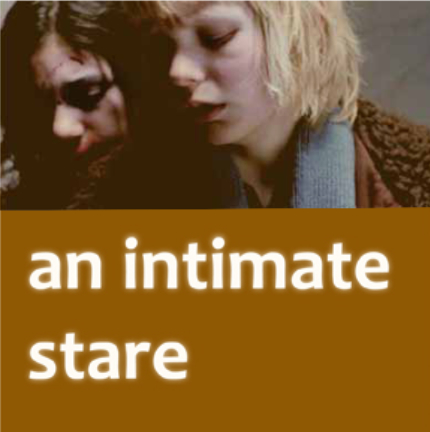
Once in a while, you watch a movie that is so good you doubt you can do it justice in a review. Let the Right One In is that good. The video box quotes a review calling it the best vampire movie ever.
I‘ll take a pass on agreeing or disagreeing, only because it’s more than vampires. What else is it? It’s hard to know where to stop. First, a movie about adolescence, a time of change that can be brutal. Many of us feel the scarring the rest of our lives.
Not all of us will make it at all. We may never escape the violence around us and inside us. Do we slip away into a fantasy world because reality is unbearable? Do we decide to join the bullies, to hurt the people who were kind to us? A lucky few find a way to stay out of the mean-ness and violence. Others seek desperately for a drug or an obsession as their way out.
Let the Right One In was made in Sweden but it’s no art film. It’s got a gritty reality you will feel no matter where in the industrialized world you come from.
The movie’s director describes the story’s adults as being nearby, but unable to get the big picture. They have enough problems of their own. Divorce, alcoholism, unhappy marriages, putting food on the table. Their kids need a lot more than their families can give.
The movie starts out as a painful look at two of the outcasts, the victims. One is Oskar, the target of bullying at school. The other is Eli, a strange girl who moves in next door, who helps Oskar fight back. But Eli can never be one of the in-crowd; for a million different reasons. Most important—she is exactly what she appears… a vampire.
Your first look at Oskar is a quiet but agonizing moment. Snow falls steadily on a dark night. He replays a kid’s voice from school. “Squeal like a pig,” the kid tells Oskar. Anyone who remembers
Deliverance will flash back instantly to that moment, the ultimate bullying. But you can figure out Oskar’s life easily enough, with or without that memory. He looks down from his window, a knife in his hand, all vulnerability and sadness.
.
Oskar–a bully’s victim, with all the desperation that comes
with that
Both Oskar and Eli are searching for love. They slowly begin to look for love in each other.
Victims/outcasts will never find this an easy path.
You may find it too hard to deal with the violence inside you…or the loneliness. You may never be able to get in touch with your gentle side. You may find it too hard to listen to the other person—or empathize if you can listen. You are bound to say things you will soon regret.
But the fortunate ones get past this, and form a true bond. So much happens in this movie, but this is its heart—two people finding the path to form a bond.
Oskar and Eli are characters you can’t forget.We have all known people like Oskar. But Eli feels real too, a different kind of outcast.To be with her, to stay with her, Oskar has to grow. He needs to find things in himself he didn’t know he had.

Eli–as much the outsider as Oskar is
Your first looks at Eli show her loneliness, her vulnerability. Wearing no winter jacket on a sub- freezing night, snow all around. “I can’t be friends with you,” she tells Oskar before he can say a word. Wanting to say she’s sorry in advance.
One reason Eli is unforgettable; her emotions are so easy to recognize, to identify with. But she is something more. And this is another big theme in the movie. Years ago there was a Donovan song called The Universal Soldier. Eli is something else, The universal outsider. And more; the savior you never expected to be your savior.
You didn’t expect them to be the one to redeem you…for many reasons. Maybe sexual orientation, like Dil in another great movie, The Crying Game. Maybe their ethnic group. Maybe they’re a whore. Or older or younger, different education level, different social class/caste. Eli could be any of them. Oskar’s road is not that different from Fergus’, the IRA soldier in The Crying Game. And Eli takes a lot of the chances that Dil took, in trusting anyone.
Oskar’s first reaction to Eli is worse than ambivalent. “You smell funny,” he tells her. Watch her face; she tries not to cry. You may be reminded of Fergus, when he first finds out Dil’s secret—he vomits. Seated on the jungle gym, Eli looks down on Oskar.
No big surprise; so does everyone else. But he takes a
chance with this strange girl, handing her his Rubik’s cube.
Next morning, Oskar finds the Rubik’s cube in front of his house, its mystery solved. He smiles cautiously, probably for the first time in the movie. In his lonely classroom, he holds it, like a magic charm. How many of us know that feeling, of finally finding a symbol of protection… or wish we did?
Oskar finds her in the same place that night.
“Do I smell better?” she asks him anxiously. She tells him she is 12, but doesn’t know her birthday. Oskar presses her on this question but all she will tell him is that she has never gotten any presents.
He offers her the Rubik’s; her first-ever present.She shows him how she solved it. His gaze at her is longing.The next day, Oskar takes awkward steps to change himself. But definitely a start. Outside school, the bully, Conny waits. His two friends step out of the shadows; one looks at least as scared as Oskar. One more kid paying a high price to fit in. Another reminder how easily one kid can turn on another.
But for the first time, Oskar stands up to Conny. His expression shows he’s ready to deal with the pain he knows is coming. Conny uses a branch to whip Oskar’s leg; one friend slashes his face.They tell him, you better not tell.
At home, Oskar continues being courageous, lying to his mother about his face. When he sees Eli later, she’s the one to reach out. She tells him, next time they hit you, hit back…hard. She says she will help him if he is in real danger….”if I can.”
We can identify with Eli; torn between wanting to reveal our secrets, and the fear of the consequences when we do.They go to the movies. Another big step. Eli asks, “Would you still like me if I wasn’t a girl?” More mysteries, more doubts. But one big difference; Oskar lets the question drop. He is glad just to be with her.
But this movie won’t let you romanticize its story for long. You’re seeing another story unfold—the story of Eli’s ‘father.’ You never learn how he first met Eli, how they decided to stay together. My gut reaction; he wanted to escape his loneliness; he hoped Eli could fill the emptiness in his life. He was willing to pay the price to be with her.
And he has paid—big time. He stalks the woods around the apartment complex. If he can find someone alone, he kills them, hangs them upside-down, drains their blood, then disposes of the body. Endless chances for things to go wrong. And the times he returns home with no blood, Eli screams at him in frustration.The movie refuses to let you forget how much Eli needs.
The strain is wearing him down. Everything about him smells of desperation, even his lifeless hair. Again, the movie is honest with you. It gives you a clear picture– what it costs to stay with Eli… already you sense Oskar will have to pick up where father has left off.
Days later. You knew it was inevitable, but you still feel the impact when Eli’s father is trapped by reality… checkmated. Not his fault. But his attempt to kill a boy inside Oskar’s school goes wrong. No way out. He has planned for this; destroy as much of his face as he can with corrosive liquid, and cover any links to Eli. And Eli is prepared too. She visits his hospital room where he clings to life…then removes his breathing tube and drains his blood.
The movie takes a lot of chances; and big ones. The next time Eli is with Oskar, she asks if she can get into bed with him. Oskar can feel how cold she is.
Yet it is not a scene about sex. They are miles away from being ready. Instead the question is simply, can they be boyfriend and girlfriend? The dialogue is risky. You may find it embarrassing, even ludicrous… or deeply touching. But one thing is clear; these are people forced to be honest. They can’t put on a “cool” façade…and they know it. “Do I have a chance with you?” Oskar asks her. It takes Eli a while to realize he is talking about going steady. When she at last understands, Eli says straight-out, “Oskar, I’m not a girl.”
A long silence. Finally Oskar says it doesn’t matter. “Then you have a chance with me,” Eli tells him. Under the blanket she is naked, but completely covered. Oskar continues to face the opposite direction, never turning to look at her. But she takes his hand.
Again, an unorthodox, courageous scene and dialogue.
Unexpected, almost unimaginable in the age of MTV. Yet
surprisingly believable.
Oskar’s life has definitely taken a turn for the better. He stands up to Conny and for the first time is left alone. In Eli he sees the girlfriend he dreamed of, but never expected to find. He has new-found self- respect. Much of this is due to Oskar taking the risk;
trusting an outsider. Yet he doesn’t know Eli as well as he thinks.The years have taught her how to keep secrets.
Oskar’s too caught up in himself to understand how much Eli’s life has changed. She is vulnerable without the guardian who kept her supplied with blood… and paid rent. And more than that, the circle is closing. Eli has already killed a man in the apartment complex. The dead man’s best friend, Lokke, is not about to stop looking for the killer.
Desperate for blood, Eli bites Lokke’s wife Virginia, and almost kills her. Virginia lies near death at the hospital. Her husband decides he must become a vigilante; find her attacker. Oskar spends more time with Eli. He notices more than one strange clue, odd coincidences. As difficult as it is to believe Eli is a vampire, Oskar finds the evidence increasing. No other explanation makes sense.
The scene where Oskar brings his suspicion into the open will leave you breathless; you can picture how differently it could have turned out. You see another big theme in the movie firsthand.

The theme of identifying with the oppressor. In this case, the kid who got bullied, becoming a bully himself. Eli stands at Oskar’s door. She says he must ask her in before she can enter. Oskar stands motionless, silent. As if the power he holds over her is suddenly a drug. He makes a slight head-movement; trying out some new tough-guy body language. Like… yeah, come in if you want, bitch.
Eli takes a few steps inside. Blood slowly begins to flow—from her eyes, her ears, even her scalp. Oskar gets it. “You can come in!” He hugs her.
You feel the conflicts, the self-doubt. Bitter words, the kind that end relationships. Eli tells him she is the same as he is. She throws it in his face– how he was, when they first met.
“I don’t kill people,” Oskar answers her.
“No, but you’d like to. Be me a little.”
He once was happy being with her. Empathizing with her is not as easy. They stand there, at the edge of the cliff. One possible road—end it now, turn their backs. Or… keep trying to trust each other. They survive this hard test. But they face worse tests down the road. More surprises are left to come.
On a less serious note, many who haven’t seen the
movie want to know–Is it scary?
My answer; yes, but what makes it frightening does not have much to do with vampires. The filmmakers wanted their story to play out as realistically as possible: the struggles at school, family problems at home, and being close friends with a vampire. They did not want the look and feel of the movie to change when Eli uses her powers. The idea is to basically leave you alone, to watch the characters, the story, the themes.
One more scene is worth a description. Oskar free and easy, alone with Eli. Happy to have found a girl of his own, and more, a girl who knows exactly who he is and still wants him. He hopes to do what romantic teenagers do—each of them will cut their fingers, then press them together. Of course this fantasy is doomed. Eli’s craving is impossible to miss once Oskar cuts his finger. She tells him to get away from her—now. Like a junkie, she attacks the first stranger she sees; a woman with a husband walking just behind her. An unlucky choice.
Not a feel-good romantic movie. Love carries a heavy price. Eli and Oskar are barely past their childhoods, and faced with a daily struggle to survive. You see crystal-clear how hard the road is. What gives this movieits power, its resonance, is just how badly you want them to make it.